Category Archives: Uncategorized

A Friend to the End

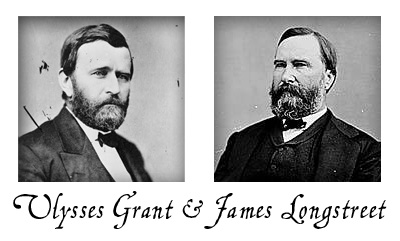
grant-longstreet

The biblical book of Proverbs declares that “there is a friend who sticks closer than a brother.” Though rare, those friendships are strong enough to endure anything, even separation and possible fights. Over three thousand years ago, David, a future King of Israel, and Jonathan, the son of King Saul, had such a friendship. More recently, during the mid-nineteenth century, unbreakable bonds were formed among those who attended the United States Military Academy at West Point. The Civil War seemed to sever those ties, but the war’s conclusion revealed that those bonds remained intact. In one particular case, there was a future Confederate general who built a lasting kinship with a future Union general and American president. The Confederate would remain close to his one-time opponent throughout their lives. His name was General James Longstreet. This is the unlikely story of his steadfast friendship with Union General Ulysses S. Grant before, during and after the Civil War.

James Longstreet, from his very beginning, was a true son of the South. Given the nickname of “Pete” by his family, Longstreet was born in South Carolina in January 1821 to a family that traced its lineage back to Dutch immigrants. His early years were spent working on the family farm in northeastern Georgia and reading about military heroes. He dreamed of becoming a soldier. To provide his son with the opportunity, his father enrolled him in the Richmond County Academy in Augusta, Georgia. He lived with his uncle and aunt in Augusta and, following the death of his father and the move of his mother to Alabama, stayed with them full time. Through the influence of a relative who was a Congressman from Alabama, Longstreet received an appointment to the United States Military Academy at West Point. It would be at West Point where he would make the most valued friend of his entire life.

Entering West Point in July 1838, James Longstreet soon found himself forming close bonds with men who would play a critical role in his future military career. His academic and disciplinary record at West Point was less than desirable. He consistently ranked near the bottom of his class in every subject, even initially failing one of his examinations in mechanics. Despite his poor performance, his greatest success came in the relationships he developed with those who would later become his comrades and adversaries in the Civil War. Among his future opponents, he befriended future Union Generals George H. Thomas, who was an upper classman at the time, and William S. Rosecrans, who was his roommate at West Point. He would face both of them at the Battle of Chickamauga. He also befriended Union General John Pope, whom he defeated at the Battle of Second Manassas or Bull Run. Among those who would join him in Confederate service, he grew close to Lafayette McLaws, who would serve as a division commander under Longstreet at the Battle of Gettysburg. Longstreet’s strongest friendship, however, was with a young cadet from Ohio who graduated the year after him in 1843 and was destined to become the future commander of all the Union armies and President of the United States — Ulysses S. Grant.

Given the nickname of “Sam” by his friends in honor of his initials U.S., Grant appeared to be the opposite of Longstreet. Pete stood a towering and robust six feet two inches where Sam was only five feet eight inches. There was also a marked difference in their personalities. Pete was more carefree and eager to embark on adventures than Sam, who was more reserved in nature. Grant also differed from Longstreet in that he never desired to become a professional soldier. Neither man let these differences keep them apart. Sam quickly proved that he was similar to Pete when it came to academics and military discipline. While better than Longstreet in most subjects, Grant remained only a mediocre student. His best subject was mathematics; he even wanted to stay at West Point as a mathematics professor after graduation. Grant also showed he was like Longstreet in his ability to accumulate demerits, once receiving one for not attending church. The two men also shared an interest in and love of horsemanship. Grant and Longstreet were also drawn together by the fact that they had relatively low rankings at the time of their graduations. Longstreet was fifty-fourth out of fifty-six, and Grant was twenty-first out of thirty-nine. The two forged an iron bond at West Point. Longstreet later described Grant as a man “of noble, generous heart, a lovable character, [and] a valued friend.” Their friendship only strengthened in the years after they left West Point.

After graduating in 1842, Longstreet was commissioned a second lieutenant and was posted with the Fourth Infantry at Jefferson Barracks, Missouri, ten miles south of St. Louis. He was soon engaged in the typical duties of drilling, training and inspecting his soldiers while at the same time falling in love with the daughter of his commanding officer. As at West Point, he made friends with many of his contemporaries, some of whom he would fight against during the Civil War. To his great delight, Sam joined him at the post in September 1843. In their free time, the two young officers toured the nearby countryside and attended various social events. One of their visits was to the home of their classmate and distant Longstreet relative, Fredrick T. Dent. One of those who warmly greeted Pete and Sam was Longstreet’s fourth cousin, seventeen-year-old Julia Dent. Grant was instantly smitten with Julia, and the two soon fell in love.

Not long after introducing Grant and Julia, Longstreet was transferred to the Eighth Infantry. In late 1845, he and the regiment were moved to Corpus Christi, Texas as American forces gathered for possible war with Mexico. At Corpus Christi, he was once again reunited with Grant, and the two friends spent the next few months together. To escape the monotony of camp life, the two often embarked on hunting expeditions for turkeys, deer and other wildlife. They also played poker, though Grant only participated when there was little money involved. Soon the men found themselves in the midst of the U.S.-Mexican War. After serving under General Zachary Taylor in northern Mexico, both Grant and Longstreet became part of General Winfield Scott’s advance and subsequent attack on Mexico City. One of those attacks was made against the fortress of Chapultepec, a charge in which Longstreet was wounded while carrying the national flag.

After recovering, Longstreet returned to the United States where he married his own sweetheart before attending the wedding of Sam Grant and Julia Dent, as the best man according to some. Over the next few years, the two had few occasions to reconnect. One of their reunions occurred in 1858 when Longstreet stopped in St. Louis on his way to a posting as a paymaster at Fort Leavenworth, Kansas. He learned that Grant had left the Army and had fallen on hard times. Nevertheless, Grant insisted on giving Longstreet a five-dollar gold piece as repayment for five dollars Longstreet had loaned Grant when they were cadets at West Point. Grant told Longstreet he could not bear being in debt to him. It soon became apparent though that the two friends would be separated by war.    

As the Civil War approached and then broke out, the two friends found themselves on opposite sides of the struggle. Joining the South, Longstreet rose to command the First Corps of the Army of Northern Virginia under Robert E. Lee while Grant rose to national prominence as commander of all the Union armies. Between the two of them they wore a total of six stars. Even when facing each other in battle, neither lost their respect or affection for the other. In the last part of the war, the two friends finally met on the battlefield as they fought throughout northern Virginia. On April 10, 1865, the day after Lee had officially surrendered, Longstreet was named a member of the surrender commission. Upon arriving at the location, he saw his old friend standing with the Union commissioners. Grant moved toward him and embraced Longstreet like a long-lost brother and joked about playing a game of poker like they had when they were younger. The war was over, and the two were together again.

In the years that followed, Longstreet became head of an insurance company, but his outspoken support for the Republican Party, including Grant’s bid for president, alienated him from his fellow Southerners. In an effort to help his friend out, Grant procured a job for him as the surveyor of customs in New Orleans, Louisiana. Longstreet’s new position and continued support for Grant and for certain Republican policies brought more vilification down on his head and eventually forced him to leave Louisiana for his native Georgia. He continued to serve in national politics as U.S. Minister to Turkey under Presidents Rutherford B. Hays and James A. Garfield and as U.S. Commissioner of Railroads under President William McKinley. In July 1885, upon learning of the death of Sam Grant, Longstreet paid him one of the greatest compliments a person could receive. He said that Grant “was the truest as well as the bravest man that ever lived.” In silent testament to their lasting friendship, Longstreet was present at the dedication of Grant’s tomb in New York City in 1897. On January 2, 1904, James “Pete” Longstreet and Ulysses S. “Sam” Grant were finally reunited in eternal peace.

James Longstreet’s lifelong friendship with Ulysses S. Grant demonstrated that there are some relationships that can endure anything. Their friendship was tested by fire, yet it came out steadfast and strong. The two never let go of the affection they held for one another, not even when they were honor-bound to try to destroy each other’s army. They underwent trials and tribulations, but, like David and Jonathan of old, they never failed to support each other and did what they could to ease the difficulties. They understood that was what true brotherhood meant. If ever there was a person who embodied the spirit of the proverb of a “friend who sticks closer than a brother,” it was James Longstreet and his indestructible bond with Ulysses S. Grant.
2 Comments

Filed under Uncategorized

A War of Words

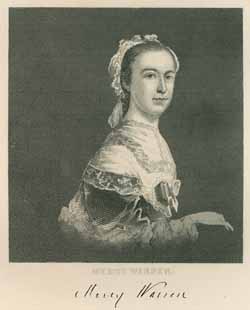
mercy_otis_warren_ref

There is a saying that “the pen is mightier than the sword.” Remarkably, there have been times in the past when one person’s words have inspired a nation more than any military victory won on the battlefield. During the tumultuous political crises of the 1760s and the early 1770s, there was an American woman who strove to light the fires of revolution. Through her efforts, the fight for liberty became synonymous with the cause of American independence. Her name was Mercy Otis Warren. This is the story of how her pen was one of the first weapons used in fight against British oppression.

Mercy Otis Warren was a firm advocate of the principles of liberty throughout her life. She was born in 1728 in Massachusetts to a family that traced its roots back to some of the first English immigrants to America, one of which was a passenger on the Mayflower. Mercy’s early years were spent on the family farm performing various domestic duties like cooking and sewing. Unusual for girls of her time, however, her father allowed her to receive an education virtually unknown to women. She accompanied her older brother, James Otis, Jr., to study sessions at her uncle’s nearby home. Although not permitted to learn classical languages like Greek and Latin, she was taught to read English translations of classical works like Homer. She also excelled at writing   She became an accomplished woman for her day, but she still desired to attract a suitable husband. She married one of her brother’s Harvard classmates, James Warren of Plymouth, in November 1754 and soon settled into a comfortable life as a wife and mother of five. She also found time to write poetry. Her circle of friends included John and Abigail Adams. As the political crisis between America and Great Britain erupted, she used her literary talents to rally support for the embryonic cause of American liberty.

Despite living in Plymouth, Mercy Otis Warren soon became part of the leading group of Massachusetts’s patriots. She first became involved through the actions of her older brother. James Otis, Jr. had risen to become a leading figure in Massachusetts politics. In 1761, he launched the first volley against British oppression by boldly arguing against the Writs of Assistance, or general search warrants, used by the colony’s royal governor to enforce the Molasses Act of 1733. In a speech lasting over four hours, James argued that the writs fundamentally violated the principles of English liberty. He concluded by claiming, “taxation without representation is tyranny.” Though he lost the case, he gained wide support from across the colony, especially from his younger sister. Four years later, in 1765, the British Parliament passed the infamous Stamp Act to raise revenue to pay for the stationing of British troops in America. News of the act inflamed passions up and down the American colonies and resulted in numerous riots. Mercy soon set to work writing a political satire that celebrated the protests against the Stamp Act. It was only the beginning of her long struggle for the preservation of American liberty.

The Stamp Act was soon repealed, but Parliament continued to pass acts designed to draw funds from the American colonies. Parliament next passed the Townshend Acts, which included taxes on paint, paper, lead, glass and tea. The acts were designed not just to raise funds to pay for British troops but to directly pay the salaries of colonial officials. Again, there were protests over the acts. As protests mounted, Mercy and other American patriots directed their criticism at American Tories who continued to indulge in British goods. Mercy personally attacked female Tories in her letters to friends and family. Many of her poems also began to carry a political message. Some even credited her with composing the “Massachusetts Liberty Song.” From her home in Plymouth, she saw the protests over the Townshend Acts result in the stationing of British soldiers in nearby Boston. With the troops’ arrival, there was an increase in the arguments and physical altercations between supporters and opponents of British policies. To Mercy’s horror, one of those altercations resulted in the savage beating of her brother James. Despite recovering physically, he never fully recovered mentally, bordering on insanity at times. He was forced to withdraw from the forefront of the patriot movement. With his departure, it was Mercy who stepped up to take his place and inspire the patriot cause through her writing.

By the beginning of 1773 Mercy’s home in Plymouth had become a meeting place for the local Sons of Liberty. The organization spread throughout the colony, and Mercy used it as a forum to disseminate her views on the cause of liberty. Her first major work as a spokeswoman for the American opposition was the play The Adulateur, in which she wove a fictional tale of the political struggle within Massachusetts. She soon wrote another play, called The Defeat, telling of the continued struggle for liberty. As her plays gained popularity, the political crisis escalated. Most of the Townshend Acts had been repealed, but there was still a tax on tea. In May 1773, Parliament passed the Tea Act, which provided for the sale of cheaper tea by the East India Company. On December 16, in an act of protest against the British, Bostonians held their celebrated Tea Party, dumping three hundred and forty-two tea chests into the harbor. To commemorate the event, Mercy wrote a satirical poem called “The Squabble of the Sea Nymphs; or the Sacrifice of the Tuscararoes” about sacrificing luxury in order to maintain the civic good. With the help of John Adams, her newest defense of liberty was published. Adams personally praised her for her efforts and encouraged her to keep writing.

In the wake of and as punishment for the Boston Tea Party, Parliament passed four repressive measures. The British called them the Coercive Acts; the Americans called them the Intolerable Acts. Under the acts, the port of Boston was closed to commerce, colonial officials would be appointed by government decree, British officers would be removed to other locations if unable to receive a fair trial in Massachusetts, and finally, British soldiers would be quartered in private homes and other buildings. Rage over the British reprisal and the punishment leveled on Boston built up in Massachusetts and in other colonies. In her letters, Mercy included descriptions of bands of Minutemen forming in each town and of inhabitants gathering reserves of gunpowder and weapons in preparation of hostilities.

In the fall of 1774 Mercy learned almost simultaneously that her good friend John Adams had been elected to the First Continental Congress and that her husband James had been elected to Massachusetts’ Provincial Congress. At the same time, she gave voice to her own thoughts on government, such as that there should be little intervention in citizens’ lives and that there should be proper respect for the voices of the governed. During the winter of 1774-75, she further amplified her views through her political satire entitled The Group. It was just as popular as her earlier plays. In the three months following the play’s publication, tensions continued to rise. Then, on April 18, 1775, James evacuated Mercy and the children to Providence, Rhode Island. Arriving the next day, they heard news of the battles of Lexington and Concord. The War of American Independence had begun.

For the rest of her life, Mercy Otis Warren continued to serve the new nation with her pen. During the early months of the war, she became one of America’s first female news reporters by writing her observations about the siege of British-occupied Boston. She then turned her attention to writing a history of the struggle as well as more poems designed to increase flagging support of the Revolution. She also remained informed of the larger struggle by corresponding with John Adams and offering support to her husband James as he served as the paymaster general of the Continental Army and on the Navy Board. For eight long years she did all she could for the cause. Like others, she finally and proudly wrote of the Revolution’s end in September 1783. After the war, she wrote two more plays called The Ladies of Castile and The Sack of Rome. In the trying days of the Constitution’s ratification, Mercy was one of those who argued that there needed to be a Bill of Rights to protect the citizens from government oppression. In her last years, she completed and published her three-volume set titled History of the Rise, Progress and Termination of the American Revolution. She died on October 19, 1814 having seen the birth and early survival of the United States of America.

Mercy Otis Warren’s contributions to our country’s founding proved that the written word often has more power to bring about victory than any other means. It was her words that fanned the fires of freedom, that inspired resistance to tyranny and oppression, and that helped launch America on the road to becoming a republic of free men and women. She was one of the first Americans to wage battle in the name of self-government. She proudly took a stand alongside her brother James Otis and her friend John Adams to declare that America must determine its own course — not acquiesce to British subjugation. Through her mastery of literature and her defiant spirit, she earned the praise and admiration of her country. In Mercy Otis Warren, the American cause found a voice that refused to suffer under the yoke of British oppression any longer. Although we often talk of the Founding Fathers, she should in fact be remembered as one of America’s foremost Founding Mothers. Nothing could stop Mercy Otis Warren’s pen — not even the British sword.  

Leave a comment

Filed under Uncategorized

A Five-Star Promise

MacArthur-returns-to-Philippines_1944

It is quite remarkable how personal experiences have the power to shape our lives and our futures. Sometimes those uniquely personal experiences can even play a dramatic role in the course of world events. This was certainly the case for one of America’s greatest warriors of the twentieth century. Many Americans have heard his quote “I shall return,” uttered during the early months of World War II. He was leaving not just his soldiers but also the islands that had been such a large part of his early military experiences. He was General Douglas MacArthur. This is the story of his personal ties to eastern Asia, specifically the Philippines, and how those ties changed everything.

From his earliest years in the U.S. Army, Douglas MacArthur had personal ties with the eastern Pacific. He was born at Fort Dodge, Arkansas, outside of Little Rock, into a family with a celebrated military heritage. His father, Arthur MacArthur, served in the Civil War and won the Congressional Medal of Honor for his leadership in the attack and capture of Missionary Ridge at the November 1863 battle of Chattanooga. Douglas grew up on frontier outposts where his father was stationed and said later that some of his first memories included “the sound of Army bugles.” He began military life by attending the West Texas Military Academy in San Antonio, Texas. He intended to enter the United States Military Academy at West Point at age eighteen, but a spinal ailment forced him to delay his entrance by a year. At West Point, he participated in sports, lettering in baseball and managing the football team, received the highest academic average ever in the Military Academy’s first century and rose to the top military position as First Captain of the Corps of Cadets. Perhaps his success there was attributable to his mother who, for four years, literally watched over Douglas from a hotel room across the road. He graduated in 1903 and entered service as a second lieutenant in the Corps of Engineers. His first assignments were in the theatre he later dominated in World War II.

Douglas MacArthur’s personal association with eastern Asia actually began the very year he entered West Point. In 1898, the Spanish-American War erupted, and his father was part of the military expedition that seized control of the Philippines. After the war, the elder MacArthur helped put down the Filipino insurrections against the American forces. He also served as military governor of the islands. Back at West Point, the younger MacArthur yearned to see where his father had fought. To his great pleasure, for his first assignment the U.S. Army dispatched him to the Philippines to perform military surveys. He arrived in October 1903, and one of the first locations he surveyed was the Bataan peninsula. He also helped construct roads inland as well as a sea wall and a wharf along the central part of the islands. It was in the Philippines though that young Douglas’ service nearly ended before it had truly begun.

As part of his duty as military governor, Douglas’ father had formed and trained Filipino soldiers to protect the islands. Unfortunately for Douglas, not all of the inhabitants were friendly to the Americans. One day he was leading a team of surveyors through the jungle when shotgun blasts suddenly rang out. One of the shots hit the man beside him, and Douglas leaned over to catch his comrade. It was fortunate he did as another blast came from nearby. This shotgun round tore through his hat, but remarkably, he was not hit otherwise. A nearby sergeant made the comment that Douglas’ “life is on velvet,” meaning he led a charmed life. He was shaken but quickly regained his composure, as did the other members of his group. It would not be the last time he almost met his end in the dense jungles of the Philippines. Another time, one of the natives attacked him by surprise as he was walking through the jungle. He pulled out his service revolver and fired all six shots at his attacker. Despite being hit by all six rounds, the man continued charging MacArthur until he fell dead just a few feet in front of Douglas. Both of these encounters persuaded Douglas that the Filipinos would make excellent soldiers if the need ever arose, assuming they were on his side. His experiences in the Philippines did much to prepare him for later life, but these were not his only experiences with Asian culture.

Shortly after the conclusion of his duties in the Philippines, Douglas was promoted to first lieutenant, and in 1905, he was transferred to his father’s staff as an aide-de-camp. He first travelled to Tokyo before continuing on to Manchuria to observe the aftermath of the Russo-Japanese War. He arrived too late to see any actual combat, but he was granted the opportunity to observe the skill and determination shown by the Japanese soldiers. Like other officers, he was greatly awed that an Oriental army was able to fight and defeat a “modern” European army. Following Russia’s defeat, he and other American leaders were forced to concede that Japan was an emerging power in world affairs. The defeat of Russia also marked the beginning of Japan’s ambitions in the Pacific. Over time, these ambitions would be a threat to American interests in the Pacific, particularly American control of the Philippines. Douglas’ observations would prove to be of the utmost importance as the Japanese advanced through the Pacific in the years leading up to the outbreak of World War II.

Douglas MacArthur not only had the opportunity to observe the Japanese army, but he also travelled throughout the Pacific theatre. Along with his father, he made a tour of other eastern Asian countries that would play a role in the Pacific War. He visited Siam, Java, Malaya, Ceylon and even India. As he inspected each of these countries, Douglas gained valuable insight into the Asian mindset and way of life. The tour convinced him that the Pacific theatre would become the center of attention during the twentieth century. After the tour was over, Douglas and his father wrote a joint report telling of their impressions. It was this first-hand exposure to the countries making up eastern Asia that later enabled Douglas to chart the right strategy and bring victory to the United States during the largest war of all time.

Over the next three decades, Douglas MacArthur continued to rise in stature as one of America’s top officers. Returning to the United States, he served as a military aide to President Theodore Roosevelt and later participated in the military expedition into Mexico, personally capturing three Mexican locomotives. During World War I, he commanded the “Rainbow” Division, so called because it was composed of National Guardsmen from all over the country. He led the division through every engagement, remaining in the field despite being wounded twice and gassed twice. After the war, he became superintendent of West Point, where he modernized the academic curriculum and broadened the sports program. He later served as Army Chief of Staff before returning to his “second country,” as he called it.

In 1935, he was approached by Philippine President Manuel Quezon to command the Philippine defenses. He accepted the position and was given the rank of Field Marshal. He spent the next few years building up the Filipino army but was unable to prevent the Japanese capture of the islands in early 1942. His forces were pushed back to the Bataan peninsula and the island fortress of Corregidor before surrendering. Douglas was not part of that surrender; he had been ordered to Australia. His parting words, “I shall return,” were a vow that he would come back. For his efforts in defending the islands, he was awarded the Congressional Medal of Honor. From Australia, he prepared to keep his solemn promise not only to return to the Philippines but also to conquer the invaders. He believed he was duty-bound to honor the promise made to his soldiers and to the citizens of his adopted country. He slowly fought his way back toward the islands. Finally, in late October 1944, he fulfilled his vow and arrived to liberate the Philippines. In December he was promoted to the rank of five-star general, and in April 1945 he was named Supreme Commander of all Pacific forces. In that capacity, he continued to plan and launch strikes against the Japanese until they agreed to surrender.

On September 2, 1945, Douglas MacArthur accepted the Japanese surrender onboard the battleship Missouri. He then served as military governor of Occupied Japan and gained the trust of Japanese leaders. In 1950, North Korea attacked South Korea, and Douglas MacArthur was given command of the forces to defeat the communists. His most brilliant triumph was the Battle of Inchon, an amphibious assault that resulted in a decisive victory. But his best days were over. He continually challenged the President on the conduct and goals of the war. President Harry Truman finally had little choice but to remove him from command for exceeding his orders and nearly starting war with China. After fifty years of dedicated service to his country, General MacArthur retired from the U.S. Army. He died on April 5, 1964 and was laid to rest at the Douglas MacArthur Memorial in Norfolk, Virginia.

Douglas MacArthur was, undoubtedly, one of the most significant Americans in the first half of the twentieth century. The impact of his life was far reaching, both during his lifetime and well afterwards. Like all of us, he was a product of his personal experiences. His early professional life in eastern Asia, particularly the Philippines, shaped his mind, his military understanding and his very outlook on the world. He took what he learned as a junior officer and successfully employed it to defeat Japan in World War II and fight the North Korean and Chinese Communists in the Korean War. From second lieutenant to five-star general, Douglas MacArthur’s personal experiences shaped not only his own life but also the course of world affairs.

1 Comment

Filed under Uncategorized

A Vision for All Americans

Image

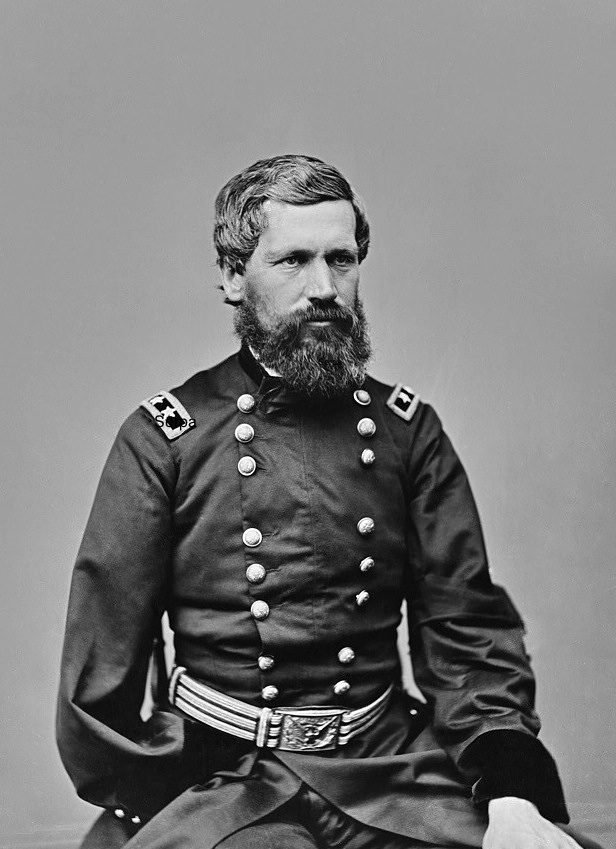
America has long been known as the land of opportunity. Many Americans still believe that if you work hard enough you can accomplish anything. During the late nineteenth century, there was a Union officer who epitomized this spirit as he strove to help assimilate one group on the fringe of American society. He wanted to help this group not only survive but also prosper in America. He was known as the “Christian General” for his strong adherence to Christian principles. His name was Oliver Otis Howard. This is the story of his efforts to provide African-Americans with full access into American culture and all its possibilities.  

Oliver Otis Howard’s early life was a living testimony that anyone could rise beyond his or her circumstances to achieve success. He grew up in humble surroundings in the hamlet of Leeds, Maine, only twenty-five miles from the state capital of Augusta. He graduated with honors from Bowdoin College in Brunswick, Maine before entering the United States Military Academy at West Point. After graduating, he saw action against the Seminoles in Florida. At one point, he was sent as a peace envoy to Chief Billy Bowlegs, successor to legendary Chief Osceola. He briefly returned to West Point to teach mathematics until the outbreak of the Civil War took him back to the regular ranks of the Union army. His courageous defense against a Confederate attack at the battle of Fair Oaks in 1862 resulted in the loss of his right arm and the awarding of the Congressional Medal of Honor. He quickly rose through the ranks, and by 1863 he commanded the Eleventh Corps. The corps had poor performances at Chancellorsville and in the initial engagements at Gettysburg. It was General Howard who rallied his withdrawing soldiers at Gettysburg and placed them along the strategic high ground, thereby enabling the Union’s ultimate victory in the battle. For his actions, he was voted the prestigious “Thanks of Congress,” an award only given to fifteen men in the Civil War. He spent the last years of the war serving under General William T. Sherman in the western theatre. He eventually became commander of the Union Army of the Tennessee. As the war closed, however, Oliver Howard was given new work that filled him with hope for the future.

In the war’s aftermath, Oliver Howard’s Christian beliefs helped transform him from a warrior to a peacemaker. He had a vision of what America could be, and the first step centered on the assimilation of African-Americans. There had to be a new relationship between whites and the former slaves. Howard was convinced that African-Americans needed to learn how to survive as free citizens. His rhetoric on the subject convinced his superiors that he was the man to see the task of assimilation through to completion. On May 12, 1865, Secretary of War Edwin Stanton appointed him as the Commissioner of the Freedman’s Bureau. Howard vocalized his belief “that God led me and assigned that work to me.”

The War Department created the Freedman’s Bureau in March 1865 in order to provide services to the newly freed slaves. Howard embraced the bureau as one of the most important sources for opening doors for African-Americans into American culture. He sought to do all he could to give African-Americans the same levels of opportunity available to whites. He led efforts to fund and build hospitals to provide medical services to black patients and training to black medical professionals. One of the most successful was the Freedman’s Hospital in Washington, D.C. It was there that African-American doctors received medical training. The “Christian General” also strove to offer equal legal protection to African-Americans. He created a system of quasi-courts under the bureau’s jurisdiction to help judge the disputes between whites and blacks. The courts also gathered funds to compensate former slaves for their labor or to seek out their family members who had been sold to other states. The courts even offered to draw up labor contracts between the former slaves and masters. Each of these actions allowed African-Americans to gain further entrance into American society.  

These accomplishments were momentous, but one of Howard’s greatest achievements came in the realm of education. He understood that the Freedman’s Bureau could not always provide for the former slaves. Sooner or later, African-Americans had to care for themselves. The best way for them to do so was to obtain higher education. Previously most schools were associated with religious organizations. Churches had provided the teachers. Now other types of schools were appearing all over the South to teach reading and writing. Howard strove to see such progress spread throughout the African-American community. Under his administration, the Freedman’s Bureau created nearly four thousand schools and trade schools. The foremost of these was a place that still proudly bears Howard’s name — Howard University in Washington, D.C. It continues to provide higher education for African-American men and women. Howard himself served as the university president from 1869-74. He not only offered education to blacks but also to poor whites. In 1895, he helped create Lincoln Memorial University in Cumberland, Tennessee to serve the needs of poor, mountain whites. He saw great success as the head of the bureau, but he was not able to contain the internal and external threats to its success.

Oliver Howard tried to deal justly with white Southerners as well as black. His bureau provided supplies to both groups after the war. Unfortunately, some of his administrators failed to have the same conciliatory view toward their former enemies. Some administrators proved overly zealous in their desire to humiliate the South. One provocative administrator in South Carolina even insisted on issuing his directives from a tree known as the Emancipation Oak, a tree from which South Carolina slaves had been informed of their freedom. Administrators also took advantage of their position to appropriate the homes of affluent Southerners for bureau purposes. In addition to Northern corruption, the bureau faced opposition from Southerners who continued to see African-Americans as inferior. Howard struggled on in spite of these challenges, but support from American leaders began to wane. By 1872, the Freedman’s Bureau had been shut down. Nevertheless, Oliver Howard continued to pursue his dream of an America that was home to all.

After he left the Freedman’s Bureau, Oliver Howard decided to help another group adjust to American life, the Native American tribes. In March 1872, President Grant sent him to the legendary Fort Apache in Arizona to negotiate peace with the Apaches. It was a demanding challenge. Despite a number of initial setbacks, he finally succeeded in meeting with several Apache leaders and escorted them east on a tour of American cities. He then returned to Arizona, and in late September, he met with the famed Apache war chief Cochise. Howard was able to reach an agreement with the Apache chief and helped bring a temporary peace between the whites and the Indians. In 1874 he was transferred to command the Department of the Columbia, which included Idaho, Oregon, Washington and Alaska. Despite desires for peace, he fought against various Indian tribes, such as Chief Joseph and the Nez Perce, and was present for the chief’s surrender in which he promised to “fight no more forever.” Howard continued to remain invested in assimilation efforts during his service as the commandant of West Point, as the commander of the Division of the Platte and finally as the commander of the Division of the East. He maintained a belief in bettering lives until his death in 1909 at the age of 79.

Oliver Otis Howard’s life was spent ensuring that the “American Dream” became attainable for all who lived throughout the land. Despite being a man of war when necessary, Howard’s real heart was for helping his fellow countrymen. He believed that any American had the potential to lift himself up from his current position and enjoy “the blessings of a civilized life.” Howard believed the best way to secure such blessings was to provide opportunities and to offer Christian charity to those in need. Both actions would enable individuals to gain full access into the very fabric of American life. With that entrance, an individual, no matter his or her background or ethnicity, could help advance the cause of liberty held dear by all Americans. That was the vision Oliver O. Howard pursued throughout his life — a vision that has since led to opportunity, improvement and, most importantly, hope for thousands.

2 Comments

Filed under Uncategorized

His Finest Hour

Image

When becoming a member of the United States military, each individual, officer or enlisted, swears an oath to “support and defend” the Constitution “against all enemies, foreign and domestic.” This is a tradition that stretches back to the very founding of the country, as the Constitution is a direct expression of the country’s core principles. Near the end of the American Revolution, an American commander was faced with having to choose between the ideals he was fighting for or the potential ruin of his country. The country’s fate rested on his decision. He was General George Washington. This is the incredible story of his greatest personal triumph, which did not occur on the battlefield, but when he dissuaded his fellow American officers from overthrowing the duly elected American government.

Throughout the American Revolution, George Washington resisted the temptation to become a military dictator. When he accepted command of the Continental Army in 1775, he swore allegiance to the Continental Congress and faithfulness to the American cause. He even refused to be paid for his services. He only wanted to serve his country. Over the years, he often had to mediate disputes between the army and the Congress over matters of payment. He also had to put down several mutinies among the enlisted soldiers. He even remained in loyal service when there was a plot to replace him with General Horatio Gates in the winter of 1777-78, known as the Conway Cabal. Each of these actions proved his ultimate loyalty was to America and his belief that Congress was the country’s true representative body. He believed that the military had to be subordinate to the civilian government. As the war was winding down, however, his commitment was put to the test.

The American Revolution seemed all but over as the year 1783 began. The surrender of Lord Charles Cornwallis’ British army at Yorktown, Virginia in October 1781 had resulted in peace negotiations in Paris, France. A preliminary peace treaty was signed in November 1782, and a permanent treaty was signed in January 1783. Back in America, meanwhile, Washington had moved his army from Virginia to New York. He set up headquarters in Newburgh, New York in the Hudson River valley. With the war nearly over, Washington, like most of his soldiers, anticipated returning home. His hopes for a peaceful retirement were threatened by the bleak state of America though. The country’s first constitution, the Articles of Confederation, had been in effect for nearly two years. Fearing a return to the offensive taxation policies of the British prior to the war, the Confederation Congress was denied the power to tax. That power rested with the states, but by this time, many states were near bankruptcy. Without money, the national government could not repay foreign and domestic creditors, nor could it adequately fund the country’s defense in wartime, or even peacetime for that matter.

George Washington watched as many Continental Army officers demanded payment for their military services. He knew the government lacked the money. He sympathized with his officers though. The government owed some of them nearly six years’ worth of back pay. In an effort to appease the officers, the government had earlier promised a half-pay lifetime pension to them. Now that promise appeared hollow. Attempting an intercession, General Washington petitioned Congress to provide some money for the officers’ use as they returned home. He knew Congress had to do something or the officers would likely revolt. In May 1782, he had received a letter from an American colonel asking him to assume power himself and stabilize the government. Washington wrote back and told the colonel he would not participate in one of the “greatest mischiefs that can befall my country.” He further advised the colonel “to banish these thoughts from your mind, and never communicate…a sentiment of like nature” again. His words made clear that there was no greater friend to American republicanism than himself. As the crisis mounted, he realized he would have to decide to whom he owed greater loyalty.

In early January 1783, the officers tried one more time to reach a settlement with Congress. Three officers travelled to Philadelphia to petition that body to either provide the officers with six years’ worth of full pay or with the pension. The officers found support among several Congressmen, including Alexander Hamilton and Benjamin Lincoln, but Congress still rejected both offers. In the wake of the officers’ rejection, there soon began to be whispers of a military coup. A meeting to discuss such plans was scheduled for March 10, 1783. Before the officers could assemble, however, Washington received news of the gathering and cancelled it. He then called his own conference for March 15 and invited all of his officers to attend.

On that March day, America’s future lay in Washington’s hands. He arrived at the meeting and stood in front of his fellow officers in a building fittingly called the Temple of Honor. As he looked at the assembly, he gave an impassioned address. He urged them not to take any action against Congress. He was not a skilled public speaker, and the officers seemed in no mood to compromise. It looked as if his own words had little effect, so Washington decided to appeal to his officers by reading a letter from a sympathetic Congressman. He pulled it out and prepared to read it. The officers stood motionless as they waited to hear what the letter said. Instead of reading it though, Washington stared at the page for several long moments. Then, to everyone’s shock, he pulled out a pair of glasses. The officers murmured amongst themselves. They had never seen their commander wear glasses before. Only his closest aides knew he needed them. Glasses were for preachers or for revered statesmen like Benjamin Franklin. To his men George Washington was the consummate warrior and still, at age fifty-one, a relatively young man. Washington could see their astonishment and replied, ”I have already grown gray in the service of my country. I am now going blind.”

Those few heartfelt words did what his speech could not — it ended the threat of military action. It struck to the heart of the sacrifices made for the American cause. Some officers later remembered that many of them had tears in their eyes. They realized in that moment that Washington had never lost sight of what he had been fighting for. He had argued with Congress many times, but he had never forsaken his duty to that body or to the nation at large. He would not allow anyone, not even his own men, to destroy the dream of American self-government at its moment of triumph. The American republic would not fail as others had. He was certain of that.   His opposition to a military coup was proof that he would not play the role that Julius Caesar and Oliver Cromwell had played and that Napoleon would later play. He did not want power. All he wanted was to go home to his plantation at Mount Vernon and to his wife Martha.  

The “Newburgh Conspiracy,” as it came to be known, was over. The officers agreed not to take any action against Congress. They allowed Washington to work out a deal acceptable to all. Rather than half-pay pensions for life, each officer received a lump sum worth of five years’ pay. Only a few weeks later, a French ship arrived carrying the news of the signed peace treaty. At last General Washington could declare an end to hostilities with Britain. He remained outside of New York City until December, at which point the last British soldiers left and he entered the city. It was not long after that he gathered his officers together to deliver a farewell address. He then made his way to Congress and formally resigned his commission as commander-in-chief. With his duties done, he arrived home at Mount Vernon on Christmas Eve, December 24, 1783.

George Washington’s refusal of dictatorial authority showed how far he would go to protect America’s republican government and the idea of freedom. He was willing to stand up to those he trusted in, served with and depended on most if they threatened those ideals. He expressly told them all Americans owed faithful allegiance to the country they had created. Had it succeeded, the “Newburgh Conspiracy” would have turned America into a mirror image of Rome. Instead, thanks to Washington, the elected civilian government maintained control of the nation. To rephrase Winston Churchill, “This was his finest hour.” George Washington was a man who truly lived his personal oath to “support and defend” his new and beloved country “against all enemies, foreign and domestic.”

1 Comment

Filed under Uncategorized

Destined

Image

In the biblical book of Esther, Esther’s cousin tells her that perhaps she was born in order to help save the Jewish people from destruction, which in fact she did. There are some people who seemed born for a specific purpose — they have a destiny. During the early part of the twentieth century, there was an American Army officer who seemed destined for his role in the modern age of combat. He helped to usher in a new form of warfare and spent his life advocating its superior qualities. He will forever be linked with a fundamental transformation in the art of war. His name was George S. Patton, Jr. This is the story of how his early experience in tank warfare prepared him for the grand purpose he would fulfill in World War II.

From the beginning, George Patton appeared destined for a soldier’s life. Both his actual grandfather, who died in battle, and his step-grandfather fought for the Confederacy in the Civil War. His father attended the Virginia Military Institute. Patton grew up listening to personal stories of Civil War battles. With dreams of martial glory of his own, he attended VMI for a year before transferring to the U.S. Military Academy at West Point. There he struggled academically but excelled in sports, especially football and track. He also mastered “Drill Regulations,” rising to become Corps Adjutant during his senior year. Following graduation, Patton was stationed at various army posts and also participated in the 1912 Stockholm Olympics in the pentathlon. In 1916 he was part of the expedition led by General John J. “Black Jack” Pershing against Mexican bandit Pancho Villa. In one fight, he personally killed two Mexican bandits with his trademark ivory-handled pistol. Pershing was greatly impressed by the young officer and marked him as a rising star.

As Patton was gaining the trust of his superiors, war was raging throughout Europe.   By late 1916, Britain and France had been stalemated in trench warfare against Germany for nearly two years. A new weapon had been created to break the stalemate — the tank. Despite the best efforts of the British and French, the Germans remained entrenched throughout northern France. Then in April 1917 the U.S. entered the war. “Black Jack” Pershing was once again placed in command of American forces. As commander of the American Expeditionary Force (AEF), Pershing selected Patton as one of his staff officers. Arriving in France, Patton served as commandant of headquarters. The work soon bored him, and he appealed to General Pershing for a field command. Pershing offered him a choice between an infantry brigade and the newly created American Tank Corps. Sensing a transformation in battlefield tactics, Patton chose the tanks.

At the time the new corps existed in name only. There was only one tank, and it was primarily used for experiments. Additionally, there was only one other man in the corps besides Patton, corps commander Brigadier General Samuel Rockenbach. Patton would not let these obstacles overcome him. His first objective was to personally master tank operations so he could teach those operations to the new volunteers enlisting in the corps. He used British and French training centers to great effect. Returning to corps headquarters, Patton was placed in command of the first brigade of tanks with the rank of lieutenant colonel. After observing both British and French tanks during training, he decided that the lighter French Renault model was better for American use. He took delivery of the tanks and began training his soldiers in the new type of warfare. He earned a reputation as a tough disciplinarian, but his soldiers took pride in the rigorous training to which they were subjected. Their commander, however, began to fear that the war would be over before he could see action.  

That fear would not be realized. American commanders were preparing to launch an attack against the Germans at St. Mihiel, France. The American strategy included plans for the tanks to lead and cover the advancing infantry. The attack began on the morning of September 12, 1918. Patton watched as his tank crews moved forward. To his frustration, many of them bogged down in the mud. Patton was determined that his soldiers would not be defeated by nature. Afoot, he rushed to the forefront of the attack and waved his ivory-handled pistol in the air to rally the few tanks left. Then he personally led them toward the German lines. Patton and the tanks successfully broke through the German fortifications.

At this point in the battle a noteworthy meeting took place. Patton was advancing with his force when he came upon an infantry unit commanded by Brigadier General Douglas MacArthur. The two future heroes of World War II briefly conversed before they turned their attention back to their respective commands. Patton moved on with his tanks to capture a nearby town. Returning to corps headquarters, however, he was severely reprimanded for exposing himself to danger and excessive eagerness in pursuing the enemy. Unfazed, Patton apologized, but the very next day he led an attack that penetrated German defensive fortifications known as the Hindenburg Line. George Patton was well on his way to becoming an American hero.

On September 26, 1918, Patton’s brigade of tanks was once again ordered to lead an attack in what came to be known as the Argonne offensive. As in the attack on St. Mihiel, Patton personally led the assault on foot. His tanks were not able to do much damage, but Patton refused to slow his attack. He and five tanks were moving through a break in the German lines when he discovered nearly three hundred Americans pinned down by a German machine gun. According to his own later account, he was on the ground when had a vision of his grandfather telling him Pattons were not cowards. Pushing himself up, he finally convinced five of the soldiers to join him in a charge against the machine gun. It was basically a suicide mission and proved fatal for three of the soldiers. Patton himself was severely wounded when a bullet tore through his upper thigh. He went into immediate shock but would not leave the field until he made his report to headquarters. As he was making it, he passed out and was finally moved to a hospital. He was not a happy patient, however, and hoped to recover enough to fight the Germans one more time. Finally, he left the hospital without authorization in order to rejoin his unit. It was too late though. He arrived on November 11, 1918, just as the Germans were signing the armistice. He thought, and not for the last time, that his days of combat were over.

Patton’s fortunes seesawed over the next two decades. On January 1, 1919 General John Pershing awarded him the Distinguished Service Cross for his actions in the Argonne. Such an award for bravery could not keep him from being affected by the army’s demobilization with the signing of the Treaty of Versailles. His rank was reduced to major, his tank brigade shrank to a token force, and military appropriations fell to five hundred dollars. He remained an outspoken advocate for tanks and for a strong military. His arguments often alienated his fellow officers. He labored in virtual obscurity during the interwar years refining tank tactics and utilization. Though in reality his efforts would ultimately reap huge rewards, it seemed for now that his career was over. The outbreak of World War II changed everything.

General Patton was by now considered by many to be the preeminent authority on tank warfare. One of those who held him in high esteem was General George C. Marshall. He had appointed Patton to command an Armored Division during a series of war games in the summer and fall of 1941. After the U.S. entered World War II in December 1941, Patton was placed in command of the forces that captured Casablanca and Tunisia, known as Operation Torch, and later the island of Sicily. His career suffered a setback when he was disciplined for inappropriate comments while in England during preparation for the invasion of France. Nevertheless, Eisenhower knew Patton was his best battlefield commander and restored him to action shortly after the Normandy invasion. He led his famed Third Army across France, came to the rescue in the Battle of the Bulge, and struck hard into the heart of Germany. There was no stopping the world’s greatest “tanker.”

In May 1945 World War II ended, and Patton was a national hero. After the war he published his memoirs and served as military governor of Bavaria. As before, his outspoken nature resulted in clashes with his superiors. This time it was his comments regarding war with Soviet Russia. It seemed that George Patton was a man of war with no wars left to fight. In an ironic twist, the man who had spent much of his life in harm’s way died on December 21, 1945 from complications related to an auto accident. He was buried in Luxembourg with military honors.

George Patton seemed to be living proof that some people are created for a certain purpose. His heritage, his nature, his training — all pointed toward a life devoted to the combat arms. No other life would have ever fit George Patton. From a different perspective, had it not been for Patton, it is possible that American tank warfare would have evolved much slower and quite differently. It was Patton who transformed the tank from an infantry support weapon into a true offensive weapon. He found his calling in leading American soldiers into combat. He spent his life searching for glory, and he found it with the new American “cavalry.” He is as admired and respected today as he ever was. At West Point, his statue proudly stands flanking the parade ground. His methods, tactics and utilization of tanks are still studied today. It is clear George Patton was a man of destiny — destined to service, destined to lead, destined to greatness.

2 Comments

Filed under Uncategorized

Winds of Change for the Comanche

Image

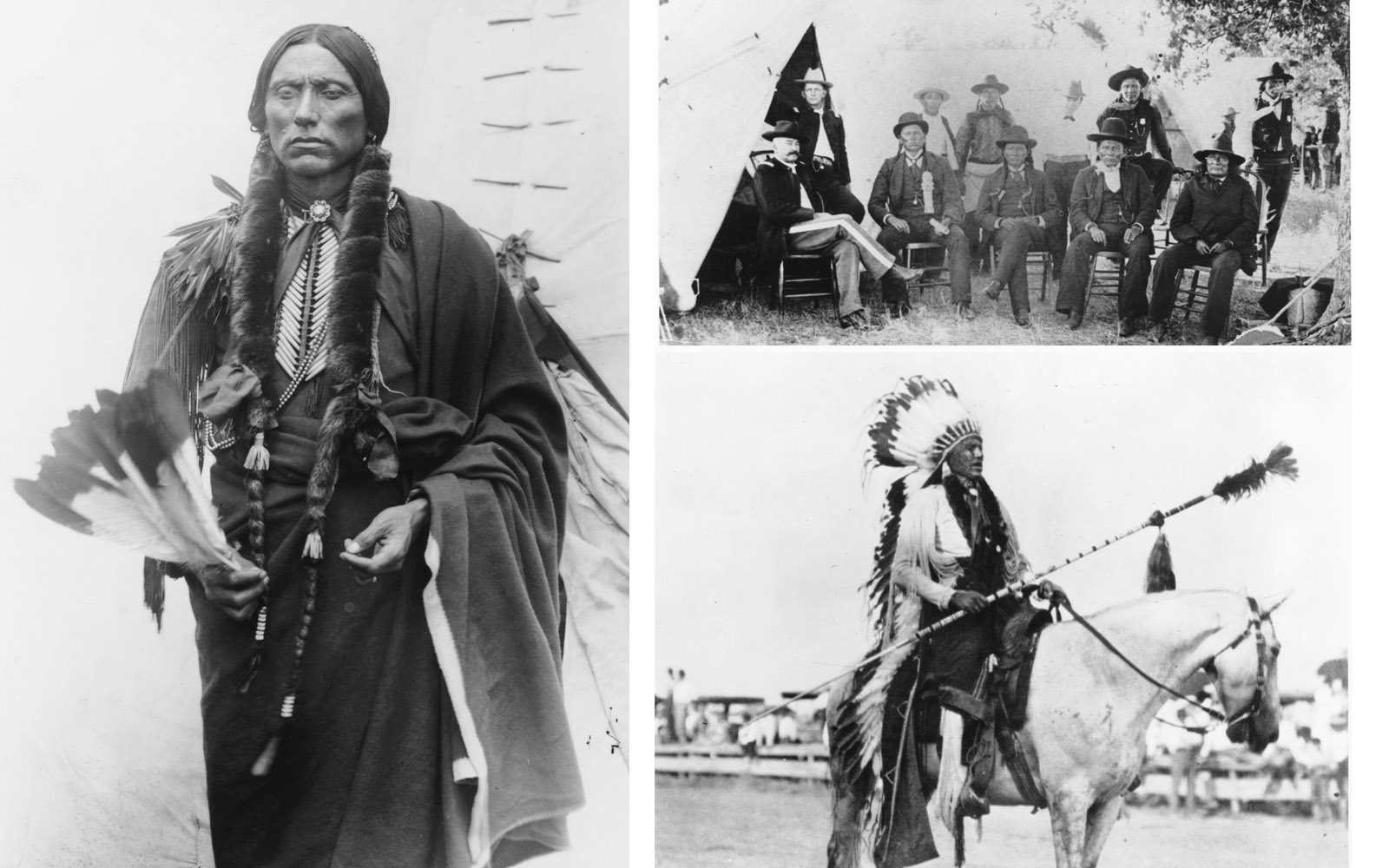
In studying the past, we often hear about an individual’s or group’s “way of life.” It is simply how one chooses to live his or her life, and it absolutely defines the person or group. When that way of life is threatened, there seems to be only two choices — give in and adapt or fight. In the late nineteenth century, the U.S. government set out to conquer the last of the western Indian tribes and force them onto reservations. Such subjugation meant an end to the nomadic lifestyle those Native Americans had previously enjoyed. Some chiefs resisted; some immediately gave up and gave in to the overwhelming might of the government. One of the chiefs who chose defiance was the leader of the fiercest tribe to rule the southern plains. When he could no longer resist, he adapted without giving in. He was a great warrior, and his name is still remembered today. He was Quanah Parker of the Comanche tribe. This is the story of his fight to protect his way of life, regardless of what it took.

Quanah Parker was a man of two worlds, but his heart always belonged to one. He was the firstborn son of Peta Nocona, a Comanche chief, and Cynthia Ann Parker, a white captive later adopted into the tribe. Quanah’s early years were spent on the vast prairies of the Texas frontier learning to ride and participating in raids on the Texas settlements. The Comanches were the rulers of the south plains, striking fear in the hearts of whites and Indians alike. They came to be known as the finest horsemen and mounted warriors ever. Quanah himself was destined to become the youngest Comanche war chief. As he grew up, he watched settlers move onto Comanche land. Like other chiefs, he resolved to defend the wild and free nomadic life that his people had enjoyed for centuries. He increased his harassment of settlements, including the capture of women and children for ransom.   Texans tried to contain the Indians, but their efforts were not enough. When the Civil War ended, the outcry persuaded U.S. officials the time had finally come to completely resolve the Indian problem.    

The government initially tried to reach a settlement with the Indians through peaceful means. In 1867, the U.S. government negotiated a treaty with the Comanche bands. Many of the bands agreed to move to the reservation, but one treaty could never bind all the independent tribes. Quanah’s Quahada band refused to sign. They continued their marauding ways. Over the next few years, some of the reservation Indians, unhappy with the confined conditions, left the reservation and joined Quanah’s warriors in attacking and killing settlers. The Indians also attacked white hunters who entered Indian land and who slaughtered large numbers of buffalo. In one famous fight, Quanah launched an attack on a community of buffalo hunters at Adobe Walls in the Texas Panhandle. Quanah hoped to drive the whites out of the village, but with their long-range rifles, the hunters inflicted losses on them, even wounding Quanah himself. The warriors finally had to withdraw. Though ultimately unsuccessful, the attack demonstrated that the Quahadas were still a lethal threat and that military action was required.

In late 1871, the U.S. government decided to send the U.S. Army into the region. It was hoped that a military presence would end the threat posed by Quanah and the last bands of Comanches. A military expedition made up of the 4th U.S. Cavalry was ordered to the edge of the Comanche’s ancestral lands. The soldiers arrived at the outpost of Fort Richardson in the town of Jacksboro, Texas. Not long after arriving, the soldiers succeeded in capturing several Kiowa chiefs, allies of the Comanches. The Comanches themselves still remained free though, and the soldiers began making preparations to go after them. Overseeing these preparations was the expedition’s commander, Colonel Ranald S. Mackenzie. A veteran of the Union army, the Indians knew him as “Bad Hand,” due to his wounded hand. President Ulysses S. Grant called him the army’s most promising young officer. Once preparations were completed, he received permission from General William Tecumseh Sherman to engage the Indians. He advanced the 4th Cavalry into the high plains of the Llano Estacado in what is today northwestern Texas and eastern New Mexico, deep in the heart of Comanche country.

Quanah and his warriors were waiting for them. The various belligerent bands had reached a consensus that the army would have to defeat them before they agreed to submit to the U.S. government. To defeat the Indians meant fighting them on their own ground. Mackenzie’s soldiers were nervous at the prospect of entering Comanche territory, but they followed their bold leader. As the days passed, Mackenzie’s forces closed on the warriors, but the Indians managed to escape on their superior horses. Tired of the pursuit, Mackenzie’s force camped in a canyon well known to Quanah’s warriors. That night the warriors snuck into the camp and stampeded the horses.

Quanah’s raid against the cavalry was a serious blow, but Mackenzie failed to accept defeat. To the Indians’ shock, he marched his soldiers towards one of the Indians’ favorite campsites. The move threw the Indians into pandemonium. They had to act quickly. The women, children and elderly managed to escape while Quanah led his warriors in a countermove against the cavalry. Quanah circled throughout the territory, and Mackenzie doggedly pursued him. The two sides engaged in a series of battles, but neither side dealt a fatal blow to the other. Quanah succeeded in preventing the capture and subjugation of his Quahada band, but he could not run the cavalry out of Indian country. The expedition remained in the field for several more months. Mackenzie’s troops returned to their base of operations when winter conditions set in; however, the fight to defeat the Indians was far from over.

Over the next three years, both sides fought a series of engagements. Then in 1874, the U.S. Army consolidated its forces and went after the Indians. Quanah once again faced Ranald Mackenzie, now a general. The two great warriors chased each other across the rolling prairies of Texas and fought throughout the rugged Palo Duro Canyon, a Comanche stronghold for generations. Despite Quanah’s elusive maneuvering, the army began to deprive the Indians of the necessary provisions to survive on the frontier. The buffalo were continuing to disappear, and now the army moved against previously undetectable Indian camps. The soldiers destroyed the safe haven camps and hunted down the survivors. They successfully captured large numbers of Indian horses, the lifeblood of the Comanche way of life. At one point in the campaign, Mackenzie’s forces captured over one thousand horses. The expedition’s goal of Indian subjugation was slowly coming to pass. By early 1875, the outlook was grim for Quanah and his band. Unbroken in spirit, he was loath to give up but began to see no viable alternative. As a respected chief, he realized that he could not lead his people to destruction. Recognizing the necessity of adapting to the new reality, he led his band to Fort Sill, Oklahoma and surrendered to his old adversary, General Ranald S. Mackenzie. Quanah would now live as a reservation Indian.

For the rest of his life, Quanah Parker, as he came to be known, worked to create a new way of life for his people. Just as his mother had adjusted to survive in the Comanche world, he would now adjust to survive in the white world. Other Indians failed to adapt as well as Quanah, but he tried in various ways to inspire his people. He refused to simply become a ward of the state. Not long after he surrendered, Quanah was selected as the chief spokesman for the Comanche tribe. With great intelligence, he not only spoke for his people but also actively advocated for them. His new position allowed him to lead some religious rituals, such as the use of peyote, and caused him to spurn others, such as the celebrated Ghost Dance. He helped finalize a treaty with Charles Goodnight to open up Comanche territory to cattle drives. Quanah also tried to lead his people to prosperity through the raising of cattle on their own. He himself established a ranch and eventually became a respected Indian statesman. Through his mixed heritage he attained great credibility, admired and trusted by both his native tribesmen and the whites. He even met with national leaders, including President Theodore Roosevelt. By the time he died in 1911, he had been a chief and a true leader in both his native and his adopted world.

Quanah Parker’s life proved that a person or group could adapt their way of life without giving up. He went from the wild and free life of a plains warrior to the peaceful life of a tribal leader and statesman on a reservation. He saw the old way of life was gone, but he refused to allow himself or his people to give in to despair. In both war and peace he sought to better the condition of those for whom he was responsible. Quanah grasped that all life had to be fluid and that individuals must conform their lives to the changing circumstances around them. If they refused to change, extinction would be inevitable. He concluded it was more important for Comanche culture to survive. Quanah Parker fought his whole life — first to protect the old ways and later to survive in the new. He stands today as an example of bending to the winds of change but never breaking.

1 Comment

Filed under Uncategorized

Into the West

Image

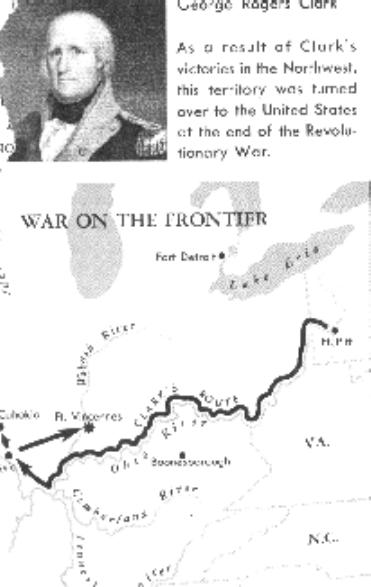
When opportunity knocks at the door, one should recognize it and take full advantage of it. Opening the door and embracing the opportunity presented can have monumental consequences not only for the individual but also for the group he or she represents. During the American Revolution, there was one American officer who used the war as an opening to greatly enlarge the western frontier. The officer was committed to liberty and desired to see the western lands freed from British rule. Many Americans considered his campaign to be a sideshow, but his actions had profound consequences for the United States. His name was George Rogers Clark. This is the story of his military campaign to liberate the Old Northwestern territory from British occupation.

As a young man, George Rogers Clark was always fascinated with the wild and unsettled western frontier. He was born near present-day Charlottesville, Virginia, not far from the birthplace of Thomas Jefferson, who would be a friend to Clark all of his life. Growing into adulthood, he left home to explore the western wilderness of Kentucky, at the time a part of the Virginia colony. Warfare soon erupted between the frontier settlers and the Indians in “Lord Dunmore’s War,” named after Virginia’s royal governor. Clark served in the Virginia militia and aggressively fought against the Indians. After the fighting ended, he returned to Kentucky with plans to settle there, but news of Lexington and Concord altered his plans. He examined the military situation and became convinced that the war provided a chance to expand the western limits of the country.

An ardent patriot, George Rogers Clark was determined to lead the region in resisting the British. In June 1776, he was elected as Kentucky’s first representative to Virginia’s new state government. Arriving in the state capital of Williamsburg, Clark presented two petitions. One requested military supplies like gunpowder and another requested that Kentucky join the state as an independent county. Both petitions were approved. Clark returned to Kentucky and was commissioned an officer in the territory’s first organized militia regiment. In charge of the region’s defense, Clark retaliated against the Indians for attacks made against the settlers. He wanted to do more than just fight Indians though. He proposed to Virginia’s government that he organize and lead an expedition to invade the Ohio River country.

George Rogers Clark understood that the presence of the British along the northwestern border prevented the country’s future expansion. By launching a campaign to claim the territory, he could eliminate the threat of a British invasion from that direction and secure that new land for the United States. Virginia’s leaders agreed and appointed him an officer in the Virginia militia with the responsibility of overseeing the campaign. Returning to Kentucky, Lt. Colonel Clark gathered men and supplies for the expedition. On May 12, 1778, accompanied by less than two hundred men, he set off to capture the Illinois territory.

Travelling down the Ohio River, the expedition’s first objective was Kaskaskia, situated on the banks of the Mississippi River. Clark decided it would be too dangerous to approach the town by water, so he led his men overland. They arrived outside the town on the evening of July 4, 1778. In a surprise attack, Clark captured the town, its fort and the town’s governor. After securing the town, he sent a delegation of townspeople to nearby Cahokia and Vincennes. Like Kaskaskia, both towns swore allegiance to the Americans, which gave Clark complete control of the Illinois territory. Clark also negotiated with the local Indian tribes and with the Spanish governor of Spanish-controlled Saint Louis. In December 1778, however, he was apprised that the British had captured Vincennes. Clark immediately set out to reclaim the city.

In early 1779, Clark gathered his forces and marched on the British garrison. The British soldiers were commanded by Lt. Colonel Henry Hamilton, known as the “Hair-buyer” for his practice of paying Indians for the American scalps they collected. To Hamilton’s complete shock, Clark’s army made a daring winter march over freezing rivers and arrived outside the town by mid-February. Clark ordered his men to attack and liberate the town first before they advanced on the British fort. The Americans soon had the fort surrounded and commenced firing on it. As the battle raged, the Americans succeeded in capturing a number of Indians, who were outside the fort. Clark finally ordered the Americans to cease firing and sent a messenger to advise Hamilton to surrender. When Hamilton refused, Clark ordered his men to kill their captives in sight of the fort’s defenders. Horrified by Clark’s actions, Hamilton surrendered. He and twenty-six others would ultimately be imprisoned in Virginia. On February 25, 1779, Clark watched as the Stars and Stripes were raised over the British fort. Word of the triumph rushed back east, and George Rogers Clark was heralded as a national hero.

Vincennes had reverted to the Americans, but fighting still raged throughout the Ohio River valley. British soldiers and Indians continued to attack frontier settlements. Clark and his soldiers repelled these attacks, however. At the same time Clark, soon to be a brigadier general, built new forts and towns, including Louisville, Kentucky, to solidify American control. He even contemplated striking the British bastion of Detroit, but lack of resources and manpower prevented the assault. Failing to be discouraged, however, he monitored the frontier as British and American diplomats negotiated terms for peace. On September 3, 1783, the Treaty of Paris was signed by the United States and Great Britain. Among its provisions, the treaty specified that the United States would extend from the Atlantic Ocean on the east to the Mississippi River in the west and the Great Lakes in the north. The Old Northwest, as it was called, was finally part of the new United States of America.

With the American Revolution finally over, George Rogers Clark sought out new opportunities for himself. In December 1783, only three months after the war’s official end, he was asked to explore the territory beyond the Mississippi River. He refused the offer, choosing to remain in the Ohio River valley instead. Over the next few years, Clark engaged in efforts to further open up the western frontier. Some of his appeals though were not well received. Specifically, when he agreed to join the French in expelling the Spanish from territories west of the Mississippi River, some considered his actions as tantamount to treason, and his reputation was ruined. He spent his last years trying to restore his name and was finally vindicated when he was extolled by his native Virginia for his military services. His hard life resulted in many physical ailments in his last years, exacerbated by his prolific alcoholism. On February 13, 1818, at age sixty-five, George Rogers Clark died. By the time of his death, another Clark had overshadowed this celebrated hero. Younger brother William Clark, along with Meriwether Lewis, in 1804 had helped lead the famed Lewis and Clark expedition to the Pacific Ocean — an expedition to open the West initially offered to George Rogers Clark by President Thomas Jefferson.

George Rogers Clark was a man who could see beyond the present and was willing to seize an opportunity. Without his vision and his actions, it is quite possible that the United States of today would look very different. The western frontier of his day is the valued present day states of Ohio, Indiana and Illinois. He fought the British for control of those lands. He opened the area up to settlement by Americans. He helped contain the Indian threat posed to the settlers headed toward those distant lands. He stands as one of the key players in the exploding growth of the United States in the late 18th and early 19th centuries. Most modern Americans know the name Clark only in association with the famous expedition across the American West; however, absent the older brother’s foresight, the younger brother’s quest might never have happened. George Rogers Clark should be gratefully remembered today. He saw a grand opportunity to increase America’s fortunes, and he took it.

1 Comment

Filed under Uncategorized

Aces High

Image

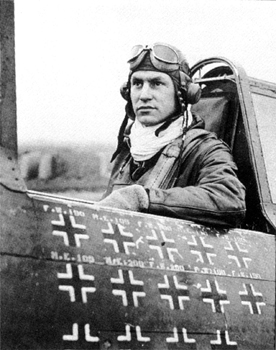
As Americans, we hold to the belief that everyone should have the opportunity to reach for the sky, regardless of his or her circumstances. Irrespective of background or parentage, success should depend only on a person’s own merits. During World War I there was a young American who was the son of poor immigrants but who, through dedication and hard work, had already risen above those humble beginnings to achieve some measure of national fame. With the outbreak of war, he turned his eyes skyward and eventually became America’s first great fighter pilot. His name was Eddie Rickenbacker. This is the story of his journey from junior high dropout to America’s Ace of Aces.

From his earliest days, Edward Rickenbacker seemed driven to overcome his present circumstances to achieve success. The third child of Swiss immigrants, Eddie grew up in the bustling city of Columbus, Ohio. Due to his family’s poverty, even as a young boy he worked to help provide for his family. After his father died when he was thirteen, he became the principle breadwinner for his mother and siblings, leaving school to support his family. Despite a lack of formal education, Eddie discovered he had a knack for mechanical things and for leadership. His fascination with machines led him to success as an automobile mechanic and later as a racer. In a country now obsessed with the automobile, his employers quickly recognized Eddie’s potential and chose him to drive their cars in the fledgling American sport of auto racing. He had found his niche. Even after suffering a severe corneal injury from a burning train ember that left a permanent blind spot in his right eye, he refused to give up the exciting life of a racer. Known around the racetracks as “Fast Eddie,” he was at the peak of his career and wanted nothing more than to become the national champion. It turned out, however, that God had other plans for him.  

The year was 1916 as Eddie reached the top tier of racing’s elite. An approaching storm darkened the horizon, however. World War I had already been raging for two years in Europe, and it increasingly impacted American life. In the racing world this meant the absence of new European racing cars and their European drivers. Some of the drivers Eddie had competed against were now serving their respective countries in a combat role. Eddie saw this, but he still remained determined to become America’s grand champion. His attitude changed when he paid a visit to England in late 1916. He observed the effects of war; more importantly, he had the opportunity to observe a new tool of warfare, the airplane. Returning home, he determined to serve America in the air if war was declared. He did not have to wait long. On April 2, 1917, President Woodrow Wilson asked Congress to declare war on Germany. Both the Senate and the House of Representatives immediately acted. The American Expeditionary Force (AEF) rapidly assembled under the command of General John J. “Black Jack” Pershing.  The Army rejected Eddie’s idea of a flying squadron manned by racecar drivers, but after he joined it did utilize his skills as a driver by assigning him to drive for the Army General Staff under General Pershing. He was soon off to war, though not exactly in the role he had envisioned.

As an American fighting man, or “doughboy” as they were often called, Eddie travelled first to England and then to France with Pershing and his staff. Although officially a member of Pershing’s staff, he had little contact with the American commander as Pershing conferred with other military commanders in Paris and established the American army’s front. Only a few stories record any interaction between the two; even Eddie later denied an association. While he may not have had much direct contact with General Pershing, Eddie did serve as the personal driver for an influential, and later controversial, American officer, Lt. Colonel Billy Mitchell, a leading proponent of air power. On several occasions, Eddie impressed Mitchell with both his driving skills and his mechanical skills, but his real desire was still to become a pilot in the Army Air Service. Convincing Mitchell he would be of more service in the skies, he was finally granted permission to enlist in the newly emerging branch of the American military.

Keeping his eye defect secret, Eddie immediately applied for a physical examination. He was deemed fit, despite being two years over the legal limit for pilots. Eddie completed pilot training after only seventeen days and was commissioned a first lieutenant. His first assignment was as a chief engineer to an air base commanded by Carl A. “Tooey” Spaatz, later a famed Army Air Corps general of World War II. Eddie was in charge of maintaining the base’s upkeep, but he wanted combat duty. Seeing his desire, Spaatz allowed him to enroll in gunnery training. Despite his eye injury, he excelled and received orders for advanced training before being formally assigned to the 94th Pursuit Squadron, the famed “Hat in the Ring” squadron. In his Nieuport biplane, he anticipated the chance to strike at the Germans, particularly the “Flying Circus,” first formed and led by Baron Manfred von Richtofen, the “Red Baron.”

Over the next few weeks, Eddie participated in several airborne missions and faced both German antiaircraft fire and German aircraft. When he went up, he often demonstrated the same aggressive spirit that had marked his career as a racer, in part inspired by the fact that he had yet to engage in actual combat with the enemy. Then, on April 27, 1918, he experienced the thrill of air combat for the first time. He and a fellow pilot received word of an approaching enemy plane. The two men rushed to their planes and quickly intercepted the German aircraft. Eddie and his companion opened fire and after a brief engagement, the plane was shot down. Returning to base, Eddie received his first confirmed kill. In response, he was decorated for bravery and promoted to flight leader. Throughout May he continued to undertake dangerous missions but also added to the number of enemy aircraft shot down, both airplanes and balloons. By the end of the month, he had his fifth kill, making him an ace. The status brought him not only national recognition but also a promotion to assistant commander of the 94th Squadron.

As assistant commander, Eddie continued to personally lead missions throughout the summer of 1918 as the Germans launched a final series of attacks to attempt to turn the tide of the war. Never the definition of a reckless pilot, Eddie’s new command responsibilities convinced him to be particularly vigilant on subsequent missions. His new restraint did not, however, keep him from shooting down two more enemy planes, bringing his total number to seven and making him America’s most senior surviving ace. As the war entered its last phase, Eddie assumed command of the 94th Squadron. On September 25th, the same day he assumed command, Eddie took off on a solo patrol. In his Spad 13, he spotted and engaged a flight of seven German fighters, downing two. By mid-October, he had eighteen kills to his credit, and in the final weeks of combat, he added another eight to his total. World War I officially ended on November 11, 1918. Eddie Rickenbacker returned home to a hero’s welcome with a grand total of twenty-six credited kills, rightfully dubbed America’s “Ace of Aces.” He was a champion at last.

After the war Eddie published his memoirs of the war, Fighting the Flying Circus, before briefly returning to his pre-war association with automobiles. He even founded his own company and bought the Indianapolis 500 racetrack. He knew all along that the future really belonged to air power though and became a staunch advocate for the manufacture of more planes. He closely resembled his old commander Billy Mitchell in that respect. In fact, Eddie would serve as a defense witness for Mitchell who, in his ardent advocacy of air power, was court-martialed for challenging the Army establishment. Always enamored with aviation, Eddie helped found and manage Eastern Airlines for over twenty-five years. In 1941, he barely survived a horrific and deadly crash of a DC-3. Despite open and acrimonious disagreements with President Franklin Roosevelt, he would go on to serve his country again in World War II. During the war he acted as an aircraft inspector for the U.S. government, travelled extensively on behalf of the government, and even survived a ditching in the South Pacific where he was adrift for twenty-four days. He died in 1973 and was eulogized by none other than Air Force Lt. General Jimmy Doolittle.

Eddie Rickenbacker’s life held many triumphs, but his climb to the pinnacle of success in so many different areas was a tribute to his drive and determination. One of his greatest moments came in 1930 when he was awarded the Congressional Medal of Honor for his actions on September 25th, 1918. Though given specifically for bravery and service to his country, that award also represented the true character and lifelong qualities of its recipient. Eddie Rickenbacker, from his humble origins, proved to all the heights one can attain with dedication and hard work. For Eddie and for us — the sky’s the limit.

1 Comment

Filed under Uncategorized

Before the Legend

Image

The lack of recognition and proper credit for a job well done should not keep a person from fulfilling his or her responsibilities. People want to know their efforts are appreciated, but that appreciation must be second in importance to accomplishing the task itself. In the early nineteenth century, frontier residents of Tennessee gathered together to fight the Creek Indians who had begun attacking settlers. A small group of frontiersmen took it upon themselves to track the Indians. When they returned from the harrowing mission, they were disappointed with the response to their efforts. One of the leaders of the frontiersmen was a man from the backwoods named David Crockett, not yet the legend he would later become. While many know of Crockett’s major exploits, this is the little known story of his first scouting mission and of the cold reception given his crucial report.  

From the beginning, David Crockett demonstrated a willingness to do his part, to use his abilities as best he could. Born to a poor pioneer family three years after the American Revolution ended, David’s early years were spent in and around his family’s tavern. His family’s poverty meant that David was hired out by his father to help earn money for the family. One of his first jobs exposed him to people’s self-serving ambitions when his employer tried to keep him beyond his term of service. Leaving his employer, he enrolled in a local school but quickly clashed with his schoolmaster. In response, he set out on a series of new adventures. After returning home, he married, had several children and moved his family further west from east Tennessee to the middle of the state, in that day a wild and untamed land. It was not long after he arrived though that war with the Creek Indians began.

David and his family had settled into their new life when the Creek Indians went on the warpath against the encroaching white settlers. On August 30, 1813, Creek Indians attacked and killed nearly five hundred settlers at Fort Mimms, Alabama. Word spread all over the western frontier, and like many others, David Crockett signed up to strike back at the Indians. Along with his fellow volunteers, he traveled to the banks of the Tennessee River and the gathering militia. Preparations were already underway for the advance south into Alabama. One of the most critical of those preparations involved finding out the Indians’ exact location. Several days after David arrived, a militia officer named Major Gibson arrived in camp and said that he was about to launch a scouting expedition. He was looking for men to go with him. It would be a hazardous assignment even for the hardy frontiersmen. David and another volunteer were selected and joined the rest of the scouting party. Numbering a total of thirteen men, the group crossed the Tennessee River into Indian country before splitting into two smaller groups.

David was assigned command of one group with instructions to talk to a local resident about the Indians while Major Gibson led the second group on a similar search. Gibson and Crockett agreed on a rendezvous spot, but Gibson failed to show up.   David soon grew impatient and decided to continue scouting ahead rather than return to camp and face ridicule for a fruitless mission. He and the other scouts travelled stealthily through Indian country, always on the lookout for a possible attack. The nights were particularly trying, but the small force pressed on in spite of their fear. As they travelled, they encountered several friendly Creeks. One of the Indians even entered the camp to inform Crockett of a Creek war party moving towards the main body of militia commanded by Andrew Jackson. Hearing the news, David instantly realized the potentially devastating impact such a surprise attack could have and hastily rushed his party back to the main force.

Arriving back at the main camp, David immediately reported to the commanding officer, Colonel Coffee, the facts of what he had discovered. Once he finished the report, he expected the colonel to take the proper defensive measures. To David’s dismay, Coffee dismissed the report as nothing but the imaginings of an over-eager, inexperienced scout. He refused to take action of any kind. Despite his lack of rank, even Crockett recognized the extreme peril and repeatedly tried to convince Coffee of the imminent threat. Coffee continued to ignore him until the next day when Major Gibson finally returned to camp with his own scouting party. Gibson’s report confirmed the story told by David and his scouts. With confirmation in hand, Colonel Coffee sent a message to Andrew Jackson relating the information. He also set about having his soldiers build and strengthen fortifications in anticipation of the Indians’ assault.

The impending attack never came, and Andrew Jackson soon launched his own attack against the Indians. Ultimately, David would be involved in many of the battles and would earn a reputation for courage and dependability. In his later years, he would remember and reflect on his military service, including his first scouting mission and its aftermath. In his autobiography, he described how he interpreted Colonel Coffee’s dismissal of his own report and acceptance of Major Gibson’s. Though unfair, he reasoned it was because he was a mere private whereas Gibson was an officer, a position of authority. He knew he had done his job well even though neither recognition nor appreciation ever came of it. The experience jaded Crockett’s opinion of military officers, but it did not stop him from even greater acts of service to his country.

After his service in the Creek War ended, David returned home to Tennessee. He remained filled with a pioneer spirit and explored throughout southern Tennessee. He became a leader respected among the common people of the state. He served as both a local and state politician before he was elected to the United States House of Representatives. He served several terms in Congress before he went in search of new adventures, this time in the Mexican province of Texas. Leading a band of fellow Tennesseans, David joined the fight for Texas independence. In early 1836, David Crockett became a volunteer in the Texas army and allied with William B. Travis and Jim Bowie in defending the Alamo against the Mexican army under General Santa Anna. He died a hero’s death in the final assault on March 6th.

David Crockett’s life was characterized by his spirit of volunteerism — first, in the military; then later as a local, state and national leader. Unsurprisingly, it is as a volunteer fighting for liberty that he is most remembered. While just a young scout he learned a valuable lesson — that fulfilling your responsibilities, doing your job right, is your real objective — not the recognition, credit or even praise for your efforts. For his final sacrifice in Texas, Crockett did eventually achieve the gratitude and recognition that he had long sought. He served his country faithfully and provided an example for all posterity.

2 Comments

Filed under Uncategorized