Category Archives: Uncategorized

A Beautiful Mind

images-1

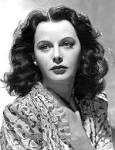
There used to be a misconception in our society that a beautiful woman could not have a brain. It was assumed the two were mutually exclusive and any success she achieved was due to her looks. This idea seemed most prevalent in Hollywood. During World War II, however, one Hollywood actress proved there was more to her than a pretty face. She developed a new communication system to power torpedoes. She expected this weapon to turn the war in the Allies favor. While her idea was initially rejected, today that technology is an integral part of our daily lives. Her name was Hedy Lamarr. This is the story of how her creative genius first introduced the world to frequency-hopping.

Hedy Lamarr’s alluring beauty always seemed to overshadow her intelligence. Born Hedwig Kiesler to Jewish parents in 1914, she grew up in Vienna, Austria in the last days of the Austro-Hungarian Empire. She often took long walks with her father and listened to him describe the workings of mechanical devices. She also developed a love of acting and dreamed of being a movie star. Her dream came true when, at age sixteen, she won a small part in Money in the Streets. Soon after she won fame for her portrayal of Eva in the Czech film Ecstasy. That appearance drew the attention of Austrian arms dealer Friedrich Mandl. He appealed to her mind with his descriptions of his industrial factories and his dealings with foreign leaders. The two were married, but Hedy quickly realized she was a trophy to be displayed. Her beauty gave her a secret advantage though. She was able to listen as Mandl and his guests, often Nazi generals, discussed such technology as a remote-controlled, wakeless torpedo. Lamarr knew she could she use this information once she had resettled in America.

By the late 1930s, Hedy Lamarr had tired of life with Mandl and decided to start a new life in America where her talents would be appreciated. On her journey she met Louis B. Mayer, head of MGM Studios, and impressed him enough that he offered her a seven-year contract with the studio. She arrived in Hollywood in October 1937, and a year later, she won the adoration of the American public with her role of Gabi in Algiers. In 1940 she teamed with Spencer Tracy and Clark Gable to make Boom Town, and two years later she reteamed with Tracy in Tortilla Flat. She was so successful she was considered for the part of Ilsa in Casablanca, the role Ingrid Bergman later made famous. Despite her growing fame, however, Hedy was not a social butterfly like other Hollywood stars. Instead of attending parties, she much preferred spending evenings at home with a few friends discussing important issues. Ever the creative type, she also enjoyed sitting at her drafting board crafting new designs. Among these designs was a bouillon-like dissolvable tablet that created soda similar to Coke and a tissue-box attachment to dispose of used tissues. The eruption of World War II, however, caused her to shift from trivial inventions to innovations the Allies could use to win the war.

By August 1940 Hedy Lamarr heard how German weapons were wreaking havoc on Allied naval forces. German commanders had recently announced that all areas around the British Isles were considered operational zones, and German submarines could attack any ship passing through the zone. It became apparent that British naval vessels were not the only targets. One of the ships targeted and sunk was filled with refugees seeking shelter in Canada. Among those on board were ninety children. Only thirteen survived the disaster. Having just adopted a baby boy, Hedy was horrified at the thought of innocent children being killed. She determined the Allies needed to eliminate the German submarine menace and set to work developing a remote-controlled torpedo. Later that month she came into contact with film composer George Antheil whose knowledge of synchronizing player pianos, radio electronics like microphones and sound recording, and inventing and breaking codes would prove invaluable. By the end of September they were hard at work developing a new type of torpedo.

Both Lamarr and Antheil understood the key was finding a way to control the direction of a torpedo wirelessly. Fortunately, they had a new radio with which to experiment. The radio was manufactured by Philco and came with a wireless remote control. Known as the Mystery Control, the cubic control operated much like an old telephone. There were ten holes a person dialed to switch between eight radio stations, adjust the volume and turn the radio off. Of most use to the pair, the remote feature allowed wireless control from across the room. Except for turning it on, a person no longer had to change a radio manually. This new invention convinced Hedy and Antheil it was possible to use a radio to direct the movement of a torpedo without human control. There would have to be two radios though, a transmitter on the ship or plane and a receiver in the torpedo itself. The real challenge was preventing interference because most radios operated on a fixed frequency. Dealing with interference and jamming would be a major obstacle.

Lamarr and Antheil concluded that both the transmitter and receiver had to “hop” simultaneously from one frequency to another. So was born the concept of “frequency-hopping.” It was not enough though for the radios just to change frequency, they had to change quickly and often to prevent enemy transmitters from zeroing in on the frequency. This led Lamarr and Antheil to believe that manual radio operators were insufficient. There needed to be a mechanical device set with a predetermined pattern that would cause both radios to constantly change frequencies simultaneously. The question was how would the device operate. After much consideration, they adopted a system similar to that which powered a player piano. There would be a roll of paper with slots cut for each frequency. As the rolls turned on a control, pushrods would close a series of switches that connected different tuning devices to an oscillator, the electronic circuit that creates a carrier wave. The different tuning devices would emit a different frequency. Antheil persuaded Hedy there should be eighty-eight frequencies because that was the number of keys on a piano. She agreed. They recognized the radio transmission would need to switch randomly rather than progressively. This would prevent the Germans from jamming the frequency. As their work neared completion, the pair realized both the transmitter and the receiver could potentially become out of sync once the torpedo was under way.

Although Lamarr and Antheil had designed a system undetectable to enemy forces, they still had to invent an approach for releasing the rolls of paper simultaneously. They cut a special starting hole in the roll of paper and designed a pin and a wire-wrapped iron rod called a solenoid. The solenoid was connected to a battery by a wire. The battery circuit connected the ship’s transmitter to the torpedo’s receiver.   When the torpedo was fired, the wire was broken and the solenoid rods pushed the pins into the starting holes. At the same time, clock motors would begin moving the rolls of paper, which would move at the same speed. As the torpedo was moving forward, the signals from the transmitter would be received by the torpedo, and a steering device would move the rudder either starboard or port (right or left). With the torpedo heading to its target, the seven transmitting channels would begin sending out different signals. Unknown to the enemy, however, there were only four channels on the receiver. Three channels were sending out false signals. Lamar and Antheil gave their invention the name Secret Communication System and prepared to present it to the U.S. government.

The first step in giving their torpedo to the government was to receive a patent for it. On June 10, 1941 Lamarr and Antheil registered their design with the U.S. Patent Office. A patent was awarded in August 1942, but by then it was apparent the torpedo would not be accepted. They had presented the design to the National Inventors Council in Washington, D.C. who approved it and forwarded the design to the U.S. Navy. War with Japan had just broken out, but the Navy brass still refused the new torpedo. They claimed it was too heavy. Antheil believed they focused on the phrase that equated the torpedo to a player piano. Both Lamarr and Antheil knew a player piano could not be built inside a torpedo, but the design itself could be made small enough to fit. Lamar took the rejection hard, so she buried herself in her career, new inventions, and supporting the war effort.

In the years after designing her radio-controlled torpedo, Hedy Lamarr remained that unique combination of beauty and brains. She and Antheil worked on designing an anti-aircraft shell with a proximity fuse that employed a magnetic field able to detect an airplane’s presence. Like the radio-controlled torpedo, the idea did not impress Navy personnel. As a result, Antheil suggested she turn her attention to selling war bonds. She took him up on it and barnstormed the country. On one trip she travelled to Philadelphia, Newark and New York raising $25 million. She also worked at the Hollywood Canteen serving men and women in uniform. After the war, she returned to acting, winning national acclaim for her role as Delilah in the 1949 production of Samson and Delilah. At home she invented a new traffic light, a device to help disabled people get out of the bath and a fluorescent dog collar. For the rest of her life though, she never forgot her greatest invention.

Hedy had originally feared her idea for “frequency-hopping” would be lost to the ages, but by the mid-1950s the technology had began to experience a resurrection. In 1954, the U.S. Navy asked an engineer to use the design to develop a Sonobuoy. He used Hedy’s concept, but he found the buoy difficult to control. The U.S. military set to work adapting the technology to the changing times. In 1962 it was used in the Cuban Missile Crisis. Renamed “spread spectrum,” it became the basis for America’s defense program. In the early 1980s, the technology was turned over to civilian companies. It provided the basis for Wi-Fi, Bluetooth, GPS, and UAVs. Though never recognized by the U.S. government for her contribution, the Electronic Frontier Foundation recognized Hedy for her pioneering work. On March 12, 1997 she received the Pioneer Award. She died three years later in January 2000 at age eighty-five, but her legacy will live on forever.

Hedy Lamarr proved it is possible for a woman to be both beautiful and brilliant. Sadly, her reputation as the “most beautiful woman in film” made it impossible for anyone to take her intelligence seriously. Beyond her looks and brains though, she was a creative genius and an ardent patriot, yet even her publicists preferred to focus on her stunning beauty rather than on her remarkable intellect. It can be argued that without her the world would be a very different place. Absent her inventive mind, who knows when, if ever, we might have come up with the technology we deem so necessary for modern life. In her last days, she must have taken comfort that the world knew her as more than a Hollywood starlet. She was not just a beautiful woman — she was blessed with a beautiful mind.
2 Comments

Filed under Uncategorized

A Rebel Chief

images-1

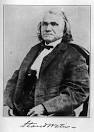
Americans have always known the stories of Indian chiefs like Sitting Bull, Crazy Horse and Geronimo and their wars against the U.S. government. Their struggles to preserve their way of life are legendary. There was another great Indian chief, unknown to most, who also fought against the United States in order to preserve his lifestyle. He committed himself to resisting the subjugation of his homeland. He was different from other Indian chiefs though. He was a general in the army of the Confederate States of America. He was Cherokee Chief Stand Watie. This is the story of the honorable and brave service of an American Indian in an unlikely war.

Despite being a Native American, Stand Watie was fiercely dedicated to the Southern way of life. Born on December 12, 1806 near Rome, Georgia, he was the son of a half-white mother and a Cherokee warrior. He grew up in Georgia where he watched many Cherokee adopt the lifestyle of Southern planters. At age twelve he attended school in Tennessee where he learned to speak English. He returned to Georgia to help his brother run the local newspaper, the Phoenix. By the early 1830s, however, he saw the U.S. government was determined to evict the Cherokee from their land. Along with the other mixed-blood Cherokee, he followed the “Trail of Tears” to Indian Territory, now Oklahoma. He and his fellow mixed-bloods soon established a society mirroring the one in Georgia. Some Cherokee even kept African-American slaves. For himself, Watie dressed like a Southern aristocrat and established a Southern-style plantation. Like many Southerners he grew to despise the abolitionists living in nearby Kansas. He considered them a threat to his homeland and his way of life. He even organized a Cherokee branch of the pro-Southern Knights of the Golden Circle. Following Abraham Lincoln’s election and the secession of the Southern states, Watie determined to cast his lot with the South.

After the Confederacy formed in February 1861, Stand Watie urged the Cherokee to join the ranks of the Confederate army. Confederate officials similarly understood the value of having the Indians on their side. President Jefferson Davis dispatched Indian Commissioner Albert Pike to negotiate with the “Five Civilized Tribes,” as they were known — the Cherokee, Choctaw, Chickasaw, Creek and Seminole. Arriving in the Cherokee Nation, Pike joined with Watie to persuade Principle Chief John Ross to join the Confederate cause. Ross finally agreed, but he always remained lukewarm to the cause. Meanwhile General Benjamin McCulloch was appointed to command Confederate forces in the territory. In turn, McCulloch assigned Watie command of a regiment to defend the region bordering Missouri. The regiment was known as the Cherokee Rifles. In early August Watie’s regiment joined a Confederate army marching north into Missouri to stop the Union invasion of Confederate Arkansas. On August 10th, he led his warriors in the attack of General Nathaniel Lyon’s army at Wilson’s Creek. Thanks in part to Watie’s efforts, the Union army was defeated and General Lyon was killed. Shortly after the Confederate victory, on October 7, 1861, the Cherokee Nation signed a treaty of alliance with the Confederacy in hopes of maintaining “unbroken the ties created by identity of interests and institutions.”

It was clear to both Cherokee and Confederate leaders that they should “cooperate against a common enemy…and drive them from our borders whenever they dare approach us.” At the moment, the primary threat were those Indians who were loyal to the Union. Watie organized an expedition to drive those Indians out of the territory. Throughout winter 1861 Watie and his Confederates pursued Unionist Indians across the plains. They showed mercy to those who surrendered, but they were just as willing to kill those who resisted. The result was that by early 1862 most Unionist Indians were in exile in Kansas. Many exiled warriors willingly enlisted in Union regiments in hopes of returning to liberate their nation. With the immediate threat of the Union Indians removed, Watie and his soldiers prepared to cross over into Arkansas.

As 1862 began, the Federals were once again preparing to invade Confederate Arkansas. Southern General Earl Van Dorn gathered troops from all over the region, including Watie’s Cherokee Rifles. To the chief’s delight, he was reunited with his old friend Albert Pike, who now commanded all Confederate Indians. On March 7, 1862 Watie found himself at the Battle of Pea Ridge. Along with the rest of the Indians, he was ordered to strike the left flank of the Union army. Leading from the front, as he always did, he and his soldiers gave the Indian Rebel Yell and charged toward the enemy. The charge broke the Union lines and captured an artillery battery. That night they were pulled back and posted along the ridge itself. The next morning Union soldiers charged the ridge and, after fierce fighting, managed to drive the Confederates from the field. As the Confederates withdrew, Watie’s command was ordered to serve as the rearguard. Watie and the Confederate Indians regrouped at the small town of Cincinnati, Arkansas. Though the Confederates were forced back, Watie had distinguished himself as a fighter. In recognition of his abilities, Southern leadership put him in command of defending Indian Territory from Union occupation.

Like other Confederate leaders, General Van Dorn recognized the strategic importance of Indian Territory. Many of the tribes were loyal to the Confederacy, but more importantly, the territory allowed for raids into Union-occupied Missouri. Watie was ordered to disrupt the movement of supplies and troops as much as possible. In compliance with his orders, he and his Cherokee Rifles attacked Missouri forces throughout the state. Often he would appear, attack and disappear over the border in quick order. His enemies learned to be on guard against this Cherokee Confederate, but he still managed to surprise them. Union commanders repeatedly tried to capture him, but each time he eluded their grasp, sometimes only by seconds. With each attack, his reputation increased exponentially. It was only logical then that Watie replaced Chief John Ross as Principle Chief after Ross was captured and moved to Philadelphia. Though he oversaw civil affairs, most of his energy was still directed at leading raids against Union soldiers in Missouri and their Indian allies. He enthusiastically fought against those Indians who chose to wear Union blue. Watie was a superb commander, but even he could not keep Union forces from invading Indian Territory.

By mid-1863, the Federals were massing for an invasion of Indian Territory. The Union army first captured Fort Smith, Arkansas before crossing the border and securing control of Fort Gibson, Indian Territory. Union forces then attacked Watie’s soldiers and drove them out of the Cherokee Nation. Despite the fact that his soldiers were ill-supplied, Watie planned an immediate counterattack. His daring advance recaptured the Cherokee capital of Tahlequah, but he was unable to drive the Federals out of the Cherokee Nation completely. He resumed raiding Missouri and even threatened to ride into Kansas several times. Despite these displays of power, his real goal was liberating Fort Gibson. As he planned the fort’s capture, he learned he had been promoted to brigadier general and given command of the Indian Brigade, comprising Cherokee, Creek, Seminole and Osage warriors. With his new command, Watie realized his best option for securing control of Indian Territory was to destroy the enemy’s supply lines.

Brigadier General Stand Watie loved attacking the enemy, but he realized attacks alone would not bring the Confederacy victory. He still raided Union territory when possible, like battling and capturing the Sixth Kansas Cavalry outside Fort Smith, Arkansas. Destruction of supplies though could accomplish more than capturing enemy regiments. With his brigade following him, he launched a campaign to destroy Union supply centers and to kill the defenders, primarily African-Americans. His greatest victory came at Cabin Creek in July 1864. After learning of a million dollar wagon train heading for Fort Gibson, he targeted the train and the accompanying Second Kansas Cavalry. He viciously attacked the cavalrymen and succeeded in cutting off their line of retreat. He then ordered his men to assault the Union right flank. The Union soldiers fled in all directions, and Watie took possession of the wagon train and mules. Despite this grand victory, it seemed apparent that Confederate fortunes in Indian Territory, like elsewhere, were beginning to fade. Still, Stand Watie refused to give up.

Throughout the fall and winter of 1864 Watie stepped up his attacks against Northern forces in an effort to provide one last hope for the foundering Confederacy. In February 1865 he was placed in command of all Confederate Indian forces and initiated efforts to unite the Civilized tribes with the Plains tribes. He intended to use this grand coalition to achieve victory for the Confederacy. His hopes for victory faded as report after report came in of successive Confederate commanders capitulating to their Union counterparts. He continued the fight as long as he could, longer than any other Confederate officer. On June 23, 1865, over two months after Lee surrendered at Appomattox, General Stand Watie became the last Confederate general to lay down his arms.

Just as he led his warriors in battle, Stand Watie led the Cherokee Nation in peace. His first responsibility was to reach an amicable settlement with Union authorities, including those Indians who fought under the Stars and Stripes. In September U.S. commissioners confirmed him as Principle Chief of the Cherokee. His long-time opponent, Chief John Ross, succeeded in overturning the decision though and negotiated his own treaty with the U.S. government. The treaty restored full rights and privileges to those Cherokee who fought for the Confederacy, but it also required them to equally distribute land among their former slaves. After the treaty was signed, Watie settled down on his farm where he cultivated corn and helped operate a tobacco factory. Like other Cherokee leaders, he struggled financially and was dealt the double blow of losing both his sons. He retained the affection of his tribesmen until the end. That end came on September 9, 1871 when Stand Watie, the Confederate “Swamp Fox,” drew his last breath.

Stand Watie’s exploits in the Civil War demonstrated his fierce dedication to preserving his way of life. His skin may not have been white, but his commitment to the Confederate cause was as strong as the most ardent of Southerners. His bravery in battle and his skilled leadership made him the top Indian commander of his day. A veteran who served under Watie called the general “one of the bravest and most capable men, and the foremost soldier ever produced by the North American Indians.” He served his cause just as fervently as did those Native Americans who resisted efforts to place them on reservations. General Stand Watie deserves to take his place beside such warriors as Sitting Bull, Crazy Horse and Geronimo. He stands proudly as the Indian General of the Confederacy.

1 Comment

Filed under Uncategorized

A More Perfect Union

images-1

As stated in the preamble, the purpose of the U.S Constitution was to “form a more perfect Union.” The framers realized the current government existing under the Articles of Confederation lacked the ability to effectively meet the needs of a sprawling new nation. Among our founding fathers there was a young Virginian who wished to create a new national government able to exercise sufficient powers to hold together the disparate interests of the various states. His name was James Madison. This is the story of how his experiences in the Confederation government shaped his views of the need for a stronger American government.

As a product of the Revolutionary era, James Madison blazed with patriotic fervor as he rose to become one of Virginia’s leading statesmen. Born in March 1751, he was the oldest son of Orange County Virginia’s leading tobacco planter. He grew up amid the storm of colonial protests over oppressive British policies. He joined in those protests after entering Princeton University. There he participated in a colonial boycott of British goods and praised Bostonians for their famed Tea Party. He began to make a name for himself in 1774 when he urged his fellow Virginians to prepare for war. He served on the local Committee of Safety and in the militia, rising to become a colonel. Unfit for actual combat because of slight stature and delicate health, he turned his life of public service to the political sphere. He served in the 1776 Virginia state constitutional convention where he committed himself to protecting religious freedom and preventing persecution of religious dissenters like Baptists. Afterwards, he was appointed to the Council of State where he worked with Governors Patrick Henry and Thomas Jefferson. In early 1780, at the age of twenty-nine, he became a delegate to the Continental Congress. Soon after arriving, he began to transform into a nationalist.

Before entering Congress, Madison was a firm supporter of republican principles, but he came to recognize the survival of republican principles was intertwined with the survival of the Union. At the moment, the Union appeared in jeopardy since the states had the final say in every matter. Congress had authorized the states to requisition supplies, raise money to fill the nation’s treasury and establish credit ratings to pay off the nation’s debts. By giving states control over these matters, Madison believed Congress had severely delegitimized itself. Certainly a Virginian loyal to his state, he came to believe in a broader allegiance. He began his shift towards nationalism by staunchly supporting the four key administrators in the new government, most importantly the superintendent of finance. He became known for his ability to secure passage of critical legislation. Unfortunately, Congress still permitted each state to decide if it would comply with each measure. Occasionally the states refused to comply, and Congress lacked the authority to enforce its policies. To solve this dilemma, Madison proposed an amendment that would allow Congress to use force against those states refusing to meet their obligations. The amendment failed to pass, but by now it had become apparent to many that the individual states were unable and unwilling to voluntarily meet their responsibilities, most of which were financial.

By late 1782 Madison saw one of the most pressing threats to national integrity was the struggling economy of the Confederation. Knowing that most states were in debt, Madison feared that waiting on the states to fulfill their fiscal obligations threated the nation’s reputation on the world stage. Believing firm action was needed, he joined with Superintendent of Finance Robert Morris and Alexander Hamilton to urge Congress to enlarge its power to collect revenue. On January 28, 1783 he called for the adoption of a “plan of a general revenue operating throughout the United States under the superintendence of Congress.” It was a further indication of his commitment to a shift in the relationship between the states and the central government. A month later he delivered a similar speech claiming that collection of revenue was consistent with “the principles of liberty and the spirit of the constitution.” Despite his support for congressional oversight of finances, he was concerned with the propriety of using financial restructuring to accomplish political centralization. In response he proposed a compromise whereby Congress would levy an impost, a tax on imports, and the individual states would turn over their revenue to the “common treasury.” Before leaving Congress in mid-1783, he publicly urged the states to accept the compromise since it provided as small a change as necessary to preserve the Confederation. Some states delayed approving the impost and continued to lag in fulfilling other fiscal obligations. His concerns about the nation’s survival increased further after watching how much commerce was affected by the lack of centralized control.

James Madison came to believe a centralized government would not only allow Congress to restore financial stability to the country but also to provide unified control over competing, sometimes feuding, state-to-state commerce. As the laws currently stood, Congress was unable to intervene in interstate commercial disputes, but even more ominously, Congress could not compel the states to unite in countering threats in international commerce. By 1785 British trade policies placed American merchants at the mercy of British merchants. With each state in control of its own affairs, it was difficult for the Confederation to pose a united front to the British challenge. From his seat in the Virginia House of Delegates, Madison joined in the cries for Congress to assume more authority over commerce. He wrote to James Monroe in Congress how “our merchants are almost all connected” with British merchants to the extent that “our trade was never more monopolized by Great Britain…than it is at this moment.” Madison’s concern for American trade compelled him to support an amendment granting Congress authority over trade. Sadly it failed due to a lack of support. Undeterred, Madison continued to assert to his fellow Virginians that authority over trade ought to be ceded to Congress since the individual states could not effectively wield that power by themselves. In time, he convinced many Virginians that a solution to the commercial crisis needed to be found. Other states finally agreed, and the result was the 1786 Annapolis Convention. Just before reaching the convention, Madison received word of the confrontation that persuaded him once and for all the Confederation was in danger of collapsing.

By 1786 the Confederation was being torn apart by financial and commercial concerns, but the final nail in the coffin appeared to be a dispute over foreign affairs. Secretary of Foreign Affairs John Jay met with Spanish authorities to negotiate navigation of the Mississippi River. The subsequent treaty required the United States to relinquish navigation of the river for thirty years in exchange for opening Spanish ports to American goods. Southerners were outraged by the demand and horrified by Northerners’ willingness to accept the treaty’s terms. Madison was just as outraged, but even more, he was frightened at the prospect of the states pitting themselves against each other. He was even more frightened at the talk of the nation dividing into separate confederations. He saw that the potential breakup of the Confederation would not only end the American republic but also would open the door for European nations to treat the American states as puppets. He realized the current Confederation Congress could, in its present form, do nothing to stop the country’s spiral downward. Only a stronger government, a new government, could keep America from returning to a colonial state. The handful of delegates who joined him at Annapolis agreed something drastic had to be done. They petitioned Congress to authorize a convention to be held in Philadelphia for the purpose of considering all the defects of the existing national government.

Madison returned from the Annapolis Convention determined to take a central part in forming a new national government. He began by using the uproar over Jay’s treaty with Spain to force Virginia to support more immediate reform than had occurred up to this point. He was elected to another term in Congress and arrived in New York City just in time to hear of Shays’ Rebellion in Massachusetts. The rebellion, an armed uprising by farmers and Revolutionary War veterans enraged by oppressive economic policies, convinced him and many other Congressmen that the nation was “tottering to its foundations.” By the time the rebellion was put down every state except Rhode Island had chosen delegates to attend the Philadelphia convention. Madison left for the convention in early May and arrived in Philadelphia with a proposed format for a new government. Known as “the Virginia Plan,” his resolutions called for the central government to exercise supremacy by collecting revenue, regulating commerce and compelling state obedience. He also desired to unite the country so America’s leaders could negotiate with Spain and Britain from a position of strength rather than weakness. Madison’s proposal replaced the ineffective Confederation Congress with a tripartite system of government. Though there were numerous compromises during the Constitutional Convention, Madison’s proposal was the foundation for America’s new government. There was a bicameral legislature, composed of a Senate and a House of Representatives, which was, among other powers, able to tax the states and to approve treaties with foreign nations. There was also a separate executive to enforce the laws and an independent judiciary to monitor compliance with the laws. On September 17, 1787 James Madison, one of the principle authors, signed the final draft of the Constitution that created “a more perfect Union.”

James Madison understood the importance of creating a Union of states able to withstand the myriad challenges facing a new nation. Without his involvement, the Constitution as it exists today, perhaps even our country, might not have come about. He watched the Confederation government struggle to exercise legitimate authority over the states. Often, the very survival of the fledgling republic seemed uncertain. Madison determined to give his nation new direction and a government capable of protecting the country from those forces that had nearly destroyed it in its first years. James Madison, visionary founding father, led the effort to create a government that would indeed “form a more perfect Union.” It was his gift to the ages.

1 Comment

Filed under Uncategorized

Sacrificial Service

images-1

Service to your country often requires you to make sacrifices. Sacrifice comes in many forms, however, not just in dying for your country. Sometimes the things a patriot is called to sacrifice are not so obvious. In the early years of the twentieth century, there was an American general who was ordered to put down a revolt in the Philippines. He had served in the region for years and had come to love the Filipino inhabitants. His love of them, however, did not keep him from putting aside his personal feelings and doing his duty. His name was John J. Pershing. This is the story of how he put down the rebellion among the Moros, a people he knew and loved.

Nicknamed “Jack” by his family, John Joseph Pershing often served alongside those on the fringe of American society. Born in Missouri in September 1860, he took an early interest in military affairs and entered the U.S. Military Academy at West Point in 1882. He performed poorly in academics but excelled in military discipline. He graduated in 1886 as first captain of the Corps of Cadets. As a second lieutenant in the Sixth U.S. Cavalry in New Mexico, he came to understand Indian culture and ended standoffs through diplomacy rather than war. In 1891 he was transferred to the Pine Ridge Indian Reservation in South Dakota as commander of Indian scouts patrolling the reservation. Two years later he was promoted to first lieutenant and assigned to the Tenth Cavalry, largely made up of African-Americans who were known as “Buffalo Soldiers.” His association with the Tenth eventually earned him the nickname “Black Jack.” In 1898 he led the Tenth Cavalry into battle in the Spanish-American War, even charging alongside Teddy Roosevelt’s Rough Riders up San Juan Hill. After the war, Pershing was promoted to the rank of captain and assigned to the new American territory of the Philippines where he was to play a critical role.

Arriving in Manila at the end of 1899, Captain Pershing soon learned rebels were waging a guerilla war against American forces. Most of the rebels were Moros, Philippine Muslims. He was posted to Mindanao, the second-largest Philippine island, on January 1, 1900 with orders to monitor those Moros living on the island. Over the next two years he led several attacks against recalcitrant Moros. Most Moro leaders, however, were willing to negotiate with the forty-three-year-old officer. Just as he had with the Indians, Pershing dedicated himself to understanding the native culture and language. He invited Moro leaders to his command post and prided himself on asking them about their families and daily lives. He also made visits himself to Moroland, most of which he made unarmed. He eventually came to feel just as at home in the jungle as they did. He saw the Moros as the ones “we serve down here,” and the feeling was mutual. According to one American officer, Pershing was “the one great American to the Moro mind,” bordering on “supernatural.” The Moros even honored him by naming him a datto, or Moro priest. As he was monitoring the Moros, he learned that he had been promoted to brigadier general ahead of hundreds of senior officers. In that capacity, he was directed to help “civilize” the Moro inhabitants.

Brigadier General Pershing soon discovered his new rank carried civil responsibilities with it. He was named governor of the Moro province, overseeing a half-million Moros and other natives. In an attempt to improve each village, he constructed various buildings, such as warehouses, and introduced transportation and communication innovations, such as railroads and telephone lines. He established a medical corps and a school specifically designed for girls’ education. His efforts earned the support of the Moros, and many worked on each project. He thought his efforts to make the island economically profitable were reaping huge rewards, and he took pride in showing off these accomplishments at the February 1911 Moro Province Fair. At the fair, he had tears in his eyes as he watched warlords who had fought one another for years embrace in friendship. It was a proud moment for Pershing, but boiling beneath the surface were tensions that endangered all the progress he had made.

John Pershing may have thought peace was at hand, but he soon learned elements of the Philippine population were still a threat. A group of Moros and native tribesmen, called “Wild Men,” joined together to raid nearby settlements and steal cattle. Many of them carried weapons that could be used against American forces. The U.S. government realized the weapons had to be confiscated. As military commander of the Department of Mindanao, he received orders to that effect. After announcing his orders to Moro leaders, he watched as some Moros willingly turned in their weapons and accepted monetary compensation. Unfortunately, there were some hard cases who refused to comply with Pershing’s demands. One group even attacked an American fort to show their resolve. With the mandate to disarm the troublemakers, Pershing realized he had no choice but to lead a military expedition against those Moros opposed to him.

In early summer 1913 General “Black Jack” Pershing gathered his soldiers and launched a campaign to force Moro compliance. Hoping “to end this business without much fighting,” he wrote a letter to several Moro chiefs expressing his affection saying, “All Moros are the same to me as my children and no father wants to kill his own children.” He begged them to give up their weapons and not to lead their women and children against the American army. The Moros refused to listen, and they took up position on a mountain known as Bud Dajo. Pershing decided to take the mountain by maneuver rather than assault. He ordered a thousand troops to surround the mountain and cut off the entrenched Moros from supplies and reinforcements. Only a dozen Moros died before they surrendered. Pershing accepted their capitulation and then moved on to an extinct volcano known as Bud Bagsak where ten thousand Moros were barricaded along with numerous women and children. He did not wish to kill innocents, so he departed from the region and returned after the women and children had gone home. On June 11, 1913 he and twelve hundred soldiers attacked the Moro fortifications. The Moros met them and appeared poised to break the American lines when Pershing dashed forward and rallied his troops. He led the men in an attack that pushed through the bamboo entanglements and into the Moro lines. He watched in awe as the Moros fought to the last man. He returned from the expedition with the grim satisfaction of knowing that peace had finally come to the Philippines. He left in December 1913 after spending nearly fifteen years there.

John J. Pershing spent the rest of his life serving wherever his country needed him. In 1916 he commanded the expedition sent into Mexico against Mexican bandit Pancho Villa. The U.S. forces moved swiftly through northern Mexico as they engaged Villa’s bandits. By summer the mission was accomplished and Pershing was promoted to major general. Less than a year later, in May 1917, he commanded the American Expeditionary Force in World War I. Arriving in France, he set to work training his soldiers and despite repeated requests from French and British commanders, refused to attack the Germans until his troops were ready. Finally in late May 1918 he ordered the army to attack the enemy at Cantigny and Chateau-Thierry. After defeating the Germans both times, Pershing ordered his forces to move against the Germans at St. Mihiel and in the Argonne Forrest. The American attacks ultimately forced the Germans to sign an armistice on November 11, 1918. With the war over, Pershing returned to the United States where he was a national hero. He was rewarded for his service with a promotion to the four-star rank of General of the Armies and thereafter spent most of his time inspecting military sites around the country. He also assisted in placing memorials to American soldiers in France in tribute to the sacrifices made by the “doughboys.” When World War II erupted in Europe in 1939, he was stunned by the news. Having fought and won “the war to end all wars,” he had believed “such a thing was not within the range of reasonable possibilities.” By August 1940, however, he had come to fully appreciate the perilous situation and delivered a radio address urging his fellow countrymen to confront the danger Hitler posed. He offered his services to his country, but now, more than eighty-years-old, he could do little but watch as others took up the fight. On September 13, 1945 he turned eighty-five, content in the knowledge that America had won both World Wars. Three years later in 1948, General John J. “Black Jack” Pershing’s life of national service finally came to an end. He was buried in Arlington National Cemetery, and a nation mourned the loss of one of its greatest warriors.

John Pershing’s life was spent in dutiful service to his country. He, more than anyone, understood what his sixty-six years of service cost. During those years, he occasionally found himself called upon to oppose those he had come to respect and admire, such as the Moros of Mindanao. He had lived among them, done his best to improve their lives and even considered them friends. No matter his admiration though, he understood he had to subordinate his personal feelings in order to accomplish the mission. It was an act of sacrifice, though certainly not the only example of it, for the country he devotedly served. The message he sent his soldiers, indeed all citizens, was clear — service requires sacrifice.

2 Comments

Filed under Uncategorized

Above and Beyond

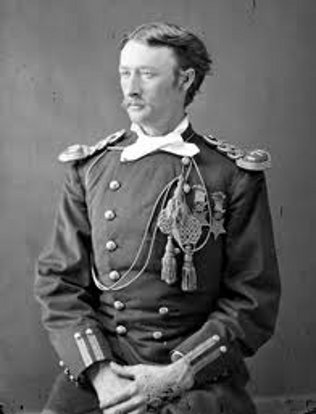
tom_custer_l

The Congressional Medal of Honor is the highest military award in the United States. It is awarded to Americans who distinguish themselves “above and beyond the call of duty.” At the end of the Civil War, there was a Union officer who personally led attacks that helped the Union army capture a sizable portion of the Confederate army, ultimately forcing the South to surrender. For his bravery, he was awarded the Medal of Honor — twice. His name was Thomas W. Custer, brother to one of America’s most famous, some would say infamous, soldiers. This is the story of how he showed “conspicuous gallantry” in the last days of the Civil War.

Thomas Ward Custer may have been the younger brother of George Armstrong Custer, but he proved himself exceptional in his own right. Tom was born in March 1845 in the town of New Rumley, Ohio. He was one of nine children born to the local blacksmith, but he always remained closest to his oldest brother George Armstrong, nicknamed “Autie.” When Tom was four, his father took up farming and moved the family to a farm on the outskirts of town. Tom soon joined his brothers in performing chores around the house and planting crops. At age six he entered the local school. Like his brother “Autie,” Tom preferred mischief to discipline, and many of his pranks ended with a meeting between himself and the rod. This mischievous nature endeared him to many of his schoolmates though, and he quickly emerged as their leader. He longed to escape and embark on adventures, much as “Autie” did when he left New Rumley for the U.S. Military Academy at West Point. His desire for adventure was fulfilled sooner than he thought when the Civil War erupted in April 1861.

By late 1861, word reached the Custer family that George had fought bravely at the First Battle of Bull Run, and Tom wanted the same opportunity for himself. Even though he was only sixteen-years-old, he begged his parents to allow him to enlist. They finally relented, and on September 2, 1861 he enlisted in the 21st Ohio Volunteer Infantry. Tom spent the next three years fighting in the western theatre. After training in Cincinnati, the regiment was ordered to march south into Kentucky in October 1861. Tom “saw the elephant” for the first time only a few days later at Ivy Mountain. He and the rest of the regiment attacked a body of Confederates from the rear and forced them to withdraw. He spent most of the winter in camp in Kentucky, and throughout 1862 he was part of the Union invasions of Tennessee and Alabama. He was even stationed for a time in Nashville, Tennessee and Huntsville, Alabama. At the end of the year, he fought determinedly against the Confederates at the Battle of Stones River. His bravery at Stones River brought him to the attention of his commanders, and he was detached from the regiment to become a military escort. Over the next year, he participated in the climactic Battle of Missionary Ridge at Chattanooga, Tennessee in November 1863 and in the capture of Atlanta, Georgia in September 1864. Shortly after the city’s fall, Tom received orders to join the staff of his brother George, now a breveted (temporary) brigadier general in the Army of the Potomac.

Tom officially joined George’s Third Cavalry Division in Virginia’s Shenandoah Valley on November 8, 1864 and spent the rest of the war fighting alongside his brother. Immediately upon reaching camp, he reported to his brother who informed Tom that he would be serving as an aide-de-camp with the rank of second lieutenant. Despite being the commander’s younger brother, Tom insisted on showing George proper military respect in public. In return, George refused to show Tom favoritism, but he also grew to depend on Tom. Only a month after joining his brother’s command, Tom participated in General Philip Sheridan’s campaign to destroy the Confederate army commanded by Jubal Early. In December 1864 he saw action against a cavalry force commanded by George’s old West Point classmate, Tom Rosser. The battle was a Union victory, but the main Confederate army led by Early still posed a threat.

The military situation was growing desperate for the Southerners. In early March 1865, the Union cavalry assaulted Early’s command outside Waynesboro, Virginia. During the battle, Tom personally led a bold attack against the Confederates and forced them to withdraw. The Union assault effectively destroyed Jubal Early’s army. With the enemy in the Shenandoah subdued, George, Tom and the rest of Sheridan’s cavalry joined the Union army outside Petersburg, Virginia, destroying railroads and bridges as they advanced. The cavalry entered Union lines on March 18, 1865. Tom was soon presented with a commendation for bravery for his role in the Battle of Waynesboro and a brevet promotion to the rank of first lieutenant. It was only one of many decorations that he earned over the next few weeks.

Only ten days after arriving in Petersburg, the Union cavalrymen were ordered to attack the critical Confederate position at Five Forks, just west of Petersburg. On the morning of March 31st Sheridan’s troopers faced off against Confederate General George Pickett. Pickett’s forces launched a surprise attack against the Union cavalry, and Sheridan called on General Custer’s division for support. Tom, alongside George, raced to the front and bolstered the faltering position. The next day, April 1, 1865, Tom was at the forefront of the charge that overpowered the Confederate defenders at Five Forks. At the same time, General Ulysses S. Grant launched an all-out assault on the Confederate army inside Petersburg, which forced the Confederates to withdraw west. Tom led his men in the chase. It was during the pursuit that Tom would truly distinguish himself as a soldier.

Tom’s first moment of lasting glory came only two days after his performance at Five Forks. On April 3rd he and his fellow soldiers faced the Confederate rearguard at a crossroads known as Namozine Presbyterian Church. The Union cavalry wasted no time in charging the Confederate cavalry and virtually annihilated the Confederate force opposing them. In the midst of this action, Tom jumped his horse over the Confederate fortifications. Bullets whistled all around him, but he ignored them. Straight in front of him was a prize coveted by all soldiers — an enemy flag. He spurred his horse toward the body of Confederate soldiers and only slowed for a moment when his mount was shot from under him. Running the last few feet on foot, he wrestled the flag out of the color bearer’s hands. At the same time, he aimed his pistol at the soldiers surrounding the color bearer and ordered them to surrender. They promptly did so. The number of captives included three officers and eleven enlisted men. Tom marched his prisoners back to the Union lines where he presented both them and the flag to his superiors. For his heroism that day, he would receive the Congressional Medal of Honor and the brevet rank of captain. But his acts of valor were not yet done.

As the division continued to pursue the Confederate army, Tom anticipated another opportunity to distinguish himself. That chance came just three days later on April 6th. As the Union soldiers approached Sayler’s Creek, they encountered a Confederate barricade blocking the road. Union troops immediately launched an attack, and after three tries, the Confederates were ultimately dislodged. The advance continued, and soon an entire Confederate infantry corps came into view. Before attacking the infantry, however, Tom and his comrades attacked and captured an artillery battery, 800 soldiers and 300 supply wagons. Then they turned their attention on the main body of Confederates. Tom was filled with excitement and charged the Confederate lines “like a lion” according to George’s chief of staff. As he had three days previously, he jumped his horse over a barricade. He now found himself surrounded by enemy soldiers, but he drew his pistol and began firing. The Confederates broke but quickly formed a new line. Suddenly, Tom caught sight of a battle flag and charged the Confederate formation. He was shot in the right cheek but succeeded in killing the color bearer and capturing his second flag. He would ultimately be rewarded with a second Medal of Honor and the brevet rank of major. He went to find his brother and, when he refused to obey an order to see the surgeon, was placed under arrest. He was escorted to the hospital at City Point, Virginia and later to Washington, D.C. where he officially received his first Medal of Honor on April 24th and his second on May 22nd. He had performed fearlessly during the Civil War, and he would carry that fearless attitude with him as he moved on to the next battleground.

It was on the plains of the American West that Tom Custer next served his country. In November 1866 Tom received a regular commission as a first lieutenant in the 7th Cavalry and eventually rose to the rank of captain. Not long after joining the regiment, Tom and his brother, Lieutenant Colonel George Custer, were ordered to pursue the Indians across the barren plains of Kansas. They followed their orders but had little success in engaging the Indians. During these pursuits they often saw evidence of Indian brutality against soldiers and civilians alike. The brothers sought retribution at the November 27, 1868 Battle of the Washita where they captured an Indian village and killed many villagers. The battle helped bring peace to the southern plains. In early 1873 Tom and the 7th Cavalry were transferred to Fort Abraham Lincoln, just outside Bismarck, North Dakota. From Fort Lincoln, Tom joined his brother in exploring the Yellowstone River in 1873 and the Black Hills in 1874. It was from Fort Lincoln that Tom departed on May 22, 1876 on his final march. Just over a month later, on June 25, 1876, he made his last stand alongside his brother George in the Battle of the Little Bighorn. He fought as valiantly in his last battle as he had in any battle of the Civil War.

Tom Custer’s life was devoted in service to his beloved country. He was just like his older brother in his desire to always be “at the tip of the sword.” It was his audacious charges that helped make his brother a national hero. George Custer himself praised Tom’s courage under fire by saying that “he should have been the general.” Tom’s gallant and faithful service brought great credit not only to his country but also to the name Custer. The larger-than-life story of his older brother George has largely overshadowed Tom, but by winning two Medals of Honor, Tom took his rightful place in the pantheon of American heroes. For Tom Custer, going “above and beyond the call of duty” was not just a military decoration — it was a way of life.

1 Comment

Filed under Uncategorized

Revolutionary Resilience

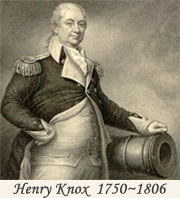
henryKnox

Some tasks in life seem, at first glance, impossible. In order to succeed in these “impossible” tasks, one has to possess a spirit of resilience. The individual must look into the face of those insurmountable obstacles and declare his or her determination to overcome them. During the first year of the American Revolution, there was an American officer who set himself to a task that appeared all but impossible to fulfill. Indeed, the very forces of nature seemed determined to stop him, but his tenacity and perseverance were stronger. His success not only brought about America’s first major military victory, but it also transformed the young officer into one of America’s most important commanders. His name was Henry Knox. This is the story of how he battled overwhelming circumstances in his attempt to transport several dozen cannons from Fort Ticonderoga in upstate New York to Boston, Massachusetts.

Life taught Henry Knox an early lesson about determination and perseverance. He was born and grew up in Boston, Massachusetts to parents of Scottish origin. He began his education by entering the Boston Latin Grammar School, but was forced to quit after only three years to provide for his mother and younger siblings following his father’s death. He served as an apprentice to a local bookseller and quickly learned the trade. Later he managed the London Book Store, devouring any book on the military and in particular on the use of artillery. Despite losing two fingers in a hunting accident, he joined the local militia and later helped organize an artillery company for the militia. As Britain cracked down on the colonies, Knox joined the Sons of Liberty and personally witnessed the Boston Massacre. For a man dedicated to the American cause, it was ironic that he fell in love with Lucy Flucker, the daughter of the Royal Secretary of Massachusetts. Despite her Loyalist parents’ objections, the two were married in June 1774 and remained devoted to each other throughout their lives. A year later the battles at Lexington and Concord erupted in April 1775, and Knox joined the newly constituted Continental Army.

Knox’s first months of service centered around the American siege of British-occupied Boston. He fought in the Battle of Bunker Hill on June 17, 1775 and oversaw the construction of American siege lines around Boston. It was this activity that first brought him to the attention of General George Washington. The two men struck up an instant friendship, and Washington even asked Knox’s advice on the military situation. After giving due consideration, Knox determined that the Americans must have artillery to force a British evacuation. The problem was, they had none. He proposed to Washington that he travel to the newly captured Fort Ticonderoga on Lake Champlain in upstate New York. He would inventory and secure the best of the fort’s cannons before transporting those cannons over the Berkshire Mountains back to Boston. Many officers considered the proposal impractical, even impossible. General Washington, however, agreed to the proposal. Not only that, but he immediately promoted the twenty-five year old Knox to the rank of colonel and named him as the American artillery commander. Leaving Lucy behind, Knox and his younger brother William set off on the mission alone.

Knox left the American army on November 16th and, after travelling through New York City to arrange for military supplies, arrived at Fort Ticonderoga on December 5th. He inspected the fort and found a variety of cannons and mortars. He selected fifty-eight pieces and made preparations for the long trip back to Boston. He hired local men to help him move the cannons down Lake George from Fort Ticonderoga to Fort George and also arranged for forty-two sleds and eighty oxen to pull the cannons overland. In mid-December the boat crews left Ticonderoga for Fort George.

The expedition would be plagued with enormous challenges from the start. The first set of problems impacted the part of the expedition that should have been one of the easiest, the trip down Lake George. Knox and the oarsmen had expected the wind to be with them and allow them a fast trip down the lake to Fort George. Instead, the oarsmen had to battle against the wind the entire way. It was not just the wind that proved a danger but the river itself. At one point, one of the boats hit a rock and sank. Fortunately, the boat was just offshore and was quickly set afloat again. Each man knew that every piece of artillery was precious. Finally, the boats reached Fort George. The team wasted no time in speedily loading the cannons onto the sleds. Knox then wrote a letter to Washington informing him that the expedition would soon be under way. He wanted to wait until a heavy snowfall had occurred in order to quicken the journey.

Knox’s hopes faded as an unexpected winter thaw set in. Without a covering of snow, the sleds could not move easily across the countryside. Knox and his teamsters prayed for a change in the weather. Several days later they were blessed with a blizzard that dropped three feet of snow on the ground. Knox knew he could not waste any more time. He ordered the expedition to set out for Boston. The column moved slowly through the heavy snowdrifts that covered the road. At one point, Knox rode ahead to scout the area in front of the caravan. For his efforts, he almost froze to death from the drop in temperature at night. Still he pressed on and finally reached the state capital at Albany. He was beginning to despair of success, but he determined to press on as best as he could. Finally the sleds joined him in Albany, and he prepared to cross the frozen Hudson River before moving on to Boston.

No doubt Knox and his team thought their myriad tribulations had ended, but they were soon disabused of that notion. At Albany he cut holes in the icy river in hopes that the cold temperatures would freeze the exposed water and strengthen the existing ice. When he was done, he ordered the expedition to move rapidly across the river. As the cannons were ferried across the frozen river, one of them crashed through the ice. Knox’s crew and nearby townsfolk had to spend an entire day dragging it up from the riverbed. Within a few days, the column reached the base of the Berkshire Mountains. The column was pushing through the rugged terrain when Knox suddenly had to confront an unexpected threat. A number of teamsters refused to go any farther because they were afraid of the risks involved in crossing the mountain passes. After much pleading, Knox convinced them to continue on in the spirit of patriotism. Once that threat had been removed, the final leg of the expedition passed without incident. The column soon entered Massachusetts. As they passed through each town, Knox and the entire column were greeted with cheers from the crowds that lined the roadside for a glimpse of the cannons. In one town, he even provided a demonstration of the cannons’ firepower for the inhabitants. A few days later, on January 24, 1776, Henry Knox presented his “noble train of artillery” to George Washington.

Knox’s feat forever endeared him to the commander-in-chief and to the American public. Many Americans were amazed that it had only taken Knox fifty-six days to travel three hundred miles from Fort Ticonderoga to Boston. Washington was equally impressed and proved it by giving Knox command of many important assignments over the next eight years. His first order of business, however, was to utilize the artillery he had just delivered. He was asked to place his cannons along Dorchester Heights in March 1776, whereby he helped drive the British out of Boston. Later that December he led the crossing of the Delaware River and commanded the artillery in the Battle of Trenton. Perhaps most important of all, it was his bombardment that ultimately forced Lord Cornwallis to surrender at Yorktown. After the war, he briefly served as the commander of the Continental Army and as the Secretary of War in the government created by the Articles of Confederation. He also served as the first Secretary of War under President Washington and the new Constitution. He left government service in 1795 and settled in Maine. He lived there until his death in 1806 of an infection resulting from a chicken bone that was caught in his throat. Today, there are awards and an artillery school named in honor of America’s first artillery commander, and Fort Knox, Kentucky, is the U.S. Gold Bullion Depository.

Henry Knox was a man who saw what was possible, not impossible. He accomplished something many would never even have considered. Amidst all the obstacles, he delivered on his word to General Washington and turned the Redcoats’ own cannon on them and drove them from New England. Throughout the long and difficult struggle of the American Revolution, it would be the determination and perseverance shown by men like Henry Knox that would eventually result in victory for the Americans.

1 Comment

Filed under Uncategorized

A Monumental Man

images-1

Creativity oftentimes reaches across time and space to bring into existence something of monumental significance. A person may even find that his or her creativity finds an outlet, indeed even opens the door, to an even greater accomplishment. In the early part of the twentieth century an American artist began work on a memorial to honor Confederate soldiers. As the work progressed, he encountered difficulties and was forced to devise creative solutions to move the project along. Little did he know that he would implement many of the same techniques to design the most famous monument in American history. His name was Gutzon Borglum. This is the story of how his work on Stone Mountain in Georgia prepared him for the work he did on Mount Rushmore in South Dakota.

Gutzon Borglum spent his early years cultivating a career as an artist. He was born the son of Danish immigrants on March 25, 1867 on the border of Utah and Idaho but spent his youth in Fremont, Nebraska. Early on he showed a talent for drawing, and several of his teachers encouraged him to pursue a career in art. He moved to California to study at the San Francisco Art Association. His reputation became so great that he traveled to Europe in the early 1890s. He visited France where he was admitted into the French National Society of Beaux Arts and Britain where he became a member of the British Royal Society of British Artists. He returned to America in late 1901 and soon transitioned to sculpting. He gained national recognition for his bust of Abraham Lincoln that was displayed in Washington, D.C. Gutzon Borglum was soon receiving requests from all over the country to sculpt figures of importance.

By the second decade of the twentieth century, Gutzon Borglum’s reputation as a sculptor had spread throughout the country. He produced a highly acclaimed statue of Abraham Lincoln for the city of Newark, New Jersey as well as statues of various state politicians. In 1915 Gutzon received a letter from the president of the United Daughters of the Confederacy asking him to carve the head of General Robert E. Lee on a Georgia mountainside. He had never undertaken such a task before and was intrigued by the offer. Before accepting, however, he decided to survey the sight. Upon arriving in Atlanta, he was greeted by the organization’s president and several other leading women. The women drove Gutzon sixteen miles to Stone Mountain where Gutzon stared in awe at the bald wall of the mountain that was 900 feet high and a mile and a half wide. He told the women that any monument “would look like a postage stamp on the side of a barn.” Still, he determined to think of some way to help the women realize their dream.

As Borglum studied the mountain, he recognized the consequence of what he was being asked to do. This was an opportunity to carve a memorial to the courage and valor of the Confederate soldiers who fought for the southern cause of independence. After spending three days surveying the mountain, he presented a plan to his hosts whereby he would carve a body of mounted and dismounted Confederate soldiers surrounding Generals Robert E. Lee, “Stonewall” Jackson and President Jefferson Davis. The women were surprised by Borglum’s audacity and were concerned about how to pay for such a project. To allay their concerns, Gutzon traveled to New York and Washington, D.C. to give speeches in support of the undertaking. He also addressed the national gathering of the United Daughters of the Confederacy in San Francisco, California. The Stone Mountain Confederate Monumental Association was also formed to help raise funds. Money began to pour in, and Gutzon was given the green light to begin work.

Gutzon was among those who attended the formal ribbon cutting of the memorial on May 20, 1916, but no sooner had the ceremony ended than he confronted a myriad of technical problems. The first problem he faced was a fundamental one — how to find a way for himself and his workers to scale the mountain in order to reach the construction site. He joined with a carpenter named Jesse Tucker and studied the mountain. The answer was obvious but certainly not simple. They would have to build a 480-foot staircase down the side of the mountain. The staircase was quickly completed, but Gutzon had by then encountered his next basic challenge — how to provide stability and mobility for the workers. The men needed a platform to stand on along with a means of moving around the mountain. He traveled to Ohio to meet with an engineer named Lester Barlow who owned a hoist company. The two men talked it over, and Barlow finally suggested that he develop a leather harness with a saddle seat. The harness would be attached to a winch placed on top of the mountain. Controlled by an operator, the winch could then raise or lower a person all over the mountain. Similarly, Barlow and Tucker constructed platforms for the workers to stand on as they carved the faces. Gutzon was pleased with these innovations and immediately saw them implemented. Actual work on the mountain could now begin.

Borglum had to delay work when America entered World War I in April 1917, but with the war’s end in November 1918, he turned his sights back on Stone Mountain. Scaffolding and the necessary platforms had been constructed, but now Gutzon had to address the obvious, but nonetheless bewildering, characteristic of an amorphous granite mountain that had a lot of “extra” stone on it. The excess stone would have to be removed before carving could actually begin. Borglum consulted engineers about the best way to remove the stone and was advised to use light amounts of dynamite, a technique that required the right amount and placement of the explosive. The face was cleared, and it was possible for Borglum to begin carving the memorial after he had painted an outline of the figures to blast away.

At the same time Gutzon had been occupied with removing the excess stone, he had also been occupied with finding a way of actually getting the figures onto the mountain. He had originally considered simply painting them on and then carving them out; however, he quickly discovered that he was unable to get the proportions of the figures right. To solve this new problem, he decided the best alternative was to build a projector and project the image onto the mountain so he could trace the outline. He contacted E. S. Porter of the Precision Machine Company, and the company produced a giant projector for Gutzon to use. After the projector arrived at Stone Mountain, the workers successfully painted the images on the mountain. Carving on the head of General Robert E. Lee finally began on June 18, 1923.

With carving officially underway, Gutzon invested himself wholeheartedly in the project. He sold his New York studio and moved to Georgia. From June 1923 to January 1924, he and his team worked day and night on the head of Lee, which was officially unveiled on January 19, 1924, what would have been Lee’s 117th birthday. Gutzon reveled in the cheers and applause of those who attended the ceremony. He immediately set to work on the head of Stonewall Jackson while simultaneously seeking more financial support for the project. He traveled throughout the country giving speeches and soliciting funds. He even convinced President Calvin Coolidge, Congress and the U.S. Mint to strike a commemorative fifty-cent piece. These travels ultimately caused friction between Borglum and the Stone Mountain Confederate Monumental Association.

The association and Gutzon had several heated debates regarding the lack of progress on the monument. Many members of the association believed Gutzon was too neglectful of the work since he was not on the mountain every day. Gutzon tried to convince them that there were difficulties in carving a mountain, most notably the appearance of flaws and defects that caused Gutzon to change his original design. He further accused the association of being consumed with what he considered minor office affairs. These disagreements came to an end on February 25, 1925 when Gutzon received word the association had decided to vote him off the project. The members decided to give his models to individual stonecutters and allow them to complete the monument. Gutzon determined that would not happen. He ordered his workers to destroy his plaster casts of Lee and Jackson as well as the studio model of the memorial. The association issued a warrant for his arrest for allegedly destroying their property. He fled to North Carolina to avoid arrest, and he was still there two months later when he heard how the association had hired a new sculptor, Augustus Lukeman, to take over the memorial’s construction. Lukeman had decided to start over and had blasted Borglum’s head of Lee off the mountain. It was an ignoble end to what Borglum saw as his life’s work. All his creative efforts seemed for naught. It was at this his bleakest moment that South Dakota historian Doane Robinson approached Gutzon about carving a national monument in South Dakota.

Gutzon Borglum spent most of the next sixteen years organizing, designing, creating and carving the most famous and iconic monument in the United States. In the heartland of America, the Black Hills of South Dakota, he would depict four of our greatest presidents — Washington, Jefferson, Lincoln, and Teddy Roosevelt — known as Mount Rushmore. He used many of the same techniques he had perfected at Stone Mountain. He began by building a stairway and scaffolding to hold platforms for the workers. He used the same winch and leather harness system to allow workers to move around the face of Rushmore. He and his team even used the same dynamite techniques to blast through excess stone to reach the right location before starting to use drills and other tools to carve each face. As the carving continued, Gutzon would engage in fights over funding and who should control the project, but through it all, he would never stop working. He proudly watched as each president was dedicated, the entire country increasingly awed at every unveiling. Washington was dedicated on July 4, 1930; Jefferson on August 30, 1936; Lincoln on September 17, 1938; and Teddy Roosevelt on July 2, 1939. Two years later, on March 6, 1941, Gutzon Borglum, patriot and artist, died at age seventy-four of complications from surgery. His greatest legacy still stands today for all to see, a true symbol of our great nation.

Gutzon Borglum’s experiences proved how vital creativity is if a person wishes to achieve success in any area of life, and not just creativity in design but in solving problems as well. Without his work and accompanying challenges on Stone Mountain, he might never have successfully completed carving the figures on Mount Rushmore. He is no longer remembered for his first attempt in mountain carving, but it was that adventure that paved the way for his ultimate success. Gutzon Borglum’s perseverance and creative genius resulted in the creation of a national monument — one whose endurance would, he hoped, match his beloved country’s.

1 Comment

Filed under Uncategorized

Balm of the Badlands

images-1

One of the hardest parts of life is moving on after a devastating tragedy. A person must somehow find the inner strength to continue living. The only real question confronting a person is how to find that strength. During the late nineteenth century, an American politician suffered two crushing losses simultaneously. He sought relief by fleeing into the vast American West. Over the next few years, he slowly regained the strength he would need to become president of the United States. His name was Theodore Roosevelt. This is the story of how his time in the Badlands helped heal him after the deaths of his wife and his mother on the same day.

Theodore Roosevelt always seemed to overcome hardships during his early life by turning to active outlets. He was born in New York City on October 27, 1858 with severe asthma and digestive problems. He worked to strengthen himself by boxing and wrestling. He also spent considerable time outdoors horseback riding, rowing and hunting in the Maine wilderness. He also devoured books written by naturalists. By the time he entered Harvard in 1876 he had hopes of becoming a naturalist. The death of his father in early 1878 put an end to such aspirations though. The loss devastated Theodore, and he recorded in his diary how he “had a good square break down.” By October he had recovered enough to visit nearby Boston. On one of these visits he met Alice Lee, and after a long courtship, they were married on October 27, 1880, his twenty-second birthday. Soon after, he embarked on a political career by winning election to the New York Assembly. It seemed he was on the road to success, but only four years later he would endure a tragedy so great that it would be uncertain if he would ever be able to return to a normal life.

In early 1884 Roosevelt was ecstatic about becoming a father. He often travelled back and forth between his home in New York City and the state capital in Albany. On February 10, 1884, he arrived home to find that his mother had typhoid, but despite being ill herself, his wife Alice appeared to be fine. He returned to Albany, and on the 13th he received word that a daughter had been born the previous day. His joy quickly turned to alarm when he got word a few hours later that Alice was dying and he needed to come home immediately. Heavy fog delayed his arrival at the house on West Fifty-seventh Street until nearly midnight. His brother Elliott met him in the front hallway and told him, “There is a curse on this house. Mother is dying, and Alice is dying too.” Roosevelt wasted no time in running up the stairs to Alice’s bedside. She was so weak she barely recognized him. He held her close even as he heard the church bells chime announcing that it was February 14th, Valentine’s Day. He remained by her side for nearly two hours until he was informed that if he wanted to see his mother one last time he had to go now. He went to his mother’s bedroom and was sitting beside her when she died at 3:00 a.m. As she slipped away, Roosevelt too claimed that “there is a curse on this house.” With a heavy heart, he returned to Alice’s bedside and held her as her kidneys failed. At 2:00 p.m., Alice finally died. All Roosevelt was able to write about the day’s events was a single sentence declaring that “the light has gone out of my life.”

In the immediate aftermath of that black day, Theodore Roosevelt did not know where to turn for comfort. Friends and family observed that “there was a sadness about his face that he never had before.” He spent much of his time in Albany and threw himself into his legislative work. In addition to his grief, his asthma flared up again, and he decided the best option was to seek refuge in the Dakota Badlands. He would spend much of the next three years there. Leaving his daughter in the care of his older sister, he travelled by train to the town of Medora on the Little Missouri River.

Roosevelt arrived in the Dakota Territory on June 9, 1884, and the next day he rode out of town to the ranch he had previously bought, called the Maltese Cross Ranch. He intended to settle down as a cowboy. His ranch hands did not think much of him at first, but he quickly won them over by learning to saddle his own horse and by showing a willingness to listen to their advice. He was able to ride well, but he never quite mastered breaking a bronco. Nevertheless, Theodore still rode out every day to inspect the herds of cattle and ponies he kept on the ranch. That November he helped round up a herd of cattle and drove them into town to ship them to market. He also made preparations to buy a second ranch and a thousand more cows. He named the new ranch Elkhorn in honor of the two elk skulls he found and soon turned the ranch into a hunting lodge. As he had always done, he completely threw himself into his new life. By the end of 1884, Theodore Roosevelt was well on his way to becoming a true man of the West.

Throughout 1884 and 1885, Roosevelt shed his eastern persona in favor of a western one. He carried a Colt Model 1873 revolver and adopted the dress of a typical cowboy, including a wide-brimmed hat, “shotgun” chaps, boots and a kerchief bandanna. He had a local woman make him a buckskin suit to show how he identified with the American frontier. It was not just his clothing that changed though. In one letter to his sister Anna, he wrote that he was once able to spend thirteen hours in the saddle without dismounting. He also took on the challenge of riding alone through the prairie. During these rides, he often pursued and killed big game like elk, deer, bighorn sheep, mountain goats and grizzly bears as well as small game like beavers, ducks and grouse. He enjoyed these kinds of masculine activity. Life was, once again, invigorating. It was not just the hunting he enjoyed though. He often wrote letters to his sister, and later books and articles, describing the beauty of the surrounding countryside. It was clear through his writing that the Badlands were proving a balm to his broken spirit. As he regained his spirit, he slowly returned to politics.

Roosevelt strove to show not only his fellow ranchers but also the ordinary citizens that he truly belonged in their western society. He was known for treating his common ranch hands fairly, even allowing them to choose the best mounts for themselves during roundups. He showed a level head when he single-handedly faced down a party of Indians and when as a deputy sheriff he pursued and captured three outlaws. Each of these actions impressed his fellow ranchers and encouraged them to select him as the chairman of the Little Missouri River Stockmen’s Association. They also selected him to serve as a delegate to the larger stockmen’s association in Miles City, Montana where he so impressed the ranchers that he was asked to serve on the executive committee. His reputation continued to spread, as shown by his appearance as the keynote speaker at the 1886 Independence Day celebration in Dickinson, Montana. In the speech he addressed the civic duties that all Americans owed. It was clear that he had a vision of uniting the country. An adopted Westerner from the East Coast, he seemed to serve as a symbol of that unification. He understood that Easterners needed to work with Westerners to preserve the uniqueness and beauty of the American West.

Theodore Roosevelt would not stay in the Badlands forever, but he would continue to protect them and areas like them for the rest of his life. He left the Badlands for good in 1887 after seeing the effects of several devastating blizzards that had swept through the region. He kept his ranch until 1897, but he always maintained an interest in wildlife. He continued hunting game in the Badlands, the Rockies and the Kootenai region of Idaho, but he found there were fewer and fewer animals left. It was then he decided he must help preserve the remaining wildlife so his children could enjoy them as much as he had. In the ensuing years, he cooperated with friends to form various conservation organizations like the Boone and Crockett Club, designed to preserve wildlife as well as wildlife habitats. He worked with others to win support for the 1894 National Park Protective Act to punish poachers who ventured onto national parks like Yellowstone to hunt wildlife. As he pushed to the forefront politically, he continued to lead conservation efforts, first as governor of New York and then as president of the United States. He was known as our country’s “Conservationist President,” and among many other efforts, created the U.S. Forest Service, established 5 National Parks and 150 National Forests, and protected approximately 230 million acres of public land. Remembering his own roots, he also appointed fellow ranchers who actually understood ranching to government posts and helped fund efforts to keep the cattle business going. On a personal level, he continued to collect artifacts from the West and displayed them at his home on Long Island, Sagamore Hill. It was there surrounded by memories of his life in the West that Theodore Roosevelt died in his sleep of an embolism on the morning of January 6, 1919.

Theodore Roosevelt’s rehabilitated life as a cowboy proved that comfort and relief can come in many forms. With a broken heart Roosevelt arrived in the Badlands in 1884, but by the time he left in 1887, he had found the strength to continue living. The rejuvenation he drew from his time in the Badlands gave him a new lease on life, and he now had dreams of taking on the world. Transformed by the experience, he became one of the greatest presidents in American history. Stories of suffering and tragedy are common today, but it is the healing afterwards that most of us seek. Theodore Roosevelt rose above his personal tragedy — so can we.

Leave a comment

Filed under Uncategorized

Life, Fortune and Sacred Honor

images-1

The last line of the Declaration of Independence states that the signers “mutually pledge to each other our Lives, our Fortunes and our Sacred Honor.” By July of 1776, the signers knew that the fight to secure American liberty would require many to give all they had in pursuit of that cause. A year before the signers even made that pledge there was already one notable patriot leader who had given his life in the name of liberty. He helped ignite rebellion in Massachusetts and then led the colony into war. He voluntarily left the safety of the Massachusetts Congress to fight beside those he had inspired with his words. His name was Joseph Warren. This is the story of how he fought and died for American liberty at the Battle of Bunker Hill.

Joseph Warren was American by birth and by temperament. He was born in June 1741 in Roxbury, Massachusetts, only a few miles from Boston, to one of the town’s selectmen. He grew up to attend the local Latin School before deciding to enroll in Harvard University in nearby Cambridge. He passed the entrance exam and entered the storied institution at the age of fourteen. Intending to become a doctor, he apprenticed under one of Boston’s most respected physicians. He soon established his own practice and quickly came to be regarded not only as Boston’s foremost doctor but also as one of its leaders. His status led him to become involved in protests against Britain’s harsh colonial policy. He joined with Sam Adams to form the Sons of Liberty in 1765, and over the next few years, he stood in the forefront of such critical events as the trial of the British soldiers involved in the Boston Massacre and the organization and implementation of the Boston Tea Party. He was a prolific writer for and advocate of American independence, serving on the Committees of Correspondence and Safety and working closely with leaders in other colonies to strengthen colonial ties. After the Boston Tea Party, he watched as the British cracked down harder on the colonies by passing the Coercive Acts, or the Intolerable Acts as the Americans called them. In response to these acts, Warren drafted the Suffolk Resolves in which he claimed that the only way for the colonists to protect their liberties was by the use of force. He began to prepare Massachusetts for the inevitable.

As the spring of 1775 began, Joseph Warren was convinced that it was only a matter of time before hostilities erupted between Britain and the colonies. On the fifth anniversary of the Boston Massacre he delivered a speech in which he told his audience that the future “happiness and liberty of millions yet unborn” rested on their decisions. Just a few weeks later on April 18, 1775 he learned that the British would move out that night to capture the military supplies stored in nearby Concord. He dispatched Paul Revere to warn the local “minutemen” and then rode out himself on the morning of the 19th to observe the fighting. Encountering several militia units, he rapidly organized them and directed them to fire on the British troops as they marched back to Boston. He himself even fired his musket several times and narrowly escaped death when a musket ball clipped a hairpin right by his ear. He was not concerned though and continued to lead the pursuit. Arriving in Cambridge that night, he knew that war had come and that it would require total commitment.

Joseph Warren was determined to make any sacrifice required for the cause he held so dear. Indeed, he had already sacrificed his prosperous medical practice and was heavily in debt as a result. Widowed, he even had to leave his children inside British-occupied Boston under the care of friends. He worried about them, but he devoted all of his attention to the political and military challenges facing the provincial army. He was a dynamo of energy. He urged Sam Adams and other delegates to the Continental Congress to adopt resolutions advising each of the thirteen colonies to draft new state constitutions and to petition foreign nations for assistance in the military struggle. Even as he urged these political measures, he was busy strengthening the colonial army in anticipation of the British assault expected to come any day. As president of the Massachusetts Provincial Congress, he ordered military raids on British installations like Fort Ticonderoga in upstate New York. He joined the rest of the Committee of Safety in ordering the army to construct defensive fortifications ranging from Cambridge to the Charlestown Peninsula, which overlooked Boston Harbor. One of the most defensible hills the soldiers were told to fortify was the one hundred and ten-foot-high Bunker Hill, an action that would undoubtedly provoke a response from the British army firmly entrenched in Boston. It was the middle of June, and the final showdown between Joseph Warren and his British adversaries was about to begin.

Just days after the colonial army was ordered to defend Bunker Hill, Joseph Warren left the political battlefield for an actual battlefield. On June 14, 1775, he was commissioned a major general in the provincial forces by order of the Massachusetts Provincial Congress. Three days later, on the morning of June 17th, he received word that American forces under the command of Colonel William Prescott had fortified the much smaller, and more exposed, Breed’s Hill instead. He also learned that British forces were mobilizing for an attack on the hill. He announced to his fellow committee members that he was going to join the solders atop the hill. One of his associates beseeched him not to go, even telling Warren he would be killed. He refused to be swayed and left for the front. He dressed in a light-blue coat and carried a book of poetry in his pocket. As he made his way forward, British ships in the harbor began to bombard the fortification. He pressed on and soon entered the redoubt the Americans had constructed. Seeing him, Colonel Prescott hurried over and told Warren to return to Cambridge. Warren politely refused, so Prescott offered to turn command over to Warren who was the senior officer present. Instead, Warren told Prescott he was merely a volunteer. The command belonged to Prescott. Both men quickly turned their attention to the drama occurring before them.

Warren beheld the sight of twenty-five hundred British soldiers arrayed in formation and ready to advance up the hill. At their head was General Sir William Howe. At 3 p.m. Howe gave the order, and British soldiers moved forward. Warren stood beside his fellow soldiers and listened as Prescott told his soldiers not to fire “until you see the whites of their eyes.” He took a stand, aimed his musket and fired on the enemy soldiers who stood out in their bright red coats. The other twelve hundred American soldiers fired a volley as well. The British staggered as many fell dead or wounded. They advanced a little further before more casualties forced them to withdraw. Warren looked around and saw that there were several Americans lying wounded. He briefly laid aside his musket to tend to them. Suddenly cries erupted that the British had reformed and were advancing again. Warren hurried back to his position and fired. Again the British suffered heavy casualties and were forced to pull back. Warren and his compatriots had driven two attacks back, but they had used up most of their ammunition in the process. Warren and Prescott both knew the Americans would be unable to stop a third attack.

Despite heavy losses, the British prepared for one final attack up Breed’s Hill. Warren saw that the General Howe had deployed his troops into a thin skirmish line instead of massing them together. Once again the Americans waited until the British were close enough for the Americans to see their belt buckles, and then they fired their last rounds of ammunition. Dozens of British soldiers fell, but the rest kept charging forward. They reached the redoubt and pored over into the American lines. The fighting turned savage as the British used their bayonets and the Americans threw stones or used their muskets as clubs. Colonel Prescott used his sword to block British bayonet thrusts until he realized there was no choice but to withdraw. As he gave the order, he looked around and caught a glimpse of Joseph Warren not far away. Warren had dropped his musket and had picked up a sword in order to cover the withdrawal. Once the last few soldiers had left, Warren turned to follow them. He saw a group of soldiers fleeing and tried to rally them. As he did so, the thirty-four year old Joseph Warren, father, physician, president of the Provincial Congress, and major general of provincial forces, fell dead from a bullet to his head.

Joseph Warren was one of the 150 Americans to die in the battle on Breed’s Hill, mistakenly called the Battle of Bunker Hill. The British won the day, but at great cost. Their casualty rate was nearly 50 percent, suffering 1,150 casualties, including 225 killed. On Breed’s Hill alone, the British lost about one-eighth of all their officers that would be killed in the eight years of the Revolutionary War. The Americans, with Joseph Warren at the forefront, proved that they could stay on the field with the world’s most powerful military.

The British found Warren’s body shortly after the battle and contemptuously buried him with the remark that “there he and his seditious principles may remain.” But his principles did not die there. Word of his death soon spread across the country. He was deeply mourned by all, but he inspired the cause. Those who knew him praised him for his willingness to act in accordance with his patriotic convictions. He would remain buried on Breed’s Hill until after the British left Boston in March 1776. In April he was buried in Boston’s Granary Burying Ground before being reinterred in 1855 in his birthplace of Roxbury, a hero welcomed home.

Joseph Warren’s life truly serves as a testament to the belief that the cause of liberty is worthy of the highest sacrifice. He had measured the cost and was willing to pay it. He dedicated every ounce of his being to fighting tyranny. That fight cost him his fortune and ultimately his life. His death, indeed his very life, inspired his countrymen to persevere in their struggle for freedom and security. Perhaps the signers of the Declaration of Independence even considered Joseph Warren when they pledged their “Lives,” “Fortunes” and “Sacred Honor.” It was a commitment he certainly lived out.

1 Comment

Filed under Uncategorized

Restored and Recognized

images

In the biblical book of Genesis, God promised Abraham that He would make him into a great nation in the land He would show him and that He would bless those who bless Abraham’s descendants. Ever since that time there have been those who sought to destroy that nation and those who sought to safeguard it. During the twentieth century there was an American president who was faced with the thorny question of whether or not to recognize the newly “re-formed” homeland of the Jews. His top foreign relations expert advised him not to get involved, yet he eventually chose to follow his conscience and recognize the country. His name was Harry S. Truman. This is the story of how he became the first world leader to recognize the State of Israel.

Harry Truman was born in Lamar, Missouri in 1884, but he spent much of his early life in Independence. Religion and religious beliefs shaped the young Truman. In Independence he attended the local Presbyterian and Baptist churches and developed a habit of reading the Bible, particularly the New Testament. He performed chores for the Viners, an orthodox Jewish family living near him, on their Sabbath and often visited with them. Later during World War I, his service in the artillery brought him into contact with a young Jewish man named Eddie Jacobson. The two men became friends, and after the war, they operated a men’s clothing store together. In 1922 Truman became involved in Missouri politics when he served as a county judge. In that capacity he diligently worked to improve living conditions for all his constituents regardless of their ethnicity or beliefs, even paving the road leading to the Jewish cemetery. In 1934 and again in 1940 he won election to the U.S. Senate. It was at this time that Truman found himself increasingly involved in Jewish affairs.

As word of the Nazi persecution of Jews spread throughout the world, Harry Truman was petitioned by public and private citizens alike to help rescue Jews trapped in Europe. Beginning in the late 1930’s, he received letters from friends asking him to entreat U.S. officials to ease the immigration of Jews to America. He assisted in bringing a number of Jewish families into the country before America’s involvement in the war forced U.S. consulates to close. He was then asked by Jewish leaders in America to speak out against the crimes being perpetrated by Nazi leaders. He did openly condemn the Nazi regime for its actions, but he saw that the most effective solution to rescuing European Jews was to win the war quickly. He briefly served on a committee that contemplated forming a Jewish army to fight the Nazis, but for the most part he followed President Roosevelt’s example and refused to offer explicit support for a Jewish state in Palestine. Throughout the war he read reports of Nazi atrocities as they attempted to annihilate the Jews. Then at the 1944 convention, the Democratic Party adopted a platform plank that pledged support for the establishment of a Jewish commonwealth in Palestine. Now Roosevelt’s running mate, Truman supported this position. In November he was elected vice-president, and upon Franklin Roosevelt’s death in April 1945, he was sworn in as president. With the end of the war a few months later, he found himself involved in the fight to create a Jewish homeland.

In the aftermath of the Holocaust, in which six million Jews were slaughtered, President Truman saw the need for a safe haven for the Jewish refugees scattered throughout Europe. Over two hundred and fifty thousand Jews lived in Allied camps with no place to go. Truman received Jewish delegations who presented different proposals on how to alleviate these dire circumstances. Some Jewish leaders argued that the Jewish refugees should immigrate to the U.S. Truman was personally in support of this strategy, but he found himself hampered by congressional limits on immigration. In addition, there was a significant percentage of Americans who wanted to simply wash their hands of the whole situation. He was also opposed by American Zionists, whose only objective was the establishment of a permanent Jewish state in the “Holy Land” of Palestine, their traditional and Biblical home. Many lobbyists were Jewish, but there were also members from America’s Christian community. They argued that Palestine was the only place left where the Jews could settle in peace. Indeed, many American Jews already lived in Palestine. The State Department recorded that eighty percent of Americans living in Palestine were of Jewish ancestry. Additionally, it was well known that American Jews helped financially support the Jewish population of Palestine. President Truman decided that the best solution was to allow one hundred thousand Jews into Palestine. He worked with British authorities who controlled Palestine to permit this migration, but over time, he came to view the creation of a Jewish state as the right course to pursue.

Harry Truman’s desire to simply transform Palestine into a Jewish refuge under the protection of the British initially kept him from seeing the need to support the creation of an independent Jewish state. The British quickly convinced Truman that a Jewish-Arab peace had to occur before Jews could immigrate to Palestine. Truman and British Prime Minister Clement Atlee formed a committee that developed a plan whereby Palestine would operate as a unitary state with two semiautonomous Jewish and Arab provinces. Truman immediately came under attack from Jewish leaders for his support of the bifurcated plan, and he decided not to endorse the proposal. He was about to give up on a political solution when he received word that Jewish leaders had agreed to the partition of Palestine. He decided that now he too could give his support to partition. The British understood that American support likely meant international support for partition, and they began to make preparations to leave Palestine for good.

After he pledged his support, Harry Truman threw his energy into seeing that partition was implemented. In early 1947 he and the rest of the world watched as Britain announced that British troops would leave Palestine in early 1948. This meant that control of Palestine now rested in the hands of the United Nations. The UN immediately formed a committee to study the situation in Palestine and determine the appropriate strategy. The committee reported back that the region should be divided into separate Jewish and Arab states with the city of Jerusalem operating under an international trusteeship. As the date for the UN vote neared, Truman and his senior advisers persuaded leaders from the Philippines, Liberia, France and several Latin American countries to vote for partition. The final vote was held on November 29, 1947 with thirty-three nations in support and thirteen against. Among the thirty-three nations that voted for partition was the U.S. and each of the nations to which Truman had reached out. Truman was personally thanked by his old friend Eddie Jacobson and by countless other Jewish leaders for his role in bringing partition about. Over the next few months however, Truman faced stiff internal opposition even as events in the Middle East threatened the peaceful partition of Palestine.

The UN vote may have divided Palestine into separate Arab and Jewish states, but Truman’s own State Department now voiced their opposition as he contemplated recognizing Israel. The State Department feared that American support for Israel would drive the Arab nations into the arms of the Soviet Union. To prevent this from happening, Secretary of State George Marshall and the State Department supported the replacement of partition with a trusteeship. Truman refused to publicly condemn partition, but he did propose a trusteeship as a temporary measure to prevent the political instability that had resulted from Arab attacks on Jewish settlements. In contrast with the State Department, Truman’s aides began to urge him to provide early recognition for Israel. Early recognition meant accepting Israeli independence before independence was officially declared. The aides argued that recognition of Israel would provide America with a trustworthy and stable ally in the region who could help oppose the Soviet Union. In a meeting with Truman on May 12, 1948, Secretary of State Marshall opposed early recognition and believed the U.S. should wait until Jewish independence was actually declared. Over the next two days, Truman’s aides worked feverishly behind-the-scenes to procure not only State Department acquiescence to recognition but also an official request by the new State of Israel for recognition. The formal request from Israel quickly followed. At 6:11 P.M. on May 14, 1948, or 12:11 A.M. on May 15 Palestine time, President Harry S. Truman became the first head of state to recognize the State of Israel as the de facto Jewish government in Palestine.

In the months and years following American recognition, Truman worked to ensure that Israel enjoyed American backing. U.S. support and the UN vote to create Israel did not, however, translate to a peaceful creation of a Jewish homeland. In late June, even as the Israeli War of Independence waged, Truman appointed a pro-Zionist, James MacDonald, to serve as the American special representative to Israel. Through MacDonald he was kept abreast of the territorial gains made by Israeli forces, especially in Galilee and in the Negev Desert. In January 1949 when Israel and its Arab opponents finally agreed to a cease-fire, Truman and the State Department granted Israel de jure recognition. His act made clear that the U.S. had tied its fortunes to Israel. He continued to have a close relationship with Israeli officials. In late 1948 he wrote the first Israeli president that he was proud of what the Jews had accomplished despite the obstacles in their path. In 1951 Prime Minister David Ben-Gurion gave him a menorah for his courageous recognition of Israel. Even after he left office in 1952 he still received letters thanking him for what he had done for the Jewish people. The man who was the first to recognize Israel died in Independence, Missouri on December 26, 1972 at age eighty-eight.

Neither the ancient nor modern nation of Israel has had an easy road. God’s promise of a homeland did not mean the absence of a struggle. A vote in the United Nations may have created modern Israel, but it took the courage and vision of the Israelis and an American president to see it through to fruition. President Truman had to battle for the successful vote in the UN, and he had to battle members of his own government to secure American acceptance of Israel’s right to exist. They were battles he believed worth fighting though. Over the last sixty-six years, Israel has been one of America’s staunchest allies and supporters. Israel and America live by many of the same values, ideals and principles. Israel continues to confront challenges to its very existence. America should continue to stand beside Israel in the face of opposition. Harry Truman would urge us on — Harry Truman would be proud.

1 Comment

Filed under Uncategorized