Redeemed, How She Loved to Proclaim It

Fanny_Crosby

Throughout the early nineteenth century, faith played a central role in the lives of most American citizens. Men and women relied on the Bible to direct them, and even as the country divided into North and South, their common religion provided the framework for ensuring the ties were not completely torn asunder. In his Second Inaugural Address, President Abraham Lincoln paid tribute to this unifying theme of American life by observing, “both sides read the same Bible and pray to the same God.” Faith allowed many Americans, Lincoln included, to overcome the war’s tribulations. In the war’s aftermath, a new generation of American Christian leaders rose up to heal the country’s wounds, inspire their countrymen, and restore their faith. Among them was a New York woman who refused to be discouraged or angry at the poor hand life had dealt her. Instead, she used the opportunity to remind her countrymen to take advantage of God’s gifts to them. Her name was Fanny Crosby. This is the story of how she became one of America’s greatest gospel songwriters.

Despite suffering a crippling blow as an infant, Fanny Crosby determined to overcome her circumstances. She was born in Putnam County, New York in March 1820 to a family descended from Massachusetts Bay Puritans, but her parents’ joy was soon marred by tragedy. After she developed an eye infection, a local doctor responded by placing hot poultices on her inflamed eyes, which did heal the infection but burned the corneas and left scars behind. A trip to New York City when she was five-years-old confirmed that, except for slight light perception, Fanny was permanently blind. The little girl was unwilling to accept her condition, however, and she set about creating her own world. Walking the homestead, she asked her grandmother to describe the sights around her. Fanny visualized multicolored birds flocking across the sky and dazzling flowers covering the hillsides. Shortly thereafter, Fanny moved to the small community of North Salem where she became a tomboy by climbing trees and riding horses bareback. She even convinced other children to join in her antics, and it was not long before she was known as the children’s ringleader. Despite her independent nature, however, Fanny still questioned why she was blind, but her grandmother told her that God had a plan for her and would guide her path.

As she continued to grow, Fanny relied on her grandmother to instruct her in daily life. The older woman enthusiastically led Fanny to overcome living in literal darkness, but she was even more determined to lead the young girl out of spiritual darkness. Fanny later remembered some of the earliest talks the two had were of a theological nature. Her grandmother impressed on her the conviction that all of nature manifested God’s glory, and God loved everything and everyone living on earth. Fanny, therefore, should not be afraid of approaching Him with her requests — no matter how big or small they might be. Her grandmother also encouraged Fanny to memorize large portions of the Bible, a feat that allowed her to draw upon the Scriptures later in life. At age nine she and her mother settled in Ridgefield, Connecticut and attended worship services at the local Methodist Church. On Sunday mornings she used her high soprano voice to praise God through the rich songs composed by Methodist Charles Wesley. She also began to write and publish poems while at New York’s Institution for the Blind. Although many were secular, some held a profound spiritual message, like “Samson With the Philistines.” Still, Fanny had not yet made a personal choice to commit her life to Jesus Christ.

That all changed in the summer of 1849. A cholera outbreak ravaged the entire country, including New York City, but Fanny remained at the school to help nurse several students. She worked with the doctor to create “cholera pills” by combining calomel and opium. Nursing took its toll, however, and she was forced to leave for Brooklyn for a brief rest. Upon arrival, Fanny became convinced she was infected and took a dosing of the pills. Fortunately, her symptoms were gone the next morning, but the experience chilled her nevertheless. She was forced to fully confront her mortality and question where she would spend eternity when she died. Returning to Manhattan, she joined the Methodist Broadway Tabernacle, but after praying on two different occasions, she continued to feel unchanged. On November 20, 1850 she knelt in prayer at the altar for a third time, but almost immediately she knew this time was different. Her “very soul was flooded with celestial light,” and she was convicted with the realization she had been trying to please both God and herself simultaneously. Now she only wanted to please God. She had finally experienced the “baptism of the Holy Spirit,” and her life would never be the same.

In the years following her rebirth, Fanny sought God’s purpose for her. She joined in the revivals sweeping the nation and celebrated as thousands professed faith in Jesus Christ. As she became more involved, however, she became part of the dispute arising between new believers and old-fashioned ministers. Led by Lowell Mason, the ministers rejected the new emphasis on personal faith in favor of traditional warnings of eternal punishment for sin. They also opposed popular songs like “Rock of Ages” and “Shall We Gather at the River.” Seeing an opportunity, Fanny yearned to lend her own contributions to this spiritual revolution. Her chance came when Reverend Peter Stryker asked her to write a New Year’s Eve hymn. Stryker was so impressed he introduced Fanny to William Bradbury, one of America’s most acclaimed hymn writers in early February 1864. Within three days, Fanny provided him with her first composition, “Our Bright Home Above,” which Bradbury published in his new hymnal. The two worked closely together until Bradbury’s death in January 1868 of tuberculosis. Fanny was devastated by the loss, but she determined to carry on in his place.

Soon after Bradbury’s death, God brought another talented composer into Fanny’s life — William H. Doane. She developed an affinity for his simple, marchlike tunes and determined to work solely with him. In spring 1868 Doane asked her to write a song called “Pass Me Not, O Gentle Savior,” telling of people’s desire for God to hear them. Fanny was uninspired until she visited a local prison and heard the agonized cry of an inmate. Within days she had not only penned lyrics, but she also led the first performance of the song at the same prison. Prisoners were so convicted by the words that many knelt in prayer and asked God to save them. Fanny herself was so overcome she fainted. She returned home and petitioned God for the opportunity to perform such a ministry again. God answered her by sending Doane back with a tune, which reminded her of how one could find comfort in God’s embrace. Telling Doane not to leave, she rushed to her room and scratched out words for “Safe in the Arms of Jesus,” one of her favorites. She also provided lyrics for “Rescue the Perishing,” a song designed to minister to those who had strayed from the faith. As thousands of voices sung her words, Fanny’s reputation spread far beyond her New York neighborhood.

Throughout the 1870s, Fanny Crosby’s talent as a hymn writer swept the entire country, and even the entire world. “Pass Me Not, O Gentle Savior” became so popular in Great Britain Fanny was venerated by royalty and commoners alike. She spoke at meetings across America and became an engaging evangelist as she charged lukewarm believers to rededicate themselves to Christ and led others to repentance for the first time. Each of her songs were aimed at leading others to salvation. She prayed the Lord would bless the effort before putting pen to paper. She ultimately composed nearly 6,000 hymns for her publishers at Biglow and Main in New York — of which, 2,000 were published. She became the “Queen of Hymn Writers.” Even Dwight L. Moody, one of America’s preeminent evangelists, praised Fanny’s work and used hymns like “Blessed Assurance” and “Jesus, Keep Me Near the Cross” in his revival services. Demand for her songs continued to grow, from secular circles as well as ministers. To appease her admirers, she worked with George Coles Stebbins to produce “Jesus Is Calling,” and along with William Kirkpatrick, she wrote “He Hideth My Soul in the Cleft of the Rock.” She further contributed hymns like “Redeemed, How I Love to Proclaim It” to collections written by Kirkpatrick and John Sweney. Her faith in the Lord reverberated throughout each song, and there were countless stories of men and women turning their lives around after hearing one. As the decade ended, however, it was clear the heyday of Fanny’s career was over.

Although her greatest successes were behind her, Fanny determined to serve the Lord any way she could. She ministered to the residents of the New York Bowery slums surrounding her home and lectured on behalf of the YMCA (Young Men’s Christian Association). She continued to write, but as the quality diminished, she traversed the countryside preaching to those in need. In 1890 Fanny turned seventy-years-old but still showed no signs of slowing down. She remained active with her missions work, and in 1897 she travelled to upstate New York to speak at a local rescue mission. As happened all over the U.S., crowds flocked to see the woman responsible for penning so many Christian anthems. Her demanding schedule finally caught up with her, however, when she collapsed from bronchial pneumonia shortly after her eightieth birthday, and she had to live with her sisters in Bridgeport, Connecticut. Unable to keep still, she immediately joined the town’s Christian Union and spoke at dozens of meetings; once she regained her health, she resumed travelling and giving evangelical messages across the region. She was so beloved that Christian leaders decided to honor her on the Sunday after she turned eighty-five. She retired from public life not long after but continued to host friends and guests at her home. In February 1915 the “Queen of Hymn Writers” went to her heavenly reward — her work on earth finished at last.

Fanny Crosby’s life vividly showed what God can accomplish through a willing follower. Fanny could have turned against God after her experiences as a child, but instead, she dedicated her life to His service. She gave Him glory in all things and sought to draw others to Him by her example. God answered her heart’s desire by granting her the gift for words and allowing her to testify to His name through powerful lyrics. Her hymns served as a unifying balm to a country so divided during her lifetime. She proved a blessing to her fellow Christians and helped transform worship for future generations. Fanny Crosby may rightly be called the mother of Gospel music.
2 Comments

Filed under Uncategorized

Backwoods Warrior

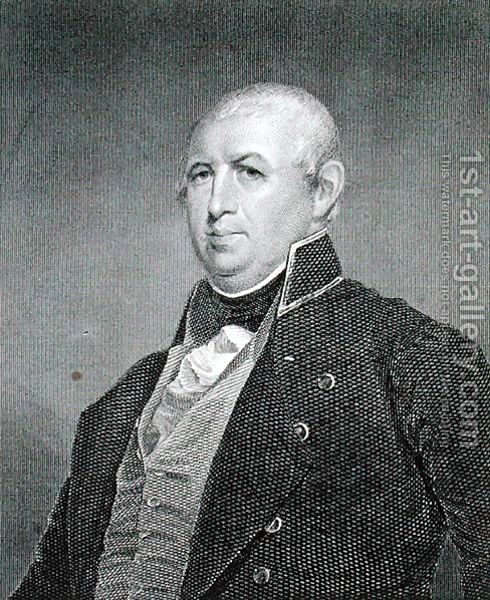
Isaac-Shelby-1750-1826

One of the most devastating conflicts America ever endured was the Civil War that raged from 1861-65. Its destruction came in part from the fact that it not only splintered the nation but also shattered families. For four years, friend fought against friend, and brother slew brother. It was not the first time Americans took up arms against each other, however. The first American civil war occurred nearly eighty years earlier during the American Revolution. As they strived to secure independence, “rebel” colonists were forced to fight not only the mighty British army but also their fellow countrymen who remained loyal to King George III. Hostility burned bright as both sides committed barbarous acts in defense of their cause. Nowhere was the struggle more ferocious than in the backcountry of North and South Carolina. One patriot commander was so outraged by the cruelty he vowed to vanquish the monster responsible. In October 1780 he and his army of frontiersmen crushed the savage commander and his Loyalist army. His name was Isaac Shelby. This is the story of his fight and ultimate triumph over the brutal Major Patrick Ferguson at the Battle of King’s Mountain.

By the time the American Revolution erupted, Isaac Shelby was fully acquainted with the ruthless nature of frontier warfare. Long before he was born in December 1750 in Clear Spring, Maryland, now part of Washington County, Indian attacks had terrorized western inhabitants. Isaac’s grandfather participated in retaliatory strikes against the natives, and at the request of Maryland’s governor, he helped construct several forts to stem the frequency of such attacks. As a teenager, Isaac joined the colonial militia and served on the Maryland-Pennsylvania border in the closing days of the French and Indian War in the early 1760s. He understood and accepted the inherent brutality of war, as demonstrated when he caught and beat an Indian spy to death with a tomahawk. In 1774 he again led men into battle against the Indians as a lieutenant in the Virginia militia. At the climactic Battle of Point Pleasant, Isaac and his men held firm against repeated Indian attacks and ultimately forced the enemy to retreat. Shelby’s command pursued the Indians and destroyed each village it passed through. Following the battles, Isaac explored the wilderness of modern Kentucky and saw boundless opportunities for westward expansion. He decided to make the region his home, but before he could do so, he became involved in the conflict between the thirteen colonies and Great Britain.

Throughout the early years of the American Revolution, Isaac Shelby served his country along the western frontier. Realizing the region had to be defended against the British and their Indian allies, Isaac and other local leaders formed militias and petitioned Virginia’s new state government for military supplies. Heeding the request, Governor Patrick Henry appointed Isaac to serve as the chief supply officer for the territory. Over the next few months, newly promoted Captain Shelby commanded numerous expeditions travelling from Virginia to the forts located throughout the region. Although he excelled at the task, he yearned for a more proactive role in defending the new country’s frontier. His chance came during the 1778 campaign against the Ohio Valley Indians. In command of thirty militiamen, he was charged with safeguarding the Virginia-Tennessee border. He took up position at the aptly named Fort Shelby and led patrols throughout the nearby countryside. By late 1779 the Indian menace had so diminished Isaac was transferred to North Carolina. He soon realized he had been so focused on the Indians he had overlooked a more sinister and immediate threat facing America’s frontier inhabitants.

By the summer of 1780 the struggle for American independence appeared to be turning in favor of the British. Unable to defeat the Continental Army in the North, Britain had invaded the American South and captured Savannah, Georgia and Charleston, South Carolina before moving inland to consolidate their control. Even more menacing, however, were the Loyalists, or Tories, waging a war of retaliation against the patriots. Such atrocities as the ransacking of homes and violent attacks on women became common. Among those outraged by these horrific acts was Colonel Isaac Shelby. He energetically organized 200 mounted riflemen and marched into South Carolina to link up with other patriot forces and combat the savage barbarians. On July 30th he arrived outside Fort Thicketty, and he spread his troops out as if preparing to attack. The display so overwhelmed the Tory commander he surrendered without firing a shot. Shelby returned to camp victorious, but almost immediately, he set out to engage British forces advancing towards his camp. On August 17th he faced the enemy along Cedar Shoal Creek and ordered his men to open fire. The patriots were outnumbered and were on the verge of withdrawing when a sniper felled the Tory commander. Shelby quickly rallied his troops and went on the offensive, forcing the Loyalists to retreat. Isaac began advancing further south, but the crushing defeat of General Horatio Gates’ American army at Camden, South Carolina on August 16th compelled him to fall back to the western mountains.

As Isaac reestablished a base in western North Carolina, he received reports of the cruelties visited upon inhabitants. Each story to reach him deepened his hatred for the British officer responsible — Major Patrick Ferguson. Under orders from British General Lord Charles Cornwallis, Ferguson turned his 1,500 Loyalists loose on the Carolina countryside with orders to kill every cow and horse belonging to any patriot family. He also supervised the destruction and looting of patriot homes. Ferguson even permitted his men to tear rings off women’s hands, no matter how much pain was inflicted. Fear and loathing soon inflamed every patriot heart, but the greatest outrage was yet to come. Ferguson sent an ultimatum to Shelby demanding the patriots cease their armed resistance or he would “lay their country waste by fire and sword.” The local populace was infuriated that this British officer and so-called “gentleman” would threaten that which they prized most — their lives and property. Hundreds of men and women clamored that action be taken against this barbarous officer. Shelby agreed and observed, “It is better that we go after him than he come after us.”

Wasting no time, Colonel Shelby dispatched messages throughout the region calling upon those able to bear arms to join his gathering army. He visited Colonel John Sevier in Tennessee and Colonel William Campbell in Virginia and secured their participation in the campaign. On September 26, 1780 Shelby led 1,000 men and boys out of Elizabethtown, Tennessee, and as the army crossed the mountains, dozens more soldiers joined the march. The army was enthusiastic at the thought of avenging the wrongs perpetrated by the brutal major. Many troops remembered the biblical story of Gideon and his victory over the Midianites. They believed God would bless them as He had blessed the Israelites. As the army drew steadily closer, Major Ferguson alerted British General Lord Charles Cornwallis to the advancing enemy, but he wrote of his intent to find a defensible position from where he could hold off the patriots until reinforcements arrived. Though the patriot army matched his in relative strength, Ferguson remained confident his well-trained and well-equipped force could easily defeat the backwoodsmen. As night fell on October 6th he stationed his soldiers along the high ground of King’s Mountain and waited for Shelby’s army to appear.

Informed of the enemy’s position by a patriot spy, Shelby marched the army through the night determined to fight the next morning. As the sun rose on October 7th Shelby and his fellow officers outlined a strategy whereby the army would surround the base of the mountain before marching up to engage Ferguson’s force. At 3:00 p.m. the men were in formation, and Shelby, who commanded the left flank of the attack, ordered his men to “prime your guns.” Then he began the long climb to the top. As he stumbled over rocks, he heard the sounds of battle from the far side of the hill, and he knew the patriots under William Campbell had engaged the enemy. His soldiers fought their way upward with a renewed determination. Finally, Isaac stood only feet away from the crest when a Tory soldier spotted him and called out the alarm. Ferguson shifted his men to the left and directed fire on Shelby and his comrades. The Tories leveled their bayonets and charged towards Shelby’s command, but in moments they were forced to withdraw as more patriots charged up the hillside. Confusion ruled as Shelby’s troops became mixed up with those led by Colonels Sevier and Campbell. Still, Isaac ordered his men to press on, and they surged up the hill. Ferguson’s soldiers fought doggedly, but the major saw he was being pressed from all sides. Loyalists dropped dead or wounded all around him, and as a result, the surviving Tories had to thin their lines. Ferguson knew he could not hold out much longer. From across the field, Shelby also watched as the enemy ranks began to fall apart, and he decided to take full advantage of the shifting tide of battle.

Believing the initiative had swung in his favor, Isaac Shelby ordered his men to push the final distance to the Tory lines. He followed the advance and crested the ridge in time to see the Tories falling back towards the backside of the mountain, but in moments, they were trapped as the remainder of the patriot army surged into Ferguson’s rear. Hand-to-hand fighting erupted as the Loyalists fought to the death. Attempting to escape through patriot lines to safety, the hated Major Ferguson was shot dead. The loss of their commander further demoralized the surviving Tories, but the patriots refused to show mercy until they had quenched their thirst for revenge. After several futile attempts, Isaac finally succeeded in reasserting control over his men, and he ordered them to cease firing. He then turned to the Tories and demanded their surrender. As his soldiers disarmed and herded their adversaries together, Shelby glanced at his pocket watch and was stunned to see the battle had lasted only one hour. The magnitude of the victory became even clearer after a brief count of the dead and wounded lying on the field. At the cost of only 90 casualties, Shelby’s army had killed or captured all of Ferguson’s 1,125 officers and men. With the Battle of King’s Mountain, nearly one-third of the British Southern army ceased to exist.

Despite the overwhelming nature of the victory, Shelby knew British forces would not tarry before advancing against the Americans. Most of the patriot army marched back into the western mountains to fight the British-allied Cherokee Indians while Shelby escorted the Tory prisoners to General Horatio Gates. He gave the general a detailed report of the action at King’s Mountain, and as word spread across the country, Shelby was proclaimed a national hero. North Carolina’s legislature awarded him a sword in honor of his triumph. In October 1781 Isaac learned of the British surrender at Yorktown, but he would not rest until the British left America for good. Along with Francis “Swamp Fox” Marion, he attacked British forts outside Monck’s Corner, South Carolina. Shelby’s deceptive tactics combined with a general loss of fighting spirit on the part of the British ensured the forts’ immediate surrender. He and his soldiers pursued the British army as it retreated to Charleston and ultimately abandoned the city in 1782.

With the war effectively won, Shelby left North Carolina and settled in Kentucky. Over the next ten years, he fought to secure Kentucky’s entrance into the United States, and on June 4, 1792 Kentucky became the fifteenth state to join the Union. On that same day, Isaac Shelby was inaugurated as the state’s first governor. In that capacity, he provided the state with financial and political stability, but he could not pacify the northern border, which was rife with Indian attacks. He returned to the governor’s office during the War of 1812 and soon learned of more massacres committed by the Indians. In response, he swore to retaliate in the same manner as he had when facing Patrick Ferguson over thirty years earlier. He formed a Kentuckian army and led it in a campaign that destroyed the Indian resistance, killing the feared Indian Chief Tecumseh in the process and finally securing the Northwestern territory. He left the governor’s office in 1816, but two years later President James Monroe chose him to negotiate the purchase of Chickasaw land situated between the Tennessee and Mississippi Rivers. Once the purchase was complete, he returned to his beloved homestead, known as Traveler’s Rest, and died there in July 1826.

Although his actions are little remembered today, Isaac Shelby was once considered one of America’s greatest patriot warriors. He had not only served courageously in America’s fight for freedom, but he had also helped secure the country’s borders and launch the U.S. on the road to prominence. His death was mourned across the country, but his memory remained etched in the hearts of his countrymen. Newspapers linked his name with that of John Adams and Thomas Jefferson, who had passed away only days before Isaac on July 4th. Cities and counties across the country took pride in bearing his name. But perhaps nowhere outside his beloved Kentucky was Isaac Shelby admired more than in the western mountains of the Carolinas where he had spent so much time fighting the enemies — both British and Loyalist — of his country. From that area and from that most glorious battle, Isaac Shelby forever carried the nickname given him by those grateful Americans he had so courageously defended — “Old King’s Mountain.”

2 Comments

Filed under Uncategorized

A Long, Hard Climb

250px-General_George_C._Marshall,_official_military_photo,_1946

On December 7, 1941, “a date that will live infamy,” America entered World War II when Japan attacked U.S. forces at Pearl Harbor, Hawaii. In the weeks that followed, thousands of young men enlisted in the U.S. military and began training to overthrow Nazi Germany and Imperial Japan. In just over four years the forces of totalitarianism were destroyed, and the United States stood alone as the world’s preeminent nuclear superpower. As the leader of the free world, America’s post-war policies shaped the actions of allies and former enemies alike. Among those who helped charter those policies was an army officer who had proudly served the U.S. since the dawn of the twentieth century. He helped convert the U.S. from an isolationist power centered on its own needs into a major player on the world stage. His impact was nearly lost, however, before he was even given the opportunity to show what he was capable of. His name was George C. Marshall. This is the story of how he overcame professional and personal strife to be U.S. Army Chief of Staff.

From the start of his military career, George Marshall proved he was well suited to the life of an army officer. He was born in Uniontown, Pennsylvania on New Year’s Eve 1880, and as the son of a Union veteran, he dreamed of life as a soldier. In 1897 he entered the venerated Virginia Military Institute (VMI) in Lexington, Virginia. He was a shy and reserved young man who strove for perfection, and it was those qualities that allowed him to excel in drill, discipline and martial leadership. He graduated in 1901 as first captain of the corps of cadets. In January 1902 Marshall was commissioned a second lieutenant in the U.S. Army and was deployed to the Philippines. There he kept a firm hand on his soldiers, once even leading them in recrossing a stream when several soldiers protested for fear of crocodiles. He returned to America in late 1903 and served in a variety of assignments in the western U.S. Intelligent and innovative, he represented the type of officer needed as the army shifted from a small cadre of professional soldiers to the large force required of an emerging great power.

Throughout the first decade of the twentieth century, George Marshall showed he had the talents necessary to rise through the ranks of the new American army. To provide the army with a corps of highly trained officers, a staff college was established at Fort Leavenworth, Kansas. In 1906 Lieutenant Marshall applied for and was accepted into the program. After a somewhat lackluster effort as an undergraduate, he dived into his military studies and so impressed his superiors that he was selected to remain at the staff college to teach engineering and military art. Army Chief of Staff J. Franklin Bell also admired his exceptionalism and loaned him to the Pennsylvania National Guard. Marshall later remembered he “was able to do things there with a regiment where I wouldn’t be able to get command of a company on a post.” Most of his work with National Guard units centered around the performance of military maneuvers. In 1911 he oversaw a field exercise that included one of the first uses of modern communications to direct operations, and a year later he helped direct a massive drill session comprising regular army units and National Guards from New York, New Jersey and New England.

During this period, he demonstrated his enormous talent for staff work and the ability to plan and execute large-scale military maneuvers. Despite his success, in 1912 he was required, by law, to return to the low status of company command at a remote posting. Assigned once again to the Philippines, his abilities resulted in being given responsibilities far beyond his rank, once even given command of a 5,000-man force designed to test Luzon’s defenses. Time after time, Marshall excelled at whatever opportunity came his way. Future Air Force General “Hap” Arnold once observed Marshall in Philippine field maneuvers and told his wife he had just seen a future Army Chief of Staff in action. Nonetheless, because of the army’s promotion policies and its emphasis on seniority, by 1916 George Marshall was a 35 year-old first lieutenant going nowhere.

By that point Marshall was on the verge of resigning from the U.S. Army. The only way his commanders could utilize his immense talent was to make him a general’s aide. He served as a personal assistant to General Hunter Liggett in the Philippines and provided the same service to General Franklin Bell when he arrived back in America in 1916. Unprecedented praise and responsibility came from the generals, but he wrote his mentor, General E.W. Nichols, that he was frustrated with a lack of promotion and was considering life as a civilian. The general and others encouraged him to stay on, and by the end of the year, he finally had his long-anticipated promotion to captain. Following America’s entrance into World War I in April 1917, Marshall joined the staff of General William Siebert, commander of the U.S. First Division, as chief of operations in charge of establishing training camps for the division’s soldiers. In May 1918 the division was ready for action, and under Marshall’s guidance, it launched an offensive against German forces in Cantigny, France. His actions not only earned him a promotion to major but also attracted the attention of General John J. “Black Jack” Pershing, commander of the American Expeditionary Force (AEF). Marshall was transferred to the general headquarters staff with the rank of brevet (temporary) colonel. In that capacity, Marshall planned the American attacks against Saint Mihiel, France and along the Meuse-Argonne in September. Finally at their limit, the Germans were forced to sign an armistice on November 11, 1918 and the subsequent Treaty of Versailles, ending the war. As the AEF demobilized, Pershing and others lauded Marshall for his brilliance in military tactics and for his diplomatic skills in negotiating with America’s allies. The end of the fighting, however, signaled the return of a dim and uncertain future for George Marshall.

When World War I ended, Marshall found himself reduced in rank to major and returned to work as a staff officer. Though he detested the assignment, he was pleased to remain under General Pershing’s command when the two returned to America and the general became Chief of Staff in 1921. Over the next two years, he familiarized himself with each area of responsibility, from personnel and intelligence to operations and war plans. Pershing even trusted him to oversee the office when he left the capital on military business. In 1923 he was promoted to lieutenant colonel, and there were suggestions that his administrative talents made him a potential candidate to become Chief of Staff one day. Unfortunately, he soon learned Pershing had decided to retire. Coupled with Congress’ refusal to expand the army, Marshall evaluated what options were open to him. He finally chose to seek a posting in China. He found the experience enlightening as he studied Chinese politics and culture, but he also encountered frustration as he listened to soldiers criticize him for his harsh discipline — even calling him a martinet, a heavy-handed authoritarian, at times. He soon yearned to return to America, but when he did return in 1927, he found himself assigned as an instructor to the Army War College in Washington, D.C. Unlike his time at Fort Leavenworth, he found the position too limiting and declared, “I thought I would explode.” Then true disaster struck.

Throughout his trying experiences, Marshall had always found solace in the arms of his wife Elizabeth, known as Lilly. He had first met her as a cadet at VMI, and after the two married in February 1902, she accompanied him to many of his postings. Sadly, she had long suffered from a heart condition which became exacerbated by a diseased thyroid gland. In August 1927 she underwent surgery on the gland and was told it appeared to be a success. On September 15th she learned she could go home the next day. Delighted, she sat down to write her mother the good news, but as she picked up her pen, she suddenly collapsed to the floor dead. Marshall was at the War College about to begin a lecture when he was told he had a telephone call. For one of the few times in his life, his austere façade cracked, and he buried his face in his arms. Those who saw him in the immediate aftermath described him as “white as a sheet.” He was so distraught he asked an aide to arrange the funeral. Unfortunately, he would experience loss again within the year as first his mother and then his mother-in-law died. To make his grief greater, he had no children or close friends on whom to lean. With nowhere else to turn, he accepted a position as assistant commandant of the Infantry School at Fort Benning, Georgia. With the typical Marshall determination and drive, he threw himself wholeheartedly into the job.

No sooner had he set foot at Fort Benning than Marshall felt new life flooding into him. He enjoyed reconnecting with old comrades like Joseph Stillwell, who had served with him in China, and establishing new bonds with men like Omar Bradley, who would play a vital role in the country’s future. It quickly became apparent, however, that the curriculum was in need of a massive overhaul. He was granted a free hand to reorganize the training given to the officers enrolled in the school. Remembering the experiences of World War I, he placed an emphasis on innovativeness and rapid mobility. To accomplish these objectives, he provided students with faulty maps, just as if they were on an actual battlefield. Almost 200 future generals would take Marshall’s lessons and put them into practice during World War II. Despite his primary focus in the classroom, Marshall did enjoy Fort Benning’s social scene, and it was in nearby Columbus he met Katherine Brown in 1929. She was a former actress and Baltimore widow with three teenage children. They were married on October 15, 1930, with General John Pershing as best man. Fellow officers marveled as his vitality returned. Cool and dispassionate in public, in private he was a loving husband and a doting stepfather.

At the same time his personal life was resurrected, his languishing career experienced a surge of energy as well. In 1932 he received the job he most wanted — command of infantry troops — first as battalion commander at Fort Screven, Georgia and then as regimental commander at Fort Moultrie, South Carolina. In 1933 he was promoted to colonel and briefly served as senior instructor to the Illinois National Guard. His most surprising success, however, came in organizing young men into President Franklin Roosevelt’s prized Civilian Conservation Corps (CCC). Marshall not only enthusiastically supported the program but also participated in its numerous projects to restore America’s environment. In 1936 he rejoiced at his promotion to brigadier general and assignment to Portland, Oregon as supervisor of local CCC projects. After two years, however, he was ordered back to Washington, D.C. to head the War Plans Division. At the very highest levels, people were beginning to take notice of him. He served as head of War Plans for only three months before receiving an appointment as deputy chief of staff. In that position, Marshall earned the respect of President Roosevelt and his top adviser, Harry Hopkins, with his frank opinions and his proposals on rebuilding the army. In April 1939 Roosevelt invited the general to the White House and quite unexpectedly informed Marshall he would be the next Chief of Staff. The final leap to the top was meteoric.

Jumping in rank from brigadier general to full general, George Marshall officially took office as Army Chief of Staff on September 1, 1939 — the same day Germany invaded Poland and ignited World War II. In the two years between his induction and Japan’s attack on Pearl Harbor, he obtained more than $2.5 billion in funding. He also urged a rapid buildup of U.S. forces, and by the end of 1940, he commanded an army of 800,000 men. Preparations for war continued throughout 1941, including the decision to defeat Nazi Germany first and then destroy Imperial Japan. In the immediate aftermath of the December 7th attacks, Marshall and the rest of the U.S. Army mobilized for combat. Despite wanting to command the European front himself, Marshall remained in Washington to direct American operations in Europe and the Pacific. He chose a bright, capable officer named Dwight Eisenhower to command in Europe while Douglas MacArthur led the war against Japan. After four years of war, he joined the rest of America in celebrating the end of the war. With the war’s end, Marshall retired from the U.S. Army, but in 1947 he returned to public life as President Harry Truman’s Secretary of State. In his new position, he helped resurrect Europe’s devastated economy, through the mechanisms of the Marshall Plan, and led the country through the early years of the Cold War against the Soviet Union. His final act of service to the U.S. was as Secretary of Defense during the Korean War. His most famous action was supporting President Truman’s decision to relieve Douglas MacArthur as head of Allied forces in Korea. In the wake of hostile criticism, George Marshall left government service for good in September 1951 and retired to his home in Leesburg, Virginia where he remained until his death in October 1959. As the nation mourned the loss of an iconic leader, he was laid to rest in Arlington National Cemetery.

George Marshall’s rise to prominence was certainly not rapid nor without struggle, but he persevered through each difficulty and challenge to eventually achieve the heartfelt respect and thanks of a grateful nation. Despite feeling frustrated on occasion, he refused to be discouraged by his slow progression up the chain of command. In much the same manner, he resolutely overcame the crushing loss of his first wife. His calm and confident manner as the highest-ranking member of the U.S. Army inspired those who waged the struggle for freedom from 1941-45. His devotion to duty was absolute, regardless of circumstances. Whether adversity builds character or reveals it, there is no truer demonstration of that idea than the life of George C. Marshall.

2 Comments

Filed under Uncategorized

For Better or Worse

220px-James_B._and_Fannie_Ricketts_-_Brady-Handy

Throughout our country’s past, women have played a key role in supporting men during wartime. It was traditionally women who maintained the home front and provided logistical support to the soldiers on the front lines. At no time was this support more critical than during the Civil War. Across the nation, both North and South, many women volunteered in hospitals as nurses while others worked to supply food, clothing and other necessities to those serving in Union and Confederate armies. One woman, however, defied all nineteenth century gender expectations. She was not content to wait for her husband to come home from war, but rather she determined to share in the harsh realities of war. For her efforts, she received praise from all who met her, regardless of their allegiances. Her name was Fanny Ricketts. This is the story of how she risked everything to be with her husband.

Even before the Civil War erupted, Fanny Ricketts was accustomed to the hard life of a military spouse. She was born in 1828 in Elizabeth, New Jersey to a wealthy Englishman and an Anglo-American mother. Details of her early life are scarce, but she likely lived a comfortable existence until January 1856, at which time she married Captain James Ricketts of the 1st U.S. Artillery. After the wedding, Fanny accompanied him to his posting on the Rio Grande River. Upon arrival, she quickly adapted to the spartan conditions of the frontier and frequently showed a cheerful disposition in the face of adversity. She also devoted herself to those around her. She served in the hospital nursing the sick and offered a sympathetic ear to those soldiers wishing to confide in her. She often pleaded for clemency on behalf of those convicted of committing an infraction. Every member of the garrison, whether officer or enlisted man, saw her as an angel of mercy and their best friend. Unfortunately, it was not long before the rumblings of war reached the tiny outpost, and Fanny realized she would soon have to watch her husband march off to war, possibly never to return.

Like many army wives, Fanny recognized the looming war could take from her all she held dear, but she was determined to enjoy her husband for as long as she had him. When the Civil War erupted in April 1861, the federal government called upon its cadre of professional officers to train the volunteers flooding Washington, D.C. With the rest of the 1st Artillery, the couple left for Fortress Monroe, at the confluence of Virginia’s York and James Rivers, where James served as an artillery instructor for new recruits. Fanny often watched as James taught his crews how to load and fire each gun. In early summer Ricketts was transferred to Alexandria, Virginia, just outside Washington, to command his own artillery battery. Fanny quickly became a familiar sight around headquarters. By mid-July, however, it was apparent the army was about to depart the capital, and sure enough, Ricketts and the rest of General Irvin McDowell’s force set out on July 16th to defeat the Confederate army and end the war.

After several days of marching, Union soldiers faced their Confederate counterparts along Bull Run creek, twenty-five miles from Washington, D.C. Battle began early on the morning of July 21st, and as afternoon approached, it appeared as if the North would win as Union forces steadily drove the Southerners back. As fighting intensified, the sounds traveled back to Washington where men and women were going about their usual Sunday routines. Some pondered the distant thunder, but Fanny knew what it meant and began praying for her husband. Her prayers were desperately needed as General McDowell had just ordered James and his cannons to follow the withdrawing Confederates to the high ground of Henry House Hill. Once in position, Captain Ricketts engaged in an artillery duel with Confederate cannon only 300 yards away. At the same time, Confederate sharpshooters picked off the gunners. Believing the shots came from the Henry house, James ordered his artillerymen to destroy the building, inadvertently killing 85 year-old Judith Henry who was inside. Seeing they had to take the battery, thousands of Confederates charged out of the tree line, urged on by their fearless commander, Stonewall Jackson. Already bleeding from several wounds, Ricketts tried to direct fire on the onrushing troops, but as the enemy enveloped his position, he collapsed to the ground when a bullet entered his left leg and shattered the bone near the knee joint. Believing him dead, his soldiers joined the rest of the army in fleeing back to Washington.

Word of the defeat raced ahead of the army as it staggered back into Washington during the night of the 21st-22nd. Like the rest of the city, Fanny gasped at the sight of beaten soldiers as they trudged past her doorway, but more frightening, there was no sign of her husband among them. Within hours, a young lieutenant arrived and presented her with James’s sword. He told her that Ricketts’ “last words are of her and our child.” He also spoke of the desperate but futile search for the captain’s body. Confronted by the bleak reality that she was now a widow, Fanny fell into a depression while still desperately hoping James would turn up alive and safe. Over the next two days, however, that hope grew weaker. She was on the verge of accepting the terrible truth when she received an unbelievable message. Under a flag of truce, a Confederate officer reported that Ricketts was alive, but he was suffering from his wounds in a battlefield hospital overseen by the Confederates.

Despite the fact he was now a prisoner of war, Fanny immediately resolved to join her husband and nurse him back to health — even if she had to go into captivity with him. She petitioned and received from General Winfield Scott, general-in-chief of all Union armies, a passage of safe conduct through Union lines as well as a carriage and driver. When she arrived at the edge of Confederate territory, she was halted by Southern soldiers and prevented from going any further. Refusing to abandon her mission, she penned a brief note to her old friend J.E.B. Stuart, now a Confederate cavalry officer, reminding him of their time together along the Rio Grande and asking for his assistance in reaching her husband. Stuart presented the brave woman with a pass to enter Confederate lines, but he also declared she had to sign a written parole stating she would not behave as a spy while behind the lines. Indignantly, Fanny ripped the parole in half and shouted she was “no spy but the wife of a wounded officer, and [I] will go as your prisoner but never sign this.” She then demanded to be taken to see Confederate General Joseph Johnston who allowed her to search for James. She finally found him on July 26th, five days after the battle, but her ordeal was just beginning.

Upon arriving at the makeshift hospital, she blanched at the sight in front of her. She saw a soldier undergoing amputation, and moments later, she shuddered after passing by two bloody legs and an amputated arm. She also had to stop on the stairway so stretcher-bearers could carry two bodies down to the main hall. Finally, she entered James’s room and saw her beloved laying on a bed, delirious with fever and clutching his mangled leg. Rushing to his side, Fanny grasped his hand and watched as his eyes slowly focused on her. He murmured softly, “I knew you would come.” As his eyes closed again, doctors approached her and said it was essential to amputate the leg. She emphatically rejected the notion, knowing James was not strong enough to survive the operation. Suitably chastened, the doctors turned away while Fanny set to work tending his wounds. She fed and washed him and changed his bandages as often as necessary. Though her main focus was on her husband, she could not ignore the plight of the other wounded soldiers, and soon she was working around the clock to ease each man’s suffering. By August, however, conditions in the hospital had deteriorated to the extent it was decided to move the wounded to Richmond, the Confederate capital.

Learning of the imminent transfer, Fanny declared she would share James’s confinement. Moved by her commitment, Colonel Wade Hampton of South Carolina secured an ambulance for the couple to ride in and provided them with nourishment along the way. This compassion came to an end when the pair arrived in Richmond and were thrown into the city’s poorhouse and later the infamous Libby Prison. The conditions were deplorable, and the suffering intensified over the next several months. Fanny watched as her husband slid into unconsciousness for large amounts of time, and she feared he was at the point of death. Her devotion, however, won the admiration of several Confederate wives who defied social convention to supply the couple with baskets of food. Thanks to these efforts, Captain Ricketts began to recover, but in November he learned he and other officers faced possible execution in return for the deaths of Confederate privateers recently captured by the Union navy. In desperation, Fanny appealed to the women who had befriended her, and they persuaded their husbands such retaliation would damage the Confederacy’s image. Miraculously instead, Ricketts was exchanged for a Confederate officer. By the end of 1861, James and Fanny Ricketts were back home in Washington, D.C.

Though not called upon to act as heroically as she did in the war’s first months, Fanny continued to show courage and commitment throughout the remaining years of civil war. In early 1862 Ricketts was promoted to brigadier general, but Fanny insisted on accompanying him into the field until the eve of battle forced her return to Washington. Following the bloody Battle of Antietam in September, she learned he had reinjured his left leg when his horse had been shot and rolled over on him. As before, she saw to his recovery, but once he was healed, she devoted herself to the care of other wounded soldiers. She worked tirelessly in the weeks and months after the epic Battle of Gettysburg in July 1863 and throughout the first half of 1864. Then in September she received word Ricketts had been severely wounded in the right breast. She once again braved all dangers to be by his side. Though the bullet had been removed by the time she arrived, his recovery was still in doubt. Showing the same dedication she had in 1861, she vigilantly nursed him back to health. After the war ended in 1865, they remained in Washington until James died in September 1887, never fully healed of his war wounds. Fanny herself lived until December 1900 when she was laid to rest beside her husband in Arlington National Cemetery in recognition of all she sacrificed in the name of love.

Fanny Ricketts’ actions provide a noble example of service to family, country and any in need of help. She was willing to brave all manner of obstacles and hardships to be with her husband. From the barren frontier to the dank prison cells of Richmond, Virginia, she faithfully followed wherever James led. Her fidelity, devotion and commitment were evident to her friends and enemies alike, and by the end of the war, she had become a national heroine. Fanny Ricketts fought the good fight in her own way, on her own terms.

1 Comment

Filed under Uncategorized

The Spirit of the Revolution

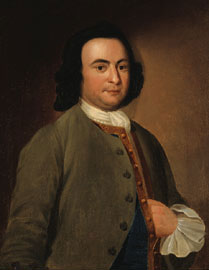
George_Mason

During the early years of America’s existence, no state seemed to play a more vital role than that of Virginia. It was the oldest colony, and many of Virginia’s most prominent families could date their lineage back to the first colonists. It was only natural, therefore, for Virginians to lead the fight for independence. It was Virginia’s Patrick Henry who gave voice to American demands when he declared, “Give me liberty or give me death.” After fighting erupted, George Washington donned his uniform and charged into battle while Thomas Jefferson used his pen to defend the righteous struggle. Each is still remembered today and honored for his contributions to the cause of freedom. There was another Virginian, however, who was just as critical to the American Revolution’s success as his more famous compatriots. He was fiercely dedicated to liberty, and he fought against oppression of all kinds. He believed the true power of government rested in the hands of the people, and it was he who inspired others to see the Revolution through to the end. His name was George Mason. This is the story of his rise to lead Virginia’s fight against Britain’s harsh colonial policies.

As befitted a member of Virginia’s Tidewater elite, George Mason was the product of an aristocratic upbringing. He was born in December 1725 at Dogue’s Neck, Virginia, a peninsula jutting out into the Potomac River, to a family that had lived in Virginia since 1651. Both his grandfather and father were prosperous landowners, and by the time Mason reached adulthood, the family owned nearly 75,000 acres across Virginia and Maryland. He built a lavish home in Fairfax County known as Gunston Hall and devoted himself to growing tobacco and other crops. He even briefly served in Virginia’s House of Burgesses. Beneath his aristocratic demeanor, however, lay the heart of an English Whig. He read Algernon Sidney’s Discourses Concerning Government and John Locke’s Two Treatises of Government and cultivated an abiding love for individual liberty and classical republicanism. He opposed the established Anglican Church in favor of religious freedom and spoke out against slavery, even though he participated in the practice. It was clear he intended to stand with the oppressed rather than the oppressors, and it was not long before he put his philosophy into practice.

As with most colonists, it was not until Britain threatened his private affairs that Mason perceived the “mother country” as hostile to American interests. The first and perhaps most critical occurrence to awaken Mason involved the western movement into territory recently acquired from France during the French and Indian War. Like his friend George Washington, Mason saw vast opportunities in the Ohio River Valley. He had joined the Ohio Company and worked to promote settlement in the region, and he bought several tracts of land for himself. He was stunned, therefore, when King George III issued the Proclamation of 1763 outlawing white settlement west of the Appalachian Mountains. Not only did the decree prohibit colonial migration, but it also essentially voided all of Mason’s hopes of creating a western real-estate empire. George was disheartened as he realized all his efforts had been for naught, and he vented his frustration by writing to other shareholders how the “proclamation was an express destruction of [the] grant” given to the Ohio Company. It was the first time Mason experienced the hand of tyranny, but it would not be the last.

George Mason was outraged by Britain’s efforts to administer its new North American empire, and his frustration only mounted as British authorities tightened their control. In 1764 Parliament passed the Currency Act, giving Britain oversight over Virginia’s monetary policy. The House of Burgesses could no longer issue paper money, and citizens could no longer use it to repay debts owed to British merchants. This also meant Mason and his neighbors could not obtain credit if they needed it. Mason recognized the new policy menaced the fragility of the colony’s finances, but he soon learned Parliament had adopted a second measure imperiling the colonial justice system. In an effort to crack down on smuggling, British officials passed the Sugar Act, which lowered the price of molasses, but the act also established a vice-admiralty court to try suspected smugglers. The court was located in Halifax, Nova Scotia and was given jurisdiction over all thirteen colonies, and more ominously, there was no impartial jury to hear the case. Instead, a crown-appointed judge determined whether the accused was guilty or innocent. This system placed the burden of proof on the defense, rather than the prosecution. Mason was unnerved when he realized colonial courts had become subservient to royal authority, but he was not quite ready to take an active role in colonial protests. That changed in 1765 with the passage of the Stamp Act.

Unlike previous British policies, including the Sugar Act, the Stamp Act was not a trade regulation but a direct tax on American colonists. The law required colonists to buy stamps for printed material, and those stamps carried a tax on them. As the crisis intensified, Mason kept up a steady correspondence with George Washington. Through that correspondence, Mason learned the House of Burgesses had resolved to oppose taxation without representation and had urged the creation of a Stamp Act Congress to oppose the new law. Mason supported the legislature, and he knew he could not sit on the sidelines any longer. He began studying English common law and discovered a way to sabotage the Stamp Act. Traditionally, tenants could recover, or replevin, seized property by posting a bond, but according to the Stamp Act, the tenant had to buy a stamp first and then appear before a local court. Many courts, however, were closed due to protests so the landlord could not sue the tenant and collect on the bond. In response, Mason proposed that a tenant submit a “confession of judgment” for back rent to a local justice of the peace, and the justice could enforce the judgment without convening the entire court once a reasonable amount of time had passed. The proposal was never adopted, but it did allow Mason to step onto the national stage for the first time. In the months that followed, he gradually became one of the primary spokesmen for American rights.

In March 1766 Mason and the rest of America learned Parliament had repealed the hated legislation, but British merchants publicly condemned the colonists for their protests and warned that the repeal had not truly solved the crisis. Mason was so incensed by the arrogant condemnations he took up his pen to defend the protests. He attacked the merchants for verbally disciplining the colonists as a schoolmaster would a disobedient pupil. He reiterated how Americans were loyal to the king and only wanted their birthright as British subjects. The protests were meant to show Britons that Americans were “descended from the same stock as themselves and nurtured in the same principles of freedom.” He then turned his attention to the new Declaratory Act, which stipulated Parliament could legislate for the colonies “in all cases whatsoever.” Mason declared that if the act was used to advance “unconstitutional” principles, namely the ability to tax without representation, then “to become ‘waste paper’ would be the most innocent use that could be made of it.” He concluded by warning how “another experiment as the Stamp Act would produce a general revolt in America.” He was soon proven correct, and he willingly shouldered the burden of leading the counterattack against the forces of oppression.

The political crisis was renewed in 1767 after Parliament adopted the Townsend Duties. The act not only imposed new taxes on imports and made royal officials independent of colonial legislatures for their salaries, but it also created the American Board of Custom Commissioners to force compliance with trade regulations. Though he detested the policies, Mason knew that Virginia and other Southern colonies were ill prepared to engage in economic warfare. Still, he was determined to try. He declared that America’s “all is at stake, and the little conveniences and comforts of life, when set in competition with our liberty, ought to be rejected not with reluctance but with pleasure.” He immediately set to work drafting a nonimportation agreement, adding that the Townsend Duties would transform the colonists “from a free and happy people to a wretched and miserable state of slavery.” His proposal advocated a boycott of all goods taxed by the Townsend Duties as well as liquor, furniture and other luxury items. He even suggested Virginians “refrain from making tobacco.” With the exception of a tobacco strike, the House of Burgesses accepted his recommendations when they convened in May 1769. Though not as effective than it might have been, the boycott ultimately forced the British government to repeal all taxes except one on tea. In 1773 Parliament used that tax to its advantage when it passed the Tea Act, which gave the East India Company a monopoly on selling tea in the colonies. Like his brethren in Massachusetts, Mason was outraged by the latest injustice, and he applauded the resistance exemplified by the Boston Tea Party. Britain’s subsequent response — imposing martial law — convinced him that armed rebellion was the only option left if Americans wished to safeguard their rights.

By late 1774 George Mason saw that Britain would accept nothing less than colonial subservience to royal authority. Like his fellow Virginians, he scorned the closing of Boston harbor and the other “Intolerable Acts.” His neighbors in Fairfax County called on him to draft a statement of American rights. He used it as an opportunity to viciously denounce Parliament’s attempt to “introduce an arbitrary government into His Majesty’s American dominions.” He renewed his calls for a boycott of British goods as well as for a Continental Congress to protect American interests. Both proposals were adopted, but he argued it was also necessary to prepare for war. Throughout the winter of 1774-75 he and George Washington formed a company of militia, and he purchased gunpowder and ammunition with his own money. His efforts showed that he was now truly committed to the patriot cause, and he would sacrifice anything to see the colonies free of tyranny’s grasp.

By the time fighting erupted at Lexington and Concord in April 1775, George Mason had risen to become one of Virginia’s most respected statesman. It was only natural, therefore, that he was elected to serve in Virginia’s provisional government. He briefly served in the third state convention helping organize militias to fight the British and overseeing construction of defenses along the Potomac River, but he achieved his greatest success in the fifth convention a year later. Arriving at the convention on May 18, 1776, he drafted a state constitution while devoting most of his time to his famous Declaration of Rights. The Declaration began with the principle that governments were meant to serve their citizens, and citizens had the “right to reform, alter or abolish” the government when it failed to safeguard the national interests. To ensure the government remained responsive to those it served, he advocated frequent elections. Mason also provided a bill of rights, which enshrined rights such as trial by jury and the free exercise of religion. He provided both documents to the larger convention, which adopted them largely intact.

When his work was done, he secured a seat in the House of Delegates where he worked to establish financial stability and supply the war effort with men and materiel. Though not as dramatic as battlefield exploits, the long and arduous struggle for independence could never have been sustained absent efforts such as his. After the Revolution ended, he kept an eye on national affairs and attempted to help negotiate commercial conflicts between Virginia and Maryland. In 1787 he was chosen to attend the Constitutional Convention in Philadelphia, Pennsylvania. As the Constitution took shape, however, Mason feared it could become a tool to oppress Americans. He refused to support the document as too empowering and joined the Anti-Federalists in an effort to safeguard individual liberties. Ultimately, his efforts proved unsuccessful, and he retired to Gunston Hall where he lived until his death in October 1792.

Though he has largely been forgotten today, George Mason earned the right to stand beside his fellow Virginians as a national hero. He was at the forefront of the struggle from the beginning, and it was he who inspired others to action. Every battle for freedom requires those who can inspire and motivate the citizenry to join the fight. Time and again, it was Mason to whom his colleagues turned to express the principles they held dear. He remained dedicated to those principles even after the fighting ended. If Washington was the Sword of the Revolution, Jefferson the Pen, and Henry the Voice, George Mason was surely the Spirit of the Revolution.

2 Comments

Filed under Uncategorized

Past and Present


Snip20160306_1

It is hard to believe, but it has already been a year and nine months since I started www.jakes-takes.com. In that time, eighty-three distinctively American stories have been published. I want to thank everyone who has read my stories, and I particularly appreciate those who have left comments. I hope you enjoyed reading them as much as I enjoyed writing them. As with any writer, however, I need some time off so I can recharge my creative batteries. After a short break, I hope to be back with new stories in the middle of October.

In the meantime, you may wish to go back and read older posts — either for the first time or as a re-read. To reach them, all you have to do is get on my site and scroll down through the last ten stories to the bottom of the page where you will see “older posts.” If you click on it, you will see more stories; then just continue to click on “older posts” at the bottom of each page that loads and you can eventually reach the story you want to read. It’s not quite as quick as being able to click on an individual story, but it’s just the way this blog site works. For your convenience, a list of all my stories, starting with the most recent, follows. Thanks again for your faithful support.

Jake McCollum

List of jakes-takes.com Posts:

Sep. 6, 2015   — “Managing Manhattan” (Leslie R. Groves)

Aug. 30, 2015 — “His Own Place in the Sun” (Robert Todd Lincoln)

Aug. 23, 2015 — “An English Patriot” (Charles Lee)

Aug. 16, 2015 — “Rhode Island Radical” (Roger Williams)

Aug. 9, 2015   — “Pushing the Envelope” (Neil Armstrong)

July 26, 2015 — “Sweet Success” (George Washington Carver)

July 12, 2015 — “The First ‘Lady’ of Liberty” (Martha Washington)

July 5, 2015    — “Changing with the Times” (Leonard Wood)

June 28, 2015 — “Risking It All” (Jefferson Davis)

June 21, 2015 — “Subject No More” (Benjamin Franklin)

June 14, 2015 — “Behind Enemy Lines” (Frederick Mayer)

June 7, 2015    — “A Reconciled Warrior” (Joseph Wheeler)

May 31, 2015 — “One Life to Give” (Nathan Hale)

May 24, 2015 — “The ‘Lone Eagle’ Flies Again” (Charles Lindbergh)

May 17, 2015 — “The Price of Freedom” (Jim Bowie)

May 10, 2015 — “Principle Defender” (John Adams)

Apr. 19, 2015 — “Duty, Honor, Country” (Dwight Eisenhower)

Apr. 12, 2015 — “Like a Stonewall” (Thomas “Stonewall” Jackson)

Apr. 5, 2015  — “The Old Wagoner” (Daniel Morgan)

Mar. 29, 2015 — “The Doolittle That Did a Lot” (Jimmy Doolittle)

Mar. 22, 2015 — “When Duty Calls” (Oliver Wendell Holmes, Jr.)

Mar. 15, 2015 — “Total Warrior” (John Sullivan)

Mar. 8, 2015  — “Selling Out for His Cause” (Alger Hiss)

Mar. 1, 2015  — “The Original Code Talker” (Samuel Morse)

Feb. 22, 2015 — “Financing Freedom” (Haym Salomon)

Feb. 16, 2015 — “Forged By Fire” (Glenn Cunningham)

Feb. 8, 2015    — “The Soldiers’ Surgeon” (Mary Edwards Walker)

Feb. 1, 2015    — “A Real ‘States’ Man” (Roger Sherman)

Jan. 25, 2015  — “The Making of a Champion” (Bobby Jones)

Jan. 18, 2015  — “A ‘Union’ Man” (Abraham Lincoln)

Jan. 11, 2015  — “A ‘Man’ Among Men” (Deborah Sampson)

Jan. 4, 2015    — “A Freedom Fighter” (H. Norman Schwarzkopf)

Dec. 21, 2014  — “Abolitionist-in-Chief” (William Lloyd Garrison)

Dec. 14, 2014  — “American Guerilla” (Henry “Light Horse Harry” Lee)

Dec. 7, 2014    — “A Beautiful Mind” (Hedy Lamarr)

Nov. 30, 2014  — “A Rebel Chief” (Stand Watie)

Nov. 23, 2014  — “A More Perfect Union” (James Madison)

Nov. 16, 2014 — “Sacrificial Service” (John J. Pershing)

Nov. 9, 2014   — “Above and Beyond” (Tom Custer)

Nov. 2, 2014  — “Revolutionary Resilience” (Henry Knox)

Oct. 26, 2014  — “A Monumental Man” (Gutzon Borglum)

Oct. 19, 2014  — “Balm of the Badlands” (Theodore Roosevelt)

Oct. 13, 2014  — “Life, Fortune and Sacred Honor” (Joseph Warren)

Oct. 5, 2014    — “Restored and Recognized” (Harry S. Truman)

Sep. 28, 2014  — “As Stubborn as a Mule” (Stephen A. Hurlbut)

Sep. 21, 2014  — “Peace Through Strength” (Anthony Wayne)

Sep. 14, 2014  — “An Undersea Transformer” (Chester W. Nimitz)

Sep. 7, 2014    — “What So Proudly He Hailed” (Francis Scott Key)

Aug. 31, 2014  — “Rise and Fight Again” (Nathanael Greene)

Aug. 24, 2014  — “Saved By Grace” (Mary Rowlandson)

Aug. 17, 2014  — “A Real ‘Survivor’” (Louis Zamperini)

Aug. 10, 2014  — “One Nation, Indivisible” (Daniel Webster)

Aug. 3, 2014    — “A Forgotten Emancipation” (Robert Carter III)

July 27, 2014   — “Lifted Above Limitations” (Franklin D. Roosevelt)

July 20, 2014   — “A Friend to the End” (James Longstreet)

July 13, 2014    — “A War of Words” (Mercy Otis Warren)

July 6, 2014      — “A Five-Star Promise” (Douglas MacArthur)

June 29, 2014  — “A Vision for All Americans” (Oliver O. Howard)

June 22, 2014  — “His Finest Hour” (George Washington Story 3)

June 15, 2014 — “Destined” (George S. Patton)

June 8, 2014  — “Winds of Change for the Comanche” (Quanah Parker)

June 1, 2014  — “Into the West” (George Rogers Clark)

May 25, 2014 — “Aces High” (Eddie Rickenbacker)

May 18, 2014 — “Before the Legend” (David Crockett)

May 11, 2014 — “Revolutionary Redemption” (Benjamin Lincoln)

May 4, 2014  — “Indomitable” (Lance Sijan)

Apr. 27, 2014 — “Her Eyes Have Seen the Glory” (Julia Ward Howe)

Apr. 20, 2014 — “British Soldier, American General” (Richard Montgomery)

Apr. 13, 2014 — “His Brother’s Keeper” (Johnnie Ashe)

Apr. 6, 2014    — “A Southern Man With a Plan” (Patrick Cleburne)

Mar. 30, 2014 — “An American Nobleman” (Marquis de Lafayette)

Mar. 23, 2014 — “Mr. Smith Goes to War” (Jimmy Stewart)

Mar. 16, 2014 — “The Last Fight” (Ulysses S. Grant)

Mar. 8, 2014    — “A Hero’s Fall” (Benedict Arnold)

Mar. 2, 2014    — “A Meaningful Mission” (George H.W. Bush)

Feb. 23, 2014  — “The Call of Duty” (Robert E. Lee)

Feb. 16, 2014  — “A Revolutionary Miracle” (George Washington Story 2)

Feb. 9, 2014    — “An ‘Ordinary’ American Hero” (Doris “Dorie” Miller)

Feb. 2, 2014    — “A Lady’s Legacy” (Dolley Madison)

Jan. 26, 2014    — “Win or Sink” (John Paul Jones)

Jan. 19, 2014    — “Courage and the Coconut” (John F. Kennedy)

Jan. 12, 2014    — “One Man Can” (Gouverneur K. Warren)

Jan. 4, 2014      — “A Man of Purpose” (George Washington Story 1)

2 Comments

Filed under Uncategorized

Managing Manhattan

images

This past week marked the 70th anniversary of the end of World War II. On September 2, 1945 Japanese leaders officially surrendered to Allied forces aboard the USS Missouri in Tokyo Bay, Japan. When word reached the United States, celebrations erupted all across the country. Perhaps nowhere was victory received with more anticipation than in the small community of Los Alamos, New Mexico. For nearly three years, it was there that dozens of men and women had worked to create the weapon that helped end the war — the atomic bomb. The final victory belonged as much to them as it did to the U.S. military. While the primary celebrity was Dr. Robert Oppenheimer, he was not the only one responsible. There was another man who has often been overlooked for his contribution to the effort. Unlike Oppenheimer, he was not a civilian but rather a U.S. Army officer. Still, he had the training and the fortitude to see creation of the bomb through to the end. His name was Leslie R. Groves, Jr. This is the story of how he came to head the mission known as the Manhattan Project.

Throughout his early years, Leslie Groves demonstrated a number of traits that proved beneficial as he later struggled to create the first atomic bomb. He was born in Albany, New York in mid-August 1896 to an army chaplain and grew up on army posts around the country. As a boy, he inherited his father’s strong sense of patriotism, and he vowed to remain dedicated to the U.S. for the rest of his life. It was that vow that led him to set his sights on attending the U.S. Military Academy at West Point, and he refused to let anyone deter him from the objective. Determined to succeed, he took both high school and college classes, but he ultimately earned only slightly above-average grades. While his grades were less than spectacular, he proved he could achieve a goal in a timely manner without completely sacrificing quality. Upon graduation from high school in June 1914, Leslie was nominated as a potential substitute for the appointed cadet, but he was unable to pass the entrance examination. Refusing to give up, he enrolled in the Massachusetts Institute of Technology (MIT) and studied science and engineering. In early 1916 he passed West Point’s entrance exam on his second try and entered the academy in June as a plebe in the class of 1920. He soon gained a reputation for his dedication to his studies, and he excelled in all his courses. He stood fourth in his class, graduated two years ahead of schedule in 1918 due to World War I, and chose to enter the Army Corps of Engineers.

After leaving West Point, Lieutenant Groves proved he was not just a skilled engineer but also oblivious to danger. In November 1918 he reported to Camp Andrew A. Humphreys, just outside Washington, D.C., to complete his training. As part of his education, he visited France in June 1919 during the immediate aftermath of World War I and observed the military installations used to supply American forces. He studied the location and purpose of each depot and critically analyzed the time and distance required to move the supplies to the front. He then evaluated if a more efficient system existed. He finished school in June 1920 and spent the next few years overseeing construction projects, including the widening and deepening of the Houston Ship Channel in Galveston, Texas to permit the entrance of larger vessels. In December 1927 he was in Vermont supervising erection of pontoon bridges across raging rivers when one bridge was destroyed. Groves refused to be discouraged and led his men in securing new materials to rebuild the bridge. Two months later, he was standing next to his sergeant when a block of TNT exploded. Though he was bleeding from injuries to his face and hands, Leslie did not panic and took his companion to a nearby hospital, where the man later died. It was not the last time he showed courage in the face of extreme peril. In March 1931 Groves was in Managua, Nicaragua laying out a possible interoceanic canal when a devastating earthquake hit the region. Braving potential landslides, Leslie took charge of restoring the town’s water system. The American ambassador commended him for his efforts, and the Nicaraguan government awarded him the Nicaraguan Presidential Medal of Merit. Undoubtedly, Leslie Groves’ star was on the rise.

Upon returning to the U.S. in the summer of 1931, Groves was posted to the Office of the Chief of Engineers in recognition of his dedicated service. There he came under the influence of Colonel Ernest “Pot” Graves, one of the corps’ preeminent officers. Graves told the young man there were certain qualifications he needed to possess to be a good engineering officer. One of the most important was mental discipline so an officer could employ his intelligence to devise successful solutions to problems. Just as important, however, was an ability to delegate authority to subordinates. As part of this process, Groves learned how to give orders that were simple and direct enough for his men to follow and allowed him to keep the mission on track, no matter how complex it might be. The more time he spent with Graves, the more Leslie came to mirror his mentor’s ability to cut to the heart of the matter in every instance. These traits were vital as Groves assumed a larger role in the department as the 1930s progressed.

As a member of the Corps of Engineers, Leslie Groves was involved in several noteworthy military projects. In early 1932 he was assigned to the Mobile Type Anti-aircraft Searchlight Unit, with instructions to develop a searchlight able to lock onto and track enemy aircraft. He spent the next three years travelling throughout the Northeast and working with scientists and civilian engineers from General Electric and other companies. Remembering Graves’ advice, Groves used his knowledge and skills to enhance the design of the searchlight, and he also personally directed the inspection of each piece of equipment as it was manufactured. Perhaps of utmost importance for his later career, Leslie succeeded in coordinating the efforts of the army and civilians to achieve a functional product. Soon after the job was finished, Groves was assigned to Kansas City, Missouri to join in the construction of the Fort Peck Dam, part of the New Deal’s WPA (Works Project Administration). He reported to the Missouri River Division’s chief engineer and was directed to help dam up the river. As before, Groves drove his subordinates with an iron hand. Claude Chorpening, a West Point classmate who worked beside Leslie at Kansas City, later remembered that “when he decided to get something done, his will was like steel.” It was this very characteristic that endeared the thirty-nine-year-old captain to those above him.

By the late 1930s, Groves had attracted the attention of his superiors. His reputation and success with the Mobile Type Anti-aircraft Searchlight Unit led to his selection to the Command and General Staff School at Fort Leavenworth, Kansas in 1935, and following his work on the Fort Peck Dam, he was appointed to the Army War College in Washington, D.C. in early 1938. The college’s commandant, Major General John DeWitt, described Leslie as open-minded to the views of others and able to propose practical ideas. Following his time at the War College, Groves was assigned to the War Department’s General Staff, specifically to the Mobilization Branch. In July 1940 he was assigned as an assistant to Quartermaster General Edmund Gregory, a long-time mentor, with orders to inspect construction of military facilities for new soldiers and report back to Gregory. Promoted to major, Leslie discovered many civilian contractors employed by the Quartermaster Department were the same ones who had served during World War I, and as such, they had not remained attentive to new developments in construction. His reports ultimately led Gregory to promote Groves to colonel and to appoint him head of all domestic army construction projects. As he supervised the work being done, Groves immersed himself in the myriad of projects assigned to him.

As the 1940s dawned, Leslie Groves found himself at the forefront of some of the U.S. Army’s biggest challenges. He oversaw the initial building of the Pentagon, but he was mostly concerned with new training facilities for the growing number of army recruits. To ensure effectiveness, Groves shouldered most of the responsibility himself, employing a small staff of trusted subordinates. As part of his duties, he hired civilian engineers and army personnel to manage each endeavor, and he kept in daily contact with those on site to sort out any problems that arose. If he felt construction was falling behind, he visited those in charge and authorized whatever it took to get the project back on schedule. He also ensured the integrity of the final product remained intact. When he returned to Washington, he recorded his observations in a small pocket notebook next to notations about costs and deadlines. He also rated each contractor according to his performance and ability to follow army regulations. If a contractor failed to meet his expectations, Groves replaced the contractor with a competent one. Although some subordinates found him irascible, his superiors continued to trust him. It is not surprising, therefore, when the military needed an officer to head a top-secret project, they turned to this engineer. The job turned out to be the development of the world’s most powerful weapon — the Manhattan Project.

While initially disappointed with the assignment, Brigadier General Leslie Groves threw all his energy into building the first atomic bomb. Everything he had done before prepared him for the indispensable role he would now play. He chose Oak Ridge, Tennessee and Los Alamos, New Mexico to house the production plants, and he selected Robert Oppenheimer to lead the New Mexico scientists. Over the next three years, he supervised atomic research and continually urged Oppenheimer to move more quickly. It took all his training, experience and focus to keep the project on track. As a military man he knew time was of the essence, and from his understanding of the nature of warfare he recognized it was better to have a less-than-perfect bomb and emerge victorious than it was to develop the perfect weapon and possibly lose the war. Despite countless obstacles, Leslie kept the mission moving ahead, and in July 1945, he quietly informed the American government that the bomb was ready for use. President Harry S. Truman, knowing American lives were at stake, authorized its immediate use. After the bombings of Hiroshima and Nagasaki, Japan, he was awarded the Distinguished Service Medal. He remained in charge of America’s nuclear weapons as head of the Armed Forces Special Weapons Project. He retired from the army in February 1948 and later published an account of the Manhattan Project. Leslie Groves lived out the rest of his life quietly in Washington, D.C. and died in July 1970. He was buried in Arlington National Cemetery, as befitted an officer of his accomplishments.

World War II was the most devastating war ever, and the race to acquire the means to quickly end the devastation became crucial for all the major players. There was no man more responsible for the United States getting the atomic bomb first than General Leslie Groves. From his refusal to give up his dream of being a West Point cadet, to his relentless drive to achieve success in his most compelling challenge, he proved he was the right man for the job. In war, not everyone can be a George S. Patton thundering across the fields of France and Germany reaping public accolades; some must labor silently behind the scenes to do their part to bring victory. Unknowingly yet methodically, Groves’ whole life prepared him to be exactly the kind of officer needed to transform America into a nuclear power. Dr. Robert Oppenheimer may have been the brains behind the bomb, but Leslie R. Groves was the beating heart.

3 Comments

Filed under Uncategorized

His Own Place in the Sun

images

Upon the death of President Abraham Lincoln in April 1865, Secretary of War Edwin Stanton observed, “Now he belongs to the ages.” It is a statement that is just as true today as the day it was spoken. Americans remember the martyred president not only as the preserver of the Union but also as the man who liberated over four million slaves from bondage. As such, he is considered to be one of the greatest presidents ever. Ironically, these exploits overshadow the accomplishments of another great Lincoln. While he never served as president, this man was just as skilled as the former president was, and much like his illustrious forbearer, he was a devoted government servant. His career spanned two administrations, and by the time of his death, he had truly earned his own “place in the sun.” His name was Robert Todd Lincoln, son of our 16th president. This is the story of how he stepped out of the shadow of tragedy and rose to prominence in his own right.

Some would perhaps say that Robert Lincoln was born into politics. Just over four years after his birth in Springfield, Illinois in August 1843, he travelled to Washington, D.C. when his father was elected to the U.S. House of Representatives. In Washington the boy observed Lincoln engage in debates over the merits of the U.S.-Mexican War and slavery. Returning to Springfield in 1849, Robert spent the next decade listened to his father vocally oppose slavery’s westward expansion. He served as a guard during the famed 1858 Lincoln-Douglas debates between Abraham and Stephen Douglas, and in 1860, while at Harvard, he campaigned for his father as a “Wide-Awake,” a group of Lincoln supporters. In February 1861 he was part of the entourage accompanying the new president to his inauguration. During the Civil War, he was one of the president’s confidants and listened to him vent his frustration over his commanders, like General George McClellan’s timidity in the summer and fall of 1862 and General George Meade’s refusal to pursue and destroy General Robert E. Lee’s army following the Battle of Gettysburg. Robert also served in the Union army during the war’s last days, even witnessing Lee’s surrender at Appomattox Court House on April 9, 1865. He developed a close friendship with Lincoln’s Secretary of War, Edwin Stanton. It was Stanton who comforted Robert in the dark hours of April 14-15, 1865 as Lincoln succumbed to the wound inflicted by John Wilkes Booth. When his father breathed his last, Robert realized it was up to him to carry on in his father’s stead.

In the days immediately after Lincoln’s death, Robert was consumed with grief, but he determined to not let that grief deter him from planning for the future. Remembering his father’s advice the morning of his death, Robert decided to follow Abraham’s example and pursue a legal career. In late 1865 he settled in Chicago where he took law classes at the local university and clerked for one of the most prominent firms in the city. He passed the bar and was certified in late February 1867. Soon after he opened his own law office, specializing in insurance and real estate law. He undertook transactions on behalf of his mother Mary and his brother Tad as well as for his father’s friend and former Secretary of the Navy, Gideon Welles. In late 1868 he even travelled to the Upper Peninsula of Michigan on behalf of the French vice consul to investigate a case of financial delinquency. He was considered “one of the most promising young men of the West,” and it was thought he would follow his father into Republican politics. Although he often corresponded with friends about national affairs, Robert had no burning ambition beyond that of local matters. After the Great Chicago Fire of October 1871, Robert used his influence to secure new law books for the Chicago Law Institute and the city’s private libraries, and in 1874 he and other lawyers joined together to found the Chicago Bar Association. By 1876, however, Robert was ready to step foot on the national stage for the first time.

As Robert’s reputation grew, friends encouraged him to seek political office. In 1874 John Hay, one of Abraham Lincoln’s private secretaries, advised Robert to seek a diplomatic posting. After all, he had served as an American representative at a dinner hosted by sheriffs from London and Middlesex while visiting Britain in 1872. Robert declined the opportunity, but he continued to monitor Republican affairs. Following the economic Panic of 1873 and the scandals of President Ulysses S. Grant’s administration, he watched as Democrats gained seats in Congress. He feared that Democratic policies, which had in part caused the Civil War and now threatened American businesses, would ultimately destroy the country. He saw it as his duty to help preserve Republican hegemony, so he vigorously campaigned for Rutherford B. Hayes during the 1876 election. He traversed the Midwest and lectured on fiscal responsibility as well as traditional Republican principles, like supporting African-Americans. He also fought against Democratic corruption in Chicago and helped reform the city as town supervisor. Four years later, in 1880, he reentered the political fray when he denounced the repudiation of the black vote by Democrats. He argued that just as “we gave freedom to the slave, we will give freedom to the ballot.” Although he originally supported a third term for Ulysses S. Grant, he eventually backed James Garfield and Chester Arthur. In response, newly elected Garfield appointed Robert as his Secretary of War, and despite his previous reluctance, Lincoln accepted the position. Little did he know the enormous responsibility he was about to shoulder.

Within months of his arrival, Robert found himself in the midst of the greatest tragedy to befall the country since his father’s assassination. He arrived in Washington, D.C. on March 10, 1881 and was sworn into office by William Crook, ironically one of President Lincoln’s former bodyguards. During his first few months, the new Secretary performed mundane but necessary tasks like reviewing the military departments and evaluating military installations. Then came July 2, 1881. That morning Robert rode to the Baltimore and Potomac Railroad Depot to see President Garfield off on a trip to New England, but as he entered the station, two shots rang out. He rushed to the president’s side and saw Garfield bleeding from a wound in the back, just above the kidney. Much like Edwin Stanton in the hours after Lincoln’s assassination, Robert took immediate command of the situation. He sent for Garfield’s personal physician before directing the station’s telegraph operator to have the War Department send four companies of soldiers to the station. At the same time, he ordered the White House cleared of intruders and surrounded by heavily armed guards in preparation for the president’s return. Once Garfield was back at the White House, Robert began a routine of sending messages around the country and keeping the American public informed about Garfield’s health. Like others, he initially hoped for a speedy recovery, but as Garfield grew weaker, Robert found himself discussing presidential succession with his fellow cabinet members. His worst fears were realized when on September 19, 1881, eighty days after the shooting, James Garfield died. Sworn in immediately, Vice-President Arthur became President Chester Arthur.

In the days following Garfield’s death, Robert faced an uncertain future. He believed the new chief executive would request his resignation. Instead, Arthur asked him to stay on. Robert agreed — the only member of Garfield’s original cabinet to do so. Many speculated it was due to Arthur’s desire to have a Lincoln by his side, but Robert maintained it was because of his job performance so far. With his position secure, the Secretary turned his attention back to the War Department. He undertook a massive overhaul, transferring or firing incompetent officials, bringing new direction and discipline to the department. He further succeeded in reducing department expenditures, such as separating the Signal Service corps from the main army, which cut over one million dollars from the army’s budget. He took care to ensure his yearly budget reports reflected this success, and he took pride in the fact that they were submitted intelligently and in a timely fashion. As the years passed, he came to be viewed as one of President Arthur’s premier administrators. Secretary Lincoln did not confine himself solely to administrative tasks, however.

While he usually left the daily running of the army to General William T. Sherman, and later General Philip Sheridan, Robert occasionally found himself mediating disputes between the army and the government. One of the most critical was the discipline of African-Americans in the regular army. Over the previous few years, a number of black soldiers and black West Point cadets had been court-martialed, some dismissed from service. As the son of the Great Emancipator, Robert took a personal interest in these cases and studied them in great detail. As head of the army, he realized he had a duty to uphold military regulations, but he was determined to see black soldiers treated the same as white soldiers. In addition, Robert struggled to maintain civilian control over military affairs. He briefly skirmished with General Sheridan over control of the War Department, and in the end, he ensured the supremacy of the Secretary of War. He also proved resolute when he denied a petition to build a Catholic church at the new Presidio in San Francisco, California. He decreed that Congress had to sanction the use of federal property for nongovernmental use. Secretary Lincoln’s skilled handling of these and other crises added to his popular appeal, and it was said he was the “best Secretary of War” since before the Civil War.

Despite his desire to return to Chicago and practice law and business, Robert Lincoln’s success as Secretary of War led Republican leaders to offer him even higher political offices. In 1884 it was suggested he be the vice presidential candidate, and in early 1887 he was offered an appointment as U.S. Senator. His immediate refusal did not deter those Republicans who saw him as a man who could unite the party. As the 1888 election drew near, he was one of the top three choices for the presidential nomination, and he even gained votes at the Republican Convention. He was actually relieved when the convention nominated Benjamin Harrison instead, but within only a few months, he was shocked to hear that President Harrison had appointed him Minister to Great Britain. Ever the public servant, he accepted. While in Britain, he negotiated revisions to the U.S.-British extradition treaty and organized an International Monetary Conference to allow more use of silver in international transactions. He also helped end a standoff between the U.S. and Britain over the arrest of Canadian seal hunters as well as seeking to settle the boundary dispute between Venezuela and British Guiana. Robert returned to America in May 1893 and resigned from his life of service to his country. He later served as president of several companies, including the Pullman Palace Car Company, one of the country’s largest and wealthiest corporations. Over the years, various attempts were made to convince Robert to run for the nation’s highest office, but as he had done in 1884 and 1888, he turned down the offers. Despite never actively seeking to attain lofty governmental office, it is worth noting that Robert observed the aftermath of three presidential assassinations — his father’s in 1865, James Garfield’s in 1881 and William McKinley’s in 1901. He died in July 1926, and believing his life of government service warranted it, his wife had him buried in Arlington National Cemetery, where he now lies only steps from another assassinated president, John F. Kennedy.

By the time of his death, Robert Todd Lincoln had certainly earned his own place in the American story. He proved he was far more than just Abraham’s son. He loyally served his country as a politician and statesman. In those years of service, he guided the country through one of its darkest periods and helped shape national policy. Although he did not allow his father’s life to define his, there was no question who most profoundly affected his life and his actions. He carried the name of Lincoln, but he won the nation’s admiration through his own efforts. Truly, the deeds of the father should not eclipse the son. Thankfully, the Lincoln legacy of service and devotion to country did not end with a tragic death in 1865 — rather, it lived on in the life of another patriot — Robert Todd Lincoln.

2 Comments

Filed under Uncategorized

An English Patriot

images-1

Today it is generally assumed that, from the beginning, the American Revolution was launched with the intention of creating a new nation. This perception is untrue. Much like their efforts in the decade before fighting began, colonists hoped the first year of armed resistance would show Great Britain how earnest they were to enjoy the same rights as native Englishmen. Unfortunately, British leaders were equally committed to subduing the rebellion and asserting their dominance over the colonists. To that end, they approved such measures as the destruction of American towns. When they received word of these acts, patriots like Ben Franklin and John Adams knew that an amicable settlement of differences was no longer possible. Instead they argued for a formal separation. They were not the only ones encouraging action, however. A recent arrival from Europe also saw the need for independence. Not only was he a fierce opponent of the British monarchy, but he was also an ardent defender of the American colonies. His name was Charles Lee. This is the story of how he fought to help secure American independence in the early months of 1776.

Despite his long and distinguished British heritage, Charles Lee did not fit neatly into the standard aristocratic role. He was born in Chester, England in February 1732 into the British gentry, but like his father, he had strong Whig principles, meaning he championed restrictions on the king’s power. As a young boy, he read Enlightenment authors like John Locke and Montesquieu as well as ancient Greek scholars like Thucydides and Plutarch. These works transformed him from a mere Whig into a republican, someone deeply opposed to monarchy, and not even his long years of service fighting for the crown in North America during the French and Indian War of the 1750s could dampen his zeal. In fact, his years in the New World solidified his views, and soon his passion caused him trouble. Not long after his return from America in 1760, he denounced King George III and his ministers for attempting to increase royal authority. In December 1764 he left Britain for Poland to become a major general, but he returned to Britain often over the next nine years. During this time, his attacks on the monarchy intensified as the government directly taxed the American colonies through the Stamp Act of 1765 and the Townsend Acts of 1767. He joined the colonists’ protests and celebrated with them when the legislation was repealed. He believed America was the first true land of liberty, and he warned British leaders the colonists would ultimately reject the crown if such policies continued. And yet, the policies continued. By August 1773 Lee was so disgusted with the government’s North American policy he decided to migrate across the Atlantic.

No sooner had Lee arrived in America in October 1773 than he was swept up in the furor that finally erupted into war in 1775. Parliament had recently passed the Tea Act, which lowered the price of British tea and thereby encouraged colonial purchase of taxed tea, a leftover from the Townsend Acts, rather than smuggled Dutch tea. Lee viciously condemned this underhanded maneuvering and praised the Boston Tea Party as a symbol of Americans’ refusal to give in to oppression. As 1774 began, Lee decided to use his pen to rally Americans to the banner of freedom. His task was not an easy one since British leaders had recently adopted the Intolerable Acts, designed to punish Boston for the Tea Party. Lee was shocked to hear colonists beginning to speak of moderation to appease Britain. To curb these sentiments, he penned an article equating moderation with submission. If the colonies gave in, he said, absolute despotism would engulf both America and Britain. In fact, “the monster Tyranny already begins to pant.” By the start of 1775, Lee was warning of the coming military domination of the belligerent colonies, evidenced by the first step of the British occupation of Boston. In response, he developed a military structure for an American fighting force and in short order was enlisted by the Maryland Provincial Congress to drill the troops. He knew a military confrontation was fast approaching. He was proven right when British and colonial “minutemen” clashed at Lexington and Concord on April 19th. Two months later in mid-June the Continental Congress commissioned Lee a major general in the Continental Army.

Soon after joining the Continental Army at Cambridge, Massachusetts in the late summer of 1775, Charles Lee began to contemplate the more drastic option now gaining support — a formal separation from Great Britain. Despite his strong ties to Britain and a desire to maintain a harmonious relationship between London and the colonies, it was clear the current leadership was determined to pursue its destructive policies. With every attempt by the colonists to demonstrate their resolve however, British leaders instituted even more tyrannical measures. Lee was now convinced the only chance to avoid all out war was if the current administration in London was replaced. With this in mind, he appealed to ordinary Britons to exercise their parliamentary prerogative to form a new government more amenable to colonial demands. If such a course was not adopted, he said, “I would advise [the Continental Congress] not to hesitate a single instant, but decisively to cut the Gordian knot.” He soon put his words into practice.

Throughout the fall and winter of 1775, Lee became steadily more outspoken about the need for colonial action. He was outraged by the Continental Congress’s adoption of the Olive Branch Petition, a document offering renewed colonial allegiance to King George III in return for concessions on taxes and trade. To Lee, it was essentially a submission to British demands. Rather than offering peace, Lee argued, Congress should threaten immediate independence if British troops were not removed from American shores. Such a declaration would send a clear message to Britain and to American Loyalists that the patriots were deadly serious. In an effort to propel the patriots forward, he proposed opening American ports to European commerce and adopting “A Solemn League and Covenant,” which would pledge members to wage offensive and defensive operations against British forces. He saw these steps as a precursor to a proclamation of independence, which he knew the colonies were not yet ready to make. He quietly voiced support for the more radical step of independence in personal letters to Congressmen, like Pennsylvania’s Dr. Benjamin Rush, but he knew the time to go public was not yet right. That all changed as 1775 turned into 1776.

The momentous year of 1776 had just begun when word reached America that King George III and his ministers had declared the colonies to be in open rebellion and intended to use all their might to crush it. The king’s position convinced Lee that the “English nation is lost and that a separation must (and immediately) take place.” Writing to John Dickinson, a Pennsylvania delegate and the primary opponent of independence, he maintained that King George would never relent in his efforts to subjugate the colonies. Lee said it went against his principles. He went on to say that even if both sides reached an agreement, it was unlikely to be honored by the king and his supporters. Therefore, he said, the “legislature of my country should lay aside all childish attachments and prejudices and make it the sole aim of their politics to insure the welfare and safety of this community.” To impress on Congress the urgent matter before them, Lee, now almost at the point of desperation, considered publishing a pamphlet to shame Congress into action. The pamphlet went unpublished, but Lee’s fervor remained unabated.

By early spring 1776, the efforts of Lee and others began to pay off as the colonies stood on the brink of independence. Lee continually pressed South Carolina’s Edward Rutledge and Virginia’s Richard Henry Lee (no relation) to secure a declaration of independence and install a national legislature in order to gain military assistance from France. Richard Henry Lee wrote back telling Charles that the legislature in Williamsburg had not authorized him to support independence. Deciding to seize the initiative, he hurried to Virginia and met with local legislative leaders like Edmund Pendleton and Patrick Henry. After much discussion, Lee disabused the men of their fears, mainly Henry’s belief that France would try to resurrect its empire in North America by assisting the colonists in their fight. The two men were finally convinced, and on May 15th, they joined the rest of the Virginia Convention in voting to instruct the delegates to the Continental Congress to favor separation. When the instructions reached the Continental Congress in Philadelphia, Richard Henry Lee moved that independence be declared immediately. The final vote came on July 2nd, and it was unanimous. Two days later on July 4th the Declaration of Independence was signed. Charles did not receive word of the signing until the end of July, but that did not stop him from celebrating the act. He proclaimed the document would give birth to an empire of free men and women who would not be “fettered by a proud domineering hierarchy.”

Ironically, Lee’s role, for which he was immensely qualified, in the actual fighting of the Revolution did not result in him becoming the champion of the American cause for which he had so doggedly struggled. In fact, quite the contrary occurred, though initially all seemed to be falling into place. Early in the war in the summer of 1776, General Lee’s men defeated a British army bent on capturing Charleston, South Carolina. That fall he returned to the main American army, which had suffered several defeats in and around New York City. He was placed in command of the army’s rear guard, but he felt no compulsion to remain silent about the army’s setbacks. It was not long before he began to openly condemn George Washington for the losses, especially Forts Washington and Lee. His attacks increased as the army withdrew across New Jersey to Pennsylvania. In one letter to Washington’s adjutant general, Joseph Reed, Lee not only criticized his commander’s “fatal indecision of mind” but also declared his “chief will do better with me than without me.” Unfortunately for Lee, the British captured him soon after, and he remained in captivity for over a year. During that time, he tried to bring peace to the warring factions, even though his plan would have resulted in less than complete independence. This led some, both then and now, to speculate that Lee was a traitor to the American cause. Lee was released from captivity in April 1778 and rejoined the army as it prepared to leave Valley Forge. At the near disastrous Battle of Monmouth in June, he inexplicably ordered his men to fall back at a crucial point in the fight, bringing Washington’s wrath down on his head. General Lee demanded a court-martial and was subsequently found guilty of disobeying orders, misbehaving by ordering the retreat and disrespecting his commander-in-chief. He was released from duty and died virtually forgotten in October 1782.

Charles Lee remains a contradiction to this day. He was born in Britain, but he found a home in America. He was a member of the nobility, yet he fought for freedom. He was a military man whose role in peacetime far eclipsed his wartime accomplishments. He helped chart a course to independence that challenged the greatest military power at the time, but his bitter and relentless attacks against George Washington, a man beloved by his countrymen, eventually resulted in his disgrace. Whether it was pride, jealousy or simple arrogance that led to his downfall, one can only speculate. Regardless of his faults, however, Charles Lee, native son of Britain, played a pivotal role in securing the birth of freedom in the new land of liberty, the United States.

2 Comments

Filed under Uncategorized

Rhode Island Radical

images

One of the most important parts of the U.S. Constitution is the Bill of Rights, the first ten amendments, and the most recognized of those is the first. The First Amendment protects freedom of speech, press and assembly, but perhaps most importantly is the prohibition of the national government from interfering with the expression of a person’s religious beliefs. This desire dates back to the early seventeenth century when English colonists emigrated from the Old World to the New. Many arrived with the expectation of worshipping God in their own way. One colonist came to America with such hopes, but he found local religious leaders just as intolerant as those in England. He quickly despaired of the persecution and desired to create a new colony where all could worship freely. His name was Roger Williams. This is the story of how his fight for religious freedom led him to found Rhode Island.

From an early age, Roger Williams learned to despise the Church of England as it cracked down on those denominations that did not fall into line. He was born in Smithfield, England, just outside of London, around 1603 to middle-class Puritans, a group of men and women wishing to “purify” the Church of any practice not found in the Bible. His early years were spent listening to his parents discuss sermons on Puritan ideology, but by age ten he had seen English officials ban Puritan books and arrest and imprison opponents, most often Baptists. As the persecution mounted, young Williams came under the tutelage of Sir Edward Coke, one of England’s most prominent jurists, and thanks to Coke’s influence, he adopted a belief that all denominations had a right to worship peacefully. After his apprenticeship ended in 1621, Roger attended Smithfield’s Charterhouse school and later Pembroke College in Cambridge, both “high church” institutions. It was at this time Williams’s criticism of the Anglican Church began as he observed the practices of the faculty and his classmates. He watched priests don “holy gowns (black and red), holy cassocks, holy caps, holy scarfs, holy rings, yea and holy boots.” For Williams, these accessories seemed to be nothing more than the “flaunting vanities of some painted harlot.” In the years following his graduation in 1627, his opposition to Anglican policies intensified and ultimately forced him to leave England.

After completing his undergraduate studies at Pembroke, Williams considered pursuing a master’s degree, but to do so, he had to accept new policies governing ministers’ conduct. Not only would he have to adhere to Anglican principles, but he would also have to wear a cope, an open cloak, over a surplice, a white tunic. These demands contradicted Roger’s Puritan beliefs, and he refused to give in to such arbitrary measures. After eighteen months of graduate work, therefore, he left school and eventually found work as Sir William Masham’s personal chaplain. It was not long, however, before oppressive church policies once again threatened his livelihood. Like other nonconformists, he knew Bishop William Laud was seeking to cleanse the Anglican faith of corruption by ridding the pulpits of “unlearned and unworthy ministers,” most of whom were Puritans. To accomplish his goal, Laud decreed in early 1629 that each minister must read from the official Prayer Book every Sunday afternoon rather than deliver sermons. At the same time, he prohibited private chaplains, like Williams, from accepting independent commissions without first securing an official church position in the same community. Less than a year later, Laud added to these demands by requiring liturgical services to precede a minister’s sermon. As word of these actions reached him, Roger condemned them as attempts to subjugate Puritans and other nonconformists. His outrage grew when he learned several chaplains had been suspended. He knew it was only a matter of time before Laud came after him, so he decided to join those Puritans who had begun migrating to the New World.

No sooner had Williams stepped foot on North American soil than he began to challenge the authority of the Puritan elite, just as he had opposed the Anglican hierarchy. He arrived in Boston, Massachusetts in early February 1631 and initially was warmly received by the colony’s leaders, including Governor John Winthrop. Quickly however, because of his outspokenness, that admiration turned to distrust, and he found himself once again on the fringe of accepted religious society. Winthrop asked him to serve as a minister, and he steadfastly refused. He had no desire to participate in the autocratic rule of the Puritan elite. He shared their religious convictions, but he rejected their hold on religious expression. The town’s ministers oversaw religious and civil affairs, and citizens were prohibited from questioning the arrangement. This was almost identical to the control exercised by William Laud and other Anglican bishops. Williams urged Winthrop and his colleagues to abolish the relationship, but his request was denied. Colonial officials feared it would not only destroy Massachusetts’ core principles but also threaten the iron grip in which they held the citizens. While the leaders refused to banish Williams for his criticisms, they made it clear he should leave Boston as soon as possible.

Although he heeded the advice and quickly departed the heart of Puritanism, it was not long before Roger once again came under fire for making controversial comments. He found solace in the Pilgrim’s colony at Plymouth where he became a popular assistant minister. By 1633, however, he was urging New Englanders to separate from the national Anglican Church. He maintained Massachusetts’ citizens should be allowed to “enjoy their conscience to God, after a particular Congregational way.” In essence, he was calling for religious freedom. His message began a lively debate within the community, but as the debate intensified, Governor William Bradford feared Roger’s sermons would bring a fundamental split in the congregation. Bradford shared his concerns with Williams, and Roger ultimately agreed to leave the community. By the fall of 1633 he was ensconced in Salem, and by early 1634 he was the town’s minister. Reports soon reached Boston that he was still lecturing on the dangers of remaining tied to a national church. No doubt under his guidance, Salem’s congregation petitioned Boston for separation, but church officials threatened to sever ties with the community if it did so. Some citizens began to distance themselves from Williams’s rhetoric, but the loss of support did not keep Roger from continuing on his self-appointed mission.

By late 1634 the government’s patience with Roger Williams was almost at the breaking point. Governor Winthrop and his supporters ordered Roger to cease using the pulpit to advocate such inflammatory positions, but he refused to obey their dictates. In November word came to Boston that Williams had condemned England’s demand that all new arrivals in the colonies must hold religious services according to traditional church practices. He labeled the Anglican Church corrupt and “anti-Christian.” For those in power, this report was the final straw. They feared William Laud would capitalize on these attacks to show Puritans were incapable of punishing dissidents. To put Roger in his place, they summoned him before the colony’s General Court and found him to be in contempt of court for violating his promise to not speak his “heretical” notions from the pulpit. Realizing he would never abandon his “erroneous and very dangerous” views, as Winthrop called them, the General Court charged Williams with sedition and ordered him to stand trial.

By the time the trial began in October 1635, Roger was such a controversial figure that he had little choice but to serve as his own advocate. Williams’s defense centered on the two positions he had espoused for the last four years — freedom of religion and separation of church and state. He believed that in Massachusetts they (church and state) operated in lockstep. Even though Puritans had rejected Anglican ceremonies and Bishops, he argued, the congregation’s leadership remained united with Anglicans when they joined “with such churches and ministers in the Ordinances of the Word and Prayer.” This union caused the colony’s authorities to remain intolerant of differing views and of those like himself who chastised them for their intransigence. When the leaders, mostly ministers, perceived themselves threatened, they used their civil power to force compliance, usually through the town’s magistrates. It was clear, therefore, that the “Commonweale and the Church is yet but one.” As John Winthrop and the rest of the General Court considered Williams’s words, they knew they could not permit Roger to remain in Massachusetts and encourage radical ideas. At the same time, however, Boston’s establishment did not want to make him a martyr. After due consideration, they decided to give Williams until the next General Court session, at which time he would either submit or face judgment. In response, Williams embarked on a letter-writing campaign outlining further injustices committed by Boston’s ministers. Ordered to appear before the Court one last time, he listened as the verdict was read — banishment.

Little did Winthrop and the other Puritans realize that Williams’s expulsion would give him the opportunity to put his views regarding religious toleration into practice. During the winter of 1635-36 he led his remaining supporters south to modern-day Rhode Island where they established Providence Plantations. In 1644 the English government granted the new colony a charter, and among the provisions, much to Williams’s exultation, was a guarantee individuals could worship as they pleased, as long as they obeyed the civil authority. He served as president of the colony’s assembly from 1654-57. During his time in office and later, Roger kept up a steady correspondence with friends in Massachusetts, including John Winthrop, and begged them to stop their harsh repression of dissidents, like Baptists and Quakers. As the persecution continued, Williams welcomed the victims to Rhode Island and defended their right to free expression. He also encouraged public debates between the denominations, the most famous being Williams’s debate with Quaker leaders in 1672. Thanks to Roger Williams’s lifelong commitment to religious freedom, the small colony of Rhode Island became the model for the entire country. The steadfast and relentless reformer, minister and statesman was laid to rest in Providence, Rhode Island in early 1683.

The United States has long prided itself as a country where all faiths are welcome. In the earliest years of the colonies, however, this was not true. One man, Roger Williams, determined to bring change, to establish religious tolerance throughout the land. It was his desire to worship without an established religion for all citizens. He wanted America to be different from those nations where one denomination reigned supreme, whether it was England’s Anglicanism or France’s Roman Catholicism. Instead, he saw a land where the religious faithful could live in harmony with one another. Just over one hundred years after his death, Roger Williams’s dream came true with the passage of the First Amendment to the U.S. Constitution, and his legacy will endure as long as Americans worship as their conscience dictates.

4 Comments

Filed under Uncategorized