Pushing the Envelope

images

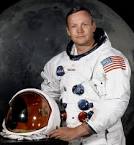
The twentieth century saw rapid changes in the mechanization of society. None was faster, literally, than that of powered flight. In 1903 the Wright brothers took to the skies above Kitty Hawk, North Carolina in a crudely made airplane, and only sixty-six years later, Americans prepared to launch a rocket that would send a man to the moon. The public had long been captivated by the thought of space and had been challenged by a young president. The road turned out to be even more difficult and dangerous than imagined. A number of men died trying to achieve it, but the dream refused to die. One of those determined to see the mission through to the end was a former Navy pilot from Ohio. He had valiantly served his country overseas before coming home to take on an even greater challenge. It was his earlier experiences that prepared him to soar higher. His name was Neil Armstrong. This is the story of his road to becoming an astronaut, and not just any astronaut, but the first to step foot on the moon.

As a young boy, Neil Armstrong developed a love of flying that followed him the rest of his life. Born in August 1930 near Wapakoneta, Ohio, he took his first flight outside Warren, Ohio when he was six-years-old. Over the next nine years he was often in his bedroom reading aviation magazines and building model planes. During World War II, some of his models were sent to local military and civil defense authorities to help train recruits in distinguishing Allied planes from Axis aircraft. It was not enough to just build model planes however; young Neil wanted to experience the joy of flying as a pilot. At age fifteen he got a job at the local drugstore to pay for flying lessons. He spent his weekends at the local airfield helping to overhaul aircraft before taking to the air, mostly in a basic version of an Aeronca Chief, the Champ. Neil received his student pilot’s license at age sixteen and soloed soon after. Wanting to test his abilities, he completed two cross-country flights, one to Cincinnati, that covered 215 miles in all, and another to West Lafayette, Indiana, over 300 miles, to register for Purdue University. In October 1947 he entered Purdue University, majoring, of course, in aeronautical engineering. In early 1949 he put his course work on hold and enlisted as a U.S. Naval aviator. He reported to Pensacola, Florida for training and graduated in August 1950. He received orders to ship out for the West Coast to join Fighter Squadron 51, the Navy’s first all-jet squadron, and, less than a year later, he was bound for action in the Korean War.

As a wartime aviator, Neil developed the reputation of a cool operator. In late June 1951 he and Fighter Squadron 51 boarded the U.S.S. Essex and set out for the Far East. The ship arrived off the Korean coast on August 22nd, and over the next two weeks Neil flew reconnaissance and bombing missions over Songjin, Wonsan and Pu-Chong, North Korea and joined in the destruction of trains, bridges and tanks bringing supplies to the North Korean and Chinese armies. His greatest test came on September 3rd when he was assigned to bomb freight yards and a bridge in a valley running from Majon-ni, North Korea to inside South Korea, a region codenamed Green Six. Upon reaching the valley, he set up his attack run, but before he could drop his bombs, the fighter sliced through a North Korean cable designed to cripple low-flying aircraft. The cable clipped off nearly six feet of his right wing, causing severe lateral control problems. Still, Neil did not panic, but rather he trimmed the tabs and skillfully climbed the aircraft back up to 14,000 feet. The aircraft could not be safely landed in such a damaged condition, so ejection was the only real option. He managed to reach friendly territory before bailing out and later returned to the Essex. Three months later, on December 2, 1951, he was on combat air patrol (CAP) when his engine quit on him. Again, Armstrong did not panic. He went through the emergency procedure to reignite the engine and returned to the ship unharmed. As 1951 turned into 1952, he continued to participate in reconnaissance missions and attacks on North Korea’s transportation network. His combat service ended in March 1952. He had flown a total of seventy-eight missions and spent nearly 121 hours in the air. He returned home with a chest full of medals, including the Air Medal, the Gold Star, the Korean Service Medal and the Engagement Star. He had proven his bravery time and again, but he was not content to rest on his laurels. He wanted to “push the envelope” as far as he could, and there was only way for him to do that.

New and better aircraft were being produced, but there were few men actually equipped to handle these new models. Neil’s wartime experiences and engineering skills made him a perfect candidate for the job. Hoping to join the exclusive fraternity of test pilots, he returned to Purdue to complete his education and graduated in January 1955. As he prepared his resume, he initially considered becoming a production test pilot where he would assess the suitability of each new design, but he ultimately chose to become an experimental test pilot “to assist in the development of superior aircraft.” He even knew the exact kind of experimental pilot he wanted to be — a research pilot. In that capacity, he would help advance flight across a vast range of scientific and technological boundaries. He joined the National Advisory Committee for Aeronautics (NACA), the precursor to the National Aeronautics and Space Administration (NASA), and was assigned to the Free-Flight Propulsion Section at the Lewis Flight Propulsion Laboratory in Cleveland, Ohio. Among his responsibilities were helping develop new anti-icing systems for new aircraft. Some of his most useful experiments, however, were those related to a field he began to pursue with great excitement — space flight.

Over the next few years, Neil Armstrong began to transition from a Naval aviator into a spaceman. At Lewis Laboratory Neil employed his aeronautical engineering skills to advance free flight rocketry. Among his experiments were flights with a solid-rocket, known as the ERM-5. As the rocket was released and fell to Earth, he evaluated the characteristics of heat transfer at high Mach numbers and the rocket’s reaction to boundary-layer transition. He provided detailed reports to his superiors, and they were so impressed they tasked him with designing new component parts for more advanced rockets. In July he transferred to Edwards Air Force Base near Los Angeles, California where he flew new experimental aircraft, like the rocket-powered X-1B and the X-15. He piloted the X-15 a total of seven times, once at a speed greater than Mach 4, and on April 20, 1962, he set the record for the longest distance (350 miles) and longest endurance (12:28:07 minutes), while climbing to more than 200,000 feet. He contemplated remaining with the X-15 program, but he also knew the country was becoming more enamored with the thought of manned space flight. Even while flying the X-15, he began to participate in transatmospheric flying, actually leaving the earth’s atmosphere.

As a test pilot, Neil had already soared to great heights, but now he wished to truly reach for the stars. His first attempt to do so came when he was selected to fly Lockheed’s F-104, the “Missile with a Man.” After taking off, he zoomed past 45,000 feet, the place beyond which a person could not survive without a spacesuit, all the way to 90,000 feet, the edge of space. He then dived back into the lower atmosphere where he was able to reignite the engine, which had previously been shut off, and land safely. These experiments encouraged him to claim it was possible to fly into orbit without relying on an autopilot or other remote control. Some scientists were skeptical of the claim. They questioned “whether the g field that you had to go through in a rocket-launch profile would adversely affect your ability to do the precision job of flying into orbit.” To prove his contention, Neil travelled to the U.S. Navy’s Johnsville Centrifuge in Pennsylvania. There he strapped himself into a custom made seat at the end of a fifty-foot-long arm and experienced every possible flight condition as the chair whizzed around the room. At times the acceleration was as much as 15 g’s — fifteen times the force of gravity. So much blood rushed from his head that he could only see one of the instruments, but he refused to get sick. Having proved his hypothesis, he now turned his attention to actually developing a plane capable of space travel.

In 1961, the same year President John F. Kennedy committed the nation to landing a man on the moon within the decade, Neil left Edwards for Seattle, Washington. There he served as a consultant for Boeing in the development of the X-20, known as Dyna-Soar. Unlike the capsules used by Mercury and Gemini astronauts, the X-20 was a winged vehicle that could actually fly. Neil and his fellow designers determined to provide the vehicle with enough lift that it could maneuver down to runways, just as the Space Shuttle would eventually do. He spent the fall and winter of 1961 and early 1962 experimenting with the F5D to determine how to ensure a safe landing approach. On March 15, 1962 he was chosen one of six pilots who would fly the X-20 upon completion. Even though it still just existed on paper, the project was full of potential. By this time, however, Neil was uncertain if he wanted to stay in the Dyna-Soar program. John Glenn had just made his celebrated orbit around the Earth. There was also an announcement that applications would be accepted in preparation for a new space program. Neil decided the time had come to leave the airplane for the spaceship. He sent in his application, and despite arriving a week late, it was processed anyway. On September 17, 1962 Neil Armstrong moved to Houston, Texas where he was proclaimed America’s newest astronaut.

Less than seven years after Neil Armstrong was inducted into the space program, he had become the nation’s foremost astronaut. His first experience at command came in February 1965 when he was named the commander for Gemini V’s backup crew. He found it incredibly valuable since he could use the information to advise Mission Control about conditions during the flight. His first foray into space came in March 1966 as the commander of Gemini VIII. He intended to fly fifty-five orbits, but due to mechanical problems, he only completed seven. It did not matter to his family and friends back in Wapakoneta, Ohio. To them he was still a hero. It was not the last time he was regarded as a celebrity. In October 1966 he embarked on a tour of Latin America, and in almost every country he visited, hundreds of people lined the streets and cheered him. Upon his return home, he joined the burgeoning Apollo program and served as the backup commander for Apollo 9. Then in July 1969 he was named the commander of Apollo 11. He expected the mission to be a dress rehearsal for the big event. Instead, on July 20, 1969, Neil Armstrong became the first man to set foot on the moon with the proclamation, “That’s one small step for [a] man, one giant leap for mankind.” He returned to Earth as one of the most celebrated men of all time. He continued to work for NASA and in 1970 served as one of the investigators into the near-disaster aboard Apollo 13. He retired in 1971 and became professor of aerospace engineering at the University of Cincinnati, but he returned to NASA in 1986 at the request of President Ronald Reagan to investigate the Challenger disaster. He died in August 2012, his place in American memory enshrined for all time.

The journey to the moon remains one of mankind’s greatest accomplishments. Once man set foot on the lunar surface, it seemed like anything was possible. That achievement did not happen overnight, however. Success depended on the vision, commitment and courage of men like Neil Armstrong. While many only know the story of his final triumph, Neil Armstrong’s entire life stands as a testament to those brave and dedicated souls who willingly embarked on the adventure to open space, “the final frontier.”
3 Comments

Filed under Uncategorized

Sweet Success

images

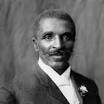
One of the reasons the American South has always been vital to the nation’s economy is because it is such a prolific farming area. During the colonial period, the South provided luxuries like tobacco from Virginia and indigo from South Carolina. In the late eighteenth and early nineteenth centuries cotton became the South’s primary export. Production led to the rise of prosperous farms and plantations. That prosperity ended with the American Civil War. After four years of war, the South lay in ruins. Some questioned if it would ever recover. It took many years and the efforts of many people for the South to rise out of the ashes. One man in particular had a profound effect on the region. Ironically, he was a former slave who had worked the land all his life. He developed a reputation as a botanist and innovator. Now he turned his talents to restoring the South’s role in agricultural development. His name was George Washington Carver. This is the story of how he developed untold uses for the sweet potato ever before imagined.

From an early age, George Washington Carver was fascinated with agriculture. He was born in January 1860, though some claim the year was 1864, in Diamond, Missouri to a slave woman, but Moses and Susan Carver, his white owners, basically raised him as a son after slave catchers captured his mother. As a young boy, he worked alongside the Carvers growing corn and cabbage. He also found the time to cultivate his own private garden and visited every day to see if his plants were growing. When he was not busy in the fields, he travelled to nearby farms and tended to others’ crops. He seemed to have a special touch, and as a result, friends called him the “Plant Doctor.” He loved digging into the rich, damp Missouri soil and expressed a desire to learn everything he could about plants. To satisfy his hunger, he wandered the fields around the farm and studied the flowers. His examinations led him to wonder if it was possible to “mix” different flowers to create a new one. He decided to gather seeds and plant them together to see if it worked. While this experiment was unsuccessful, George refused to give up on finding a way. It soon became common for him to carry a pouch as he travelled the dusty roads of Missouri, Kansas and Iowa as he pursued his education. Whenever he spied an interesting flower, particularly a bulbous one, he collected seeds and took them home to study. He was so knowledgeable and capable in identifying specimens that when asked by friends or acquaintances he could easily satisfy any request for a particular flower. It was obvious to everyone who met him that he had a future in agricultural science.

Determined to live up to his friends and loved ones’ expectations, George attended the Iowa State College of Agriculture and Mechanic Arts in Ames, Iowa. He arrived in late 1891 and dove into his studies. He thoroughly embraced chemistry and agricultural innovations, such as testing the soil to determine which crops grew best. His main interest, however, was in the field of botany. Remembering his youthful desire to “mix” flowers, he now set to work on crossbreeding. He worked for hours attempting to marry bulbous seeds to create a new color or a new plant form. His work paid off when he successfully modified an amaryllis and documented the results in his thesis paper entitled “Plants as Modified by Man.” The faculty was so impressed by his work that upon his graduation in late 1894 they assigned him to be the college’s assistant botanist. In that role he was responsible for cultivating new types of apples, pears and plums so the fruit could survive in the college greenhouse. His fame spread across the country, and he was soon receiving requests to speak at agricultural meetings. At the same time, however, he began to look south to the colleges that offered new opportunities for African-Americans. He wanted to bring prosperity back to the South.

In April 1896 George received a letter from Booker T. Washington, head of the Tuskegee Normal and Industrial Institute in Tuskegee, Alabama. Washington wanted Carver to come to Macon County, Alabama and chair the school’s agricultural department. George agreed and left Iowa State in early October. Upon his arrival, he was shocked to discover large numbers of whites and blacks alike still insisted on growing cotton. It was as if the Civil War had never happened. He knew there was still a need for cotton, so farmers should not abandon the crop entirely, but they should decrease the amount of acreage allocated to cotton. By 1898 he was fiercely advocating for farmers in and around Tuskegee to diversify their crops. Farmers often asked him what they should cultivate instead. He spent days looking for suitable replacements. The answer finally came after he spied a plant with small root swellings that was a member of the morning-glory family. It was called the sweet potato.

George Carver knew that sweet potatoes had long been grown in the South, mainly as a supplement to farmers’ diets, but he was focused on creating new markets for the crop. At his laboratory inside Tuskegee’s agricultural building, he dissected sweet potatoes and made detailed observations of their characteristics. He found the outside of the plant full of small culls filled with a woody fiber. Obviously, this was not fit for human consumption, so many farmers simply threw it away. George, on the other hand, was adamantly opposed to discarding anything. To his mind, everything had a purpose, even if it was not apparent. He gathered culls and carried them back to his office. Along the way, he stopped to watch the livestock graze in and around the institute. They seemed to feed on anything they could find, even the roots of plants. Perhaps that was the answer. With building excitement, he gathered all the culls, vines and peelings he could find and mixed it with other forms of protein. He then fed the mixture to the livestock. It turned out to be the perfect fodder. He invited local farmers to his garden where he showed them how to make the fodder themselves. The farmers were amazed that such a useful product could result from a seemingly disposable covering. Many of them now followed his example. Pleased with his efforts, Carver turned his attention from the outside of the sweet potato to the inside.

In his studies of the sweet potato, George discovered that “for every hundred pounds, the roots contain sixty-nine pounds of water, one of ash, and thirty of sugar, starch, plant cellulose, fat, etc.” Pushing further, he concluded that, with a little effort, each of these constituent parts had real usefulness. For example, the large percentage of water made sweet potatoes extremely perishable, but it was possible to remove the water, thereby deactivating the enzymes causing perishing. The most effective way to do this was by laying the plants on a hot stove or under the scorching sun. Once dried out, they could be stored or ground up and utilized for various purposes, including coffee. More importantly, however, dehydration left behind sugar and starch that yielded valuable household products. Using his chemical skills, George removed the sweet potato’s skin and grated it before placing the pieces in a cheesecloth bag. He then dipped the bag in water and squeezed it until there was no more milky juice left inside. Once the water had settled, he poured off the top layer to reveal a starchy paste that could be used for laundry, and by boiling the watery liquid he could produce a syrup that was better than that produced by sorghum. Pleased with his discoveries, he immediately set out for the nearby farms where he taught women how to do the same. His success in extracting sugar and starch led George to identify an even more valuable ingredient in the crop’s chemical make-up.

As he examined each sweet potato, he noticed how each had a distinct color. A number of fresh sweet potatoes were yellow and orange while others, particularly rotten sweet potatoes, were a bluish-purple. Since coming south, he had heard stories relating how Native Americans had used sweet potatoes to make dyes for their clothing. At the same time, he knew the United States was dependent on German-produced dyes. Perhaps new sources would enable the country to free itself from that dependence. He immediately set to work. Using his chemistry skills, he extracted a water-soluble solution he then treated with citric acid to produce the colors he wanted. Some colors were made by mixing the pigments with natural ingredients, such as combining blue dye with Alabama’s yellow clay to produce a soft green color. Ultimately, he created dyes ranging from bright yellow to dark black. When George introduced these products, there were celebrations across the country. Farmers requested detailed instructions on how to create these products, so George prepared and distributed printed bulletins detailing his methods. With demand for sweet potatoes now on the rise, George Carver turned his attention to other useful crops, most notably peanuts, but he never lost his fascination with the sweet potato.

For the rest of his life, George Washington Carver continued to improve the commercial value of sweet potatoes. They were not only valuable as food themselves, but they could be used to create whole new meals. During World War I, he developed, from a Puerto Rican sweet potato, both an egg yolk and tapioca, a new ginger-flavored breakfast food, but his greatest success came when he used the sweet potato’s starch content as a new kind of flour. He found that mixing it with wheat flour produced bread just as good as that made solely from wheat flour. The new flour was greatly appreciated by the U.S. government since it would permit Americans to cut down on the amount of wheat flour they used. He even appeared before the U.S. House of Representatives’ Ways and Means Committee in January 1921 to show off the syrup he made from sweet potatoes and declared he had found a total of 118 uses for the plant, including glue, shoe polish, rubber and dextrin for stamps. By 1935 demand was so great that 62 million bushels were being grown across the South. When George Washington Carver died in January 1943, he could take comfort in the fact that his life’s work had helped millions of people and had restored agricultural prosperity to the American South.

Today, George Washington Carver is primarily remembered for his work with the peanut. In all he found over three hundred uses for the plant — more than double those resulting from sweet potatoes. But it all started with the lowly sweet potato. Without his experiments on them, it is possible he would never have thought to try peanuts. The vegetable is so much than just a tasty Thanksgiving treat. It is one of the most important crops to ever come out of the South. And none of it would have been possible without George Washington Carver — the Plant Doctor.

3 Comments

Filed under Uncategorized

The First “Lady” of Liberty

images

With the adoption of the Declaration of Independence on July 4, 1776, Americans made it clear they no longer wished to be part of an aristocratic society. After all, it was Britain’s King George III and his titled advisors who had rejected the colonists’ requests to be treated like other British subjects. Americans now wanted a society where it was recognized that “all men are created equal.” There would end up being one exception, however. This individual was a Virginian who enjoyed a privileged lifestyle. Yet, during the Revolution, this person willingly participated in, and helped alleviate, the hardships that accompanied service in the Continental Army. The line soldiers applauded this willingness and came to love her. They rewarded her with a title not conferred because of high station in life but because of her actions. Her name was Martha Washington. This is the story of how she became “Lady Washington” through her actions at Valley Forge.

Much like her husband, Martha Washington’s support for American liberty increased as tensions mounted between the colonies and Great Britain. Born Martha Dandridge in June 1731 near Williamsburg, Virginia, she married George Washington in January 1759. She delighted in wearing British-imported gowns and tried to decorate the plantation at Mount Vernon like a great British estate. She was appalled, therefore, in 1765 when Parliament passed the Stamp Act in an attempt to directly tax the colonies. With George’s encouragement, Martha supervised as Mount Vernon’s weavers produced homespun wool so the family and servants could make their own clothes. Her relief at Parliament’s repeal of the act was short lived. Like other colonials, she was shocked when Britain continued its aggressive approach by not only passing the Townsend Acts in 1767 but also dispatching British soldiers to Boston, Massachusetts to quell the protests there. Her anger only intensified in March 1770 when she heard how the soldiers had killed citizens in the Boston Massacre. Like her husband and other prominent Virginians, she now regarded Britain as an oppressor. The perception seemed even more accurate when Parliament passed the Intolerable Acts in 1774 in response to the Boston Tea Party. The acts closed Boston harbor and imposed military rule on Massachusetts. Martha realized if Britain could so easily deny rights to Massachusetts, it could do the same to Virginia. There was only one option — open resistance. With determination, she waved George on to the First Continental Congress in September 1774 and to the Second in May 1775 where he served until his appointment as commander-in-chief a month later.

When she received word of the appointment, Martha knew she now had a responsibility to help George overcome the immense challenges facing him. The best way to accomplish that was by enduring military life with him. In November she set out for Cambridge, Massachusetts, across the Charles River from British-held Boston, to spend the winter with him. Arriving a month later, she found him at the point of desperation as he watched thousands of soldiers depart for home. In an effort to keep spirits high, she organized dinner parties for the army’s officers. Virginia hospitality reigned supreme as the charming Martha treated each officer with warmth and courtesy. It was not long before officers began to covet an invitation to Mrs. Washington’s parties. With morale on the rise, Martha focused her energies on the soldiers’ personal needs. She formed a sewing circle to mend officers’ uniforms and to roll bandages for the army’s hospitals. She even joined the general’s secretaries in transcribing orders for the army. Her presence proved a balm to the army, as well as to Washington, and she decided she would return to camp as often as possible. It was a promise she fulfilled in March 1777 following George’s victories at Trenton and Princeton, New Jersey. She spent the spring and early summer with him at his headquarters in Morristown, New Jersey where she accompanied him on camp inspections. Little did she know though that her greatest test, and most crucial service, was yet to come.

Throughout the fall of 1777 Martha watched from afar as George and the army tried to protect the American capital at Philadelphia. Even after the city fell, he fought to reclaim it at the Battle of Germantown. The British ultimately forced him to withdraw, but Washington was not ready to relinquish control of the region just yet. He halted the army a mere twenty miles outside Philadelphia at Valley Forge along the Schuylkill River. As before, Martha prepared to join him for the winter, but this time George told her the camp was no place for her. The soldiers were forced to live in canvas tents until they could build log huts. The general himself lived in a tent. He refused to move into a farmhouse until all the huts were completed. Even then, however, the tiny headquarters was barely big enough for him and his staff. Martha understood his reasoning, but she was undaunted by this bleak state of affairs. She boarded her carriage for the journey north and arrived in February 1778. She found conditions just as deplorable as George described and made up her mind to alleviate the suffering any way she could.

As she toured the camps, she talked with the soldiers about their needs. Many told her they only had a blanket or a shirt patched together from a variety of materials for warmth. They showed her their threadbare uniforms, and the officers described how theirs were ragged as well. Other officers had only a semblance of a buckskin or broadcloth outfit. For officers and enlisted soldiers alike, the breeches and stockings were little better. They were in serious need of repair, and shoes were non-existent. At times the best that could be done was to tie rags or an old hat around bloody feet. Martha’s heart broke for each suffering soldier, and she requested the men give her their uniforms. She spent hours in her parlor with her sewing kit in hand stitching them up. When she was done, she took the additional step of washing each uniform to ensure lice and other disease-ridden insects were killed and could not infect the soldiers. Remembering the lack of footwear, she then sewed socks for those who needed them. As she did so, she hosted local women who came to pay their respects. Amazed at her dedication, they joined her in sewing outer garments to protect the soldiers from the frigid wind and snow. Martha knew, however, that the army needed more than just proper clothing to survive the winter; it needed nourishment.

The lack of food in camp had reached the critical stage. Most locals were Tories loyal to the Crown and preferred to sell their produce to the markets in Philadelphia. There was little money from the Continental Congress, and the Continental Army’s Quartermaster Department supplied only a limited amount of food to the camp at Valley Forge. As a result, most soldiers were in the grips of starvation and weakly pleaded for meat. When Martha heard these cries, she immediately volunteered the food she had brought with her from Mount Vernon. She had packed large amounts of ham, cheese, dried fruit and nuts to share with George and his aides. Now she distributed the remaining food among the grateful soldiers. They accepted the offering and looked on her as a ministering angel, and indeed, she was. She served them food from her own table and looked after them as if they were her own family. As the weeks passed, she was pleased to see more food arrive from nearby farms and the health of the army improve. Now that she had aided the army’s physical state, Martha determined to restore the army’s mental state.

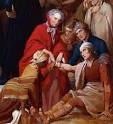
Even though Washington’s men thought the country had forgotten them, Martha was determined they know she would not abandon them. She often talked with them about their lives before the war and provided a sympathetic ear for their problems. She also braved the horrors of the camp hospitals to tend to the sick and dying. She knelt next to those lying on the piles of hay and told them she was proud of them. She did the same for those men whose feet had turned black due to frostbite and had to be amputated. She even tried to reward them for their service. During a birthday celebration for Washington, she invited members of Henry Knox’s artillery band inside headquarters and gave each man money for entertaining the general. It seemed to many soldiers like she was their own mother. They knew she was as devoted to their welfare as her husband was. After all, she had left the comfort and safety of Mount Vernon to kneel in the mud and filth of Valley Forge to nurse and feed them. As the army prepared to leave Valley Forge in May 1778, the soldiers cheered her when they spotted her near the commanding general and called out “Long Live Lady Washington!” It brought tears to her eyes.

For the rest of her life, Martha Washington’s actions continued to result in the adoration of the American public. She refused to let anything keep her from George’s side in the years to come. During the brutal winter of 1779-80 at Morristown, New Jersey she remained in camp when a blizzard struck the camp. She tenderly cared for the soldiers suffering in the bitter cold and fought to keep spirits up among those at headquarters. She stood side-by-side with George and his staff officers even late in in the war when things looked bleak, such as when the British captured Charleston, South Carolina in May 1780 and then defeated the rest of the Southern Army at the Battle of Camden in August. She was there too when things finally turned around for the Americans. During the Yorktown campaign in October 1781, Martha followed the army south to Virginia and then returned with George in victory to Philadelphia following the British surrender. Six years after the war ended in 1783 George became the first President of the United States, and like always, she followed him to the new nation’s capital, first at New York and then at Philadelphia. She hosted parties at the President’s home where she entertained American officials as well as foreign dignitaries. When she appeared in public, she was often referred to by the name first given her by the Continental Army at Valley Forge — “Lady” Washington.   She died in May 1802 and was mourned across the country for her dedication to the cause of liberty.

Throughout her life, Martha Washington proved that one did not have to be born with a title to have a noble spirit. Her actions during the American Revolution proved she was part of a new order of aristocracy — an aristocracy of character. It was based on serving others rather than being served. While she and George never had their own children, she looked after those who truly suffered for the cause as though they were her own. She would not allow her beloved husband and those under him to endure hardship alone. The soldiers loved her for her sacrifice and treated her to an honor that no other American woman ever received. On Martha Washington alone they bestowed the title of “Lady.” And she remains America’s Lady to this day.

2 Comments

Filed under Uncategorized

Changing With the Times

images

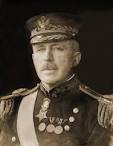
Throughout its early existence, the U.S. military depended on volunteers to supplement its regular forces in time of war. From the American Revolution up to World War I, thousands of patriotic citizens enlisted to serve their country and defend liberty. As the twentieth century dawned, however, a number of forward thinking military officers realized the country could not always depend on patriotic fervor to draw men to the flag. There needed to be a reliable system to assure the army’s strength. One of the individuals who saw this was a life-long army officer. He had served the U.S. faithfully since the days when the Army consisted of only a few thousand professionals. He desired to see the country institute a new policy whereby the army depended on men from all walks of life and from all around the country. His name was General Leonard Wood. This is the story of how he fought to bring universal service to the U.S. Army.

As a young man, Leonard Wood believed that patriotic zeal would lead Americans into military service. It was how his own career had begun. He was born in Winchester, New Hampshire in October 1860, and at an early age, he told his father he wanted to enter either the U.S. Military Academy at West Point or the Naval Academy at Annapolis. Though forced by his father to attend Harvard Medical School, he only practiced private medicine for a year before entering the Army Medical Department. He was assigned to be a contract surgeon with the Fourth Cavalry at Fort Huachuca in Arizona. In May 1886 he took part in the campaign to subdue Geronimo’s renegade Apaches. Though he started out as the medical officer, it was not long before he led an infantry company. The experience transformed him, and he returned to Fort Huachuca with the desire to become a line officer. His chance came twelve years later during the Spanish-American War when he served as colonel of the 1st U.S. Volunteer Cavalry, more popularly known as the Rough Riders. In July 1898, Colonel Wood commanded a brigade of volunteers and regulars who seized the San Juan Heights outside Santiago, Cuba and brought victory to the American army. This experience convinced him that ordinary citizens could adapt to the harsh realities of military life, and he determined to encourage the enlistment of large numbers of citizens even as he was being commissioned a brigadier general in the regular army.

As he climbed through the ranks to Army Chief of Staff, Wood faced hostility from the professional officer corps to his plan to introduce American citizens into the U.S. Army. Many officers believed ordinary individuals were incapable of handling the rigorous demands of the military. Wood rejected this premise. He argued that young, intelligent men were the perfect candidates for army recruits. There was no valid reason, Wood said, they could not be absorbed into military life within a year — with the proper training. The most critical threat to this plan, however, was that the current Army training often centered on harsh discipline. Most instructors treated the recruits as if they were completely ignorant. Realizing this was an insult to capable recruits, General Wood issued a directive at the start of his four-year stint as Chief of Staff in 1910 saying officers should treat their enlisted men with due respect. If instructors dealt harshly with the soldiers, he said, they would reject military service and urge their fellow citizens to do the same. This would likely increase the apathy already existing among the civilian populace regarding army life. This knowledge convinced Wood that he should not focus all of his efforts on the military establishment alone.

At the same time Wood was working to encourage the military and civilian leadership to enlist more private citizens, he was also trying to convince ordinary Americans of the value of military service. He believed every American had an obligation to serve in the military. It was one of the responsibilities a person had when they lived in a free country. In a way it was similar to paying taxes, for it was a tax on one’s physical strength. He went on to say that it would make people better citizens of their country and would unite them in spirit with those who underwent the same experience. There were benefits that would accrue to the military as well. Wood’s plan was based on the idea that a younger citizen-soldier force would be more physically capable and efficient than the traditional approach which led to longer service terms, a bloating at higher ranks, and a more aged fighting force. He proposed citizens sign up for three years and then serve for another three years in the reserves. At the urging of the entrenched Army hierarchy, however, Congress rejected his proposal in favor of a plan whereby enlistees could, at their own choice, either serve for four years in the army or for three years in the army and four in the reserve, all reserve years without pay. The final legislation gutted the most crucial of Wood’s reforms. He feared this new plan would lead to an Army “whose losses were due only to death, retirement, or disability, and we would have no instructed reserve in the population.”

Despite his defeat, Wood refused to give up on creating a “sense of personal and individual responsibility for one’s preparedness to discharge the duties of a soldier in case the Republic should become involved in war.” He decided to take his ideas directly to the American people. In the summer of 1913 he assembled over two hundred students from 90 colleges at military camps in Monterey, California and Gettysburg, Pennsylvania. He provided the students instruction in drilling, the manual of arms and battlefield tactics. The camps were so successful he made plans for four such camps during the summer of 1914. This time over six hundred students attended. Many paid their own way, demonstrating their “sincerity of purpose and interest” in becoming citizen soldiers. His mission to augment the regular army with ordinary citizens took on greater urgency in 1914 as Europe exploded into war.

Throughout late 1914 and early 1915, General Wood became even more strident in his argument, warning that the nation could not rely on patriotic sentiment any longer. Most of the European armies now engaged in warfare were massive forces, but President Woodrow Wilson declared his belief that the U.S. should continue to rely on volunteers in the militia and National Guard. Large armies violated American traditions. Wood saw this policy as the precursor to disaster. He foresaw volunteers being sent to the front untrained to face a superior enemy. To prevent this eventuality, Wood, now in command of the Department of the East, took it upon himself to mobilize a large force of citizen soldiers. He drew up plans for the American Legion, a reservist force filled with militarily qualified men. When notified of this, President Wilson ordered the general to cease all cooperation with the Legion. Wood reluctantly did so, but he refused to give up rousing public opinion in favor of his position. In January 1915 he proudly watched the National Security League, an organization designed to urge Americans to prepare for war, adopt his views as part of its platform. It called upon the American people to accept that each of them owed their country a term of service in its defense. As war fever swept the nation, more and more citizens agreed with this argument.

Wood was pleased his ideas had taken hold of the American imagination. During the summer of 1915 he once again planned to open military camps to train young Americans. This time camps were situated around Plattsburg, New York and included businessmen and other professionals. As before, the camps proved extremely popular, attracting 1,200 men. These endeavors seemed to indicate Americans’ willingness to enter into military service. Wood hoped it was the beginning of a large citizen army, so he was disappointed when Congress passed the National Defense Act in May 1916. The act enlarged the regular army to 175,000 troops and authorized a National Guard reserve force of 400,000 men. It also created ROTC (Reserve Officers Training Corps) units at universities across the country. While this act appeared to strengthen the army, it still remained dependent on the individual patriotic citizen doing his duty. This reality finally convinced Wood there was only one solution to the country’s military needs — conscription.

By the summer of 1916 Leonard Wood had come to the conclusion that national defense required national participation. He knew there were millions of Americans who exercised their right to vote, but incongruously, at least to him, those same Americans thought they could choose whether or not to “render service in case of necessity.” In the past, he told the Senate Military Affairs Committee, the rich “have been able to buy the poor to take their places” in the army. There had to be a way to prevent less-patriotic citizens from “ducking, side-stepping or dodging [military service]” and ensuring equality of service among all Americans. The answer was the adoption of universal military training. Every able-bodied American male should be required to undergo a military education and defend his country. He argued that such a program would dramatically increase the numbers of soldiers eligible for the U.S. Army. It would also allow the government to show impartiality by recruiting men from every area of American society. Wood spent the remainder of 1916 campaigning for the program. Along with other advocates, he testified before the Senate Military Affairs Committee on the principle and helped convince the government the military situation warranted such action. He went on to champion the idea in the court of public opinion, through such outlets as the Journal of the National Education Association and the Universal Military Training League. By January 1917 his ardent advocacy had encouraged 118 newspapers and 378 mayors to second his proposal. His efforts finally convinced Congress to pass the Selective Service Act in May 1917.

While it achieved less than he wanted, Leonard Wood was still jubilant when he learned the government had the authority to recruit American men and boys directly into the U.S. Army. At long last, his dream for a truly “national” American military was realized. Within days of the act’s passage, President Woodrow Wilson used it to authorize the formation of a one million-man army. The men would serve for the rest of World War I. Wood’s greatest hope was to lead these men into battle. He thought his aspirations had come true when he was ordered to take command of the new 89th Division. He travelled to Camp Funston, Kansas and oversaw their training. He then led his troops to New York City for embarkation, where he learned he had been selected as the new commander of the 10th Division. Though he was disappointed, he returned to Kansas and ensured his new command was as ready for combat as the 89th had been. Through both units, he contributed mightily to the final victory in 1918. He retired in 1921 and died less than six years later in August 1927. A grateful nation mourned the loss of one of its greatest public servants.

Change does not come easy. General Leonard Wood set out to transform the make up of the United States Army. Along the way he had to confront not only a staid military hierarchy but also a dubious Congress and a skeptical American public. He grasped, as few others did, that the old policies and outdated thinking simply would not meet the needs of a 20th century army. His new ideas and innovative approaches to the Army force structure brought about fundamental changes still in use today. Although full acceptance of universal military service never took hold in the U.S. as it did in countries like Switzerland and Israel, Leonard Wood’s legacy lives on through the citizen soldiers who loyally serve our country.

1 Comment

Filed under Uncategorized

Risking It All

images

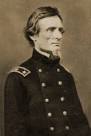
One characteristic most Americans admire is the willingness to take risks — not stupid risks, but calculated ones. We are willing to take risks in the hope we will achieve great rewards. To that end, we seek to match wits, and even more, against those who stand in our way. Some opponents are larger and more fearsome than we are, but this makes the victory all the sweeter. During the U.S.-Mexican War of 1846-48, a small American army faced a Mexican force over four times its size. Citizens back in the U.S. expected to hear of a crushing defeat. American soldiers were determined not to be overawed, however. One of those was a Mississippi colonel who intended to fight as long and as hard as he could. He was known for his tenacity and boldness in battle. His name was Jefferson Davis. This is the story of how he helped achieve a spectacular victory at the Battle of Buena Vista.

From an early age, Jefferson Davis was never one to let the odds frighten him. He was born in Fairview, Kentucky in June 1808 but spent much of his youth in Mississippi. Indians and outlaws populated the region, but the young boy never once showed fear when he ventured beyond the confines of his home. As a young man, he attended the U.S. Military Academy at West Point where he defied regulations by sneaking off campus to Benny Havens, a local tavern. He even faced dismissal once but was ultimately pardoned. On another occasion, he was placed under arrest for throwing a party and sentenced to confinement for several weeks. He graduated twenty-third in the Class of 1828 and was commissioned a second lieutenant in the 1st U.S. Infantry. For the next seven years, he served at frontier outposts like Fort Crawford on the Wisconsin River in Michigan Territory and Fort Gibson in Arkansas chasing Indians. In reality, he was one of the lucky ones. Other graduates found themselves without any hope of an active-duty assignment. Davis’ “luck” was somewhat of a mixed bag, however. He served at a time when an officer could count on long periods at the same rank. He did not earn a promotion to first lieutenant until 1833. Although he was disappointed with the unlikelihood of winning military distinction, Jefferson was not discouraged. He decided to try his hand at civilian life.

After resigning his commission in June 1835, Davis returned home to Mississippi and established his plantation of Brierfield. He intended to become a respected Southern planter, but he decided to distance himself from his fellow planters by investing in a variety of crops, rather than just cotton. He actively involved himself in efforts to induce Southerners to accept new industrial techniques that improved productivity. (Ironically, many of his ideas would come to fruition with the adoption of President Franklin D. Roosevelt’s New Deal policies.) While his ideas were not widely accepted, he still managed to make Brierfield a success, and his industriousness won him the approval of his neighbors. In 1843 he was asked to run for the state legislature from Warren County. It was a mighty struggle. The Whig Party was in the majority, and Davis was a Democrat. Despite ably acquitting himself in the debates, he lost the election but so impressed voters that two years later he was elected to the U.S. House of Representatives. While in office, Congressman Davis fought to ensure peace remained between the U.S. and Great Britain in spite of escalating tensions regarding the Oregon-Canadian border. Passions cooled, and Davis turned his attention to the troubles brewing with Mexico. He could not believe Mexico wanted war with the United States over the disputed territory between the Nueces and Rio Grande Rivers in Texas. When Mexican soldiers ambushed U.S. forces in May 1846, however, he joined other congressmen in voting to approve a declaration of war. In short order, now stirred by patriotic fervor, he decided to leave Congress and to join in the fight.

Within days, Davis left Washington, D.C. for his hometown of Vicksburg, Mississippi. On his arrival, Colonel Jefferson Davis was given command of the First Mississippi Rifles and led his men south to join in General Zachary Taylor’s capture of Monterey. On September 20th Davis and his regiment were ordered to attack La Teneria, a stone edifice blocking the road from Monterey to Saltillo. It appeared to be a daunting task — one attack had already been repulsed with heavy casualties. Nevertheless, Davis led his men in a desperate charge. The Mexicans panicked, dropped their weapons and raced out of the building. It took four more days for Davis and the rest of Taylor’s army to capture the city. Often, Davis had to fight street by street. With the city secured, the army advanced to Saltillo and then on to Agua Nueva. It was there Taylor, Davis and their comrades heard that Mexican General Antonio Lopez de Santa Anna, infamous for his Alamo massacre, and 20,000 troops were marching towards them. Taylor knew his force of less than five thousand were vastly outnumbered, so he pulled his men out of the city and stationed them in the gullies and ravines of a valley at the base of a high mountain. Nearby was a ranch that would lend its name to the battle to come — Buena Vista.

On the morning of February 23, 1847 Santa Anna ordered his army to divide into three columns and to advance toward the American entrenchments. In the face of this onslaught, the soldiers on the American left flank quickly withdrew towards the rear. As General Taylor rallied his retreating troops, he directed Davis to probe the enemy’s front. The colonel rode to the front of his riflemen and told them to prepare for a charge. Spotting soldiers from Indiana nearby, he commanded them to join in the attack. At his signal, the two regiments burst forth from their position. The Mexicans were stunned by the assault’s ferocity. They had thought the Americans were beaten. Despite their shock they leveled their muskets at the onrushing multitude and fired. One of the musket balls struck Davis in the heel, carrying with it brass splinters from one of his spurs and bits of wool from his stocking. The colonel refused to abandon his command and watched with pride as his men pushed the Mexicans back towards the base of the mountain. He sighed in satisfaction, but as he looked around, he spied Santa Anna’s cavalry mobilizing to the left in anticipation of striking the American rear.

Jefferson realized the only troops standing between the American army and destruction were his Mississippians and Indianans. The outcome of the battle hung in the balance. He quickly weighed the risks and knew immediately the move he had to make. Surveying the terrain in front of him, he decided to take advantage of the sloping ground on either side of a nearby ravine. He stationed the Mississippians along the right side of the ravine facing the plains beyond. He ordered the Indianans to take up positions on the other side of the ravine, thus giving the appearance of a “V.” He and his men watched as the Mexican cavalry trotted across the fields toward them. Davis repeatedly told his men to hold fire. When the horsemen had closed to within eighty yards, some of his soldiers commenced firing without orders. The rest of the formation followed suit. Dozens of horses and riders fell to the ground. As the smoke cleared, Davis saw the survivors racing for the safety of their own lines. Wishing to keep up the pressure, he shouted for his soldiers to pursue the fleeing riders. They advanced to within easy range of Mexican artillery, but as they prepared for an assault, Davis received a message from Taylor requesting assistance in repelling an attack on the American right flank.

He turned his men in that direction and quickly marched toward the sound of musketry and artillery. He had gone only two or three hundred yards when he spotted Mexican infantry advancing on an artillery battery commanded by future Confederate General Braxton Bragg. Once again, it was Davis’ men who could make the difference in the engagement. His troops were exhausted from hours of combat, but upon seeing their comrades were in danger, they moved with the “alacrity and eagerness of men fresh to the combat.” They followed their heroic colonel, still suffering from his earlier injury, up a rocky slope to a hill that commanded the enemy’s right flank. Seeing the infantry was only 100 yards from the American battery, Davis shouted for his men to fire. The volley was so destructive, Jefferson recalled, that the infantry’s right “gave way, and [the Mexicans] fled in confusion.” At the same time, the rest of Santa Anna’s soldiers withdrew to their campsites. The Americans expected to resume fighting the next day, but when dawn came, they discovered Santa Anna had withdrawn under the cover of darkness. With victory achieved, Davis and the other injured Americans were transported back to Saltillo. There doctors told him the wound was not life-threatening, but it would take months before he could walk without crutches. It was clear his military service was at an end, so he returned home to Mississippi in late May.

By the time he arrived back in the U.S., the nation’s newspapers were already heralding his exploits. There was little doubt his actions at Buena Vista had saved the day. In Dubuque, Iowa he enjoyed a celebration the likes of which have “never since taken place.” In New Orleans he was toasted as a “hero second only to Zachary Taylor.” Even the U.S. government got into the action, offering him a commission as brigadier general. He was honored by the offer but ultimately turned it down. He was not able to turn down succeeding appointments though. In August 1847 he was appointed to the U.S. Senate to complete the term of Jesse Speight, who had recently died. He spent the next six years in the Senate trying to cool the rising passions of the North and South, but he saw the odds against him growing longer by the day. Still, he continued to serve his country with distinction. From 1853 to 1857 he loyally served President Franklin Pierce as Secretary of War where he introduced new weapons to the U.S. army, such as rifled muskets and Minie balls. When the states finally did split into North and South, however, there was no question in his mind that he would remain faithful to his Mississippi roots. In 1861 he was chosen as President of the Confederate States of America. Despite the long odds the South faced, Davis fought long and hard for four years. Even after he was captured on May 10, 1865, he continued to do his duty as he saw fit. For the next twenty-five years he fought to preserve the memory of the Confederacy until December 1889 when he contracted bronchitis while in New Orleans. As he always had, Jefferson Davis fought back, but this time he was unable to beat the odds stacked against him and finally succumbed to defeat.

The name of Jefferson Davis conjures up differing images for Americans these days. It is easy to judge him only for the role he played in the Civil War. However, a man’s life should not be weighed without considering the whole measure of it. On the rugged terrain of northern Mexico, Colonel Davis wagered everything he had to save the army he served and to win victory for the country he loved. His actions during that time made him the epitome of a true Mississippi riverboat gambler.

2 Comments

Filed under Uncategorized

Subject No More

images

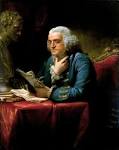
For the past two hundred years, the United States of America has existed as a sovereign country. Most Americans could never imagine having loyalties beyond the borders of this great land. It was not always like this, however. For years colonial Americans were proud to belong to the British Empire. During the French and Indian War in the 1750s and 1760s, colonists even fought to protect and expand the Empire in North America. It was only when British authorities began to treat them as second-class citizens that many colonists expressed a desire to separate from the Empire. One of these was the most internationally respected American of the age. He served British interests in the heart of the Empire, but he saw firsthand how the colonies were treated by the mother country. His experiences ultimately convinced him the colonies would be better off on their own. His name was Benjamin Franklin. This is the story of his transformation from a loyal British subject into a radical revolutionary.

For most of his early life, Benjamin Franklin was an ardent imperialist. He was born in Boston, Massachusetts in January 1706 but moved to Philadelphia, Pennsylvania at age eighteen. As he grew to manhood, he watched the thirteen colonies grow so populous he concluded that within another century “the greatest number of Englishmen will be on this side [of] the water.” He foretold how this growth would result in an increase in power of “the British Empire by sea as well as land.” He wished to pave the way for this increase by uniting the colonies under a British official. To that end, he lobbied for and received a royal appointment as Postmaster General of North America. Later, under the Albany Plan, he proposed a Crown-appointed “president-general” who would head a grand council of colonial representatives. Although his plan was ultimately rejected, Ben still wished to see Britain dominate the continent. In the quest to drive the French out of North America in the 1750s, Ben supplied British armies with horses and wagons and directed militia operations along the Pennsylvania frontier. When it became clear the French would be defeated, he drew up plans for the establishment of two new colonies in the interior. The new colonies would promote a “great increase of Englishmen, English trade, and English power.” In Franklin’s mind, the future of British North America seemed bright.

Having helped unify much of North America under the Union Jack, Ben now threw himself into the task of solidifying that control. In 1757 the Pennsylvania Assembly commissioned him as their representative to London. He arrived in the city determined to revoke the control of William Penn’s London-based successors and to replace them with a royal governor. He spent eight years petitioning the Crown to assume a greater role in Pennsylvania’s affairs, even if it meant the power of the colonial assembly would diminish somewhat. Upon learning of riots in 1763, he warned the colony was in danger of falling into anarchy. The only hope was that the “Crown will see the necessity of taking the Government into its own hands, without which we shall soon have no Government at all.” Royal authority, he claimed, would bring stability. To ensure the success of his mission, he devoted himself to “constantly and uniformly promoting the measures of the Crown.” He wrote his fellow Pennsylvanians that this was consistent with the duty owed by every faithful subject of the Crown. His words persuaded colleagues in Rhode Island and Connecticut to express their desire that he be given authority to plead on all the colonies’ behalf as to these measures. Despite years of work, however, he was no closer to achieving a satisfactory result in 1765 than when he had begun. That year, however, his efforts turned from securing royal authority to bridging the divide between the colonies and the mother country.

Benjamin saw himself as a loyal subject of King George III, so he was distraught when he found himself caught in the middle of the dispute over Parliament’s taxation of the colonies. He understood Parliament’s need to raise revenue to pay for the defense of North America, but it came as a shock when he learned of the Stamp Act, a law that would collect money on all printed papers used by colonists. To Benjamin it appeared to go too far. The act was tantamount to “treating [the colonists] as a conquer’d People, and not as true British Subjects.” Unable to provide a suitable alternative, however, he accepted the measure and was tasked with naming Stamp distributors in Pennsylvania. Many colonists believed him guilty of complicity and reacted with violence. They targeted the distributors and almost destroyed his house in Philadelphia. When word of the violence reached him, Franklin began to revise his opinion of Parliament’s actions. He appeared before the House of Commons and argued how the colonists would never submit to taxes like the Stamp Act. After urging repeal of the act, he suggested the colonists might be willing to pay customs duties on goods entering the colonies. Parliament seized on this advice, and in 1767 it passed the Townsend Acts imposing duties on ink, paper, glass and tea. Once again, however, colonists launched vigorous protests and boycotted British goods. To many in London it seemed like the colonists refused to accept any act of Parliament and instead wished to set up a new and unconstitutional authority — an open act of defiance. To Ben’s dismay, it was decided to crush the rebellion before it could start.

In 1768 Parliament directed Secretary of State for American Affairs Lord Hillsborough to dispatch 4,000 soldiers to Franklin’s hometown of Boston, the center of colonial protests. Ben argued that the arrival of the troops might destroy what pro-British sentiment remained in the hearts of what had once been “truly a loyal people.” He soon received reports from friends telling of the “Boston Massacre” on March 5, 1770. Franklin denounced the offending British soldiers as “detestable murderers.” Upon learning of Franklin’s support, the Massachusetts Assembly appointed him the colony’s agent in London. His new position, however, convinced Lord Hillsborough he was in league with the upstart Bostonians. In January 1771 Ben visited the secretary and asked to be confirmed in his new position. Hillsborough sneered at the man in front of him and denied his request. Hillsborough then haughtily declared he had no intention of receiving any agent who had not received the consent of the governor. As he rose to leave, Ben voiced his belief that any representative of the colonies to the British government would be wasting his time. His defiant response, however, placed him on bad terms with not only Lord Hillsborough personally but also with the entire British ministry. As the ministry grew more hostile to the colonies, and by extension to him as their primary representative, he found himself aligned with those like-minded colonials who opposed the increasingly oppressive government.

In late 1772 an unknown “gentleman of character and distinction” approached Franklin and presented him with letters written by several prominent royalists. Among the letters was one belonging to Thomas Hutchinson, the royal governor of Massachusetts, advocating the denial of traditional English rights to control the colonies. To Franklin, Hutchinson stood for all that was wrong with the Crown’s attitude toward the colonials. That attitude demonstrated that the colonials would never be viewed as anything but second-class citizens. Ben immediately had the letters published in Britain and in Massachusetts. When it became known that Franklin was responsible, he was denounced as the source of all Britain’s troubles. Since 1765 he had publicly tried to mediate the colonies’ demands for fair treatment with Britain’s obligation to manage its far-flung Empire. Now he had leaked private and sensitive information that was sure to ignite a new wave of colonial resentment. The British ministry was pleased to finally have a scapegoat to turn their venom on.

On January 29, 1774, Franklin appeared before the Privy Council in the amphitheater at Whitehall, known as the Cockpit. He arrived with the intention of presenting a petition to recall Thomas Hutchinson, but he never got the chance. No sooner had the session began than British Solicitor General Alexander Wedderburn pointed at him and called him “the true incendiary.” Over the next hour, Wedderburn viciously degraded the elderly man. Franklin, Wedderburn said, was “the first mover and prime conductor” for all the unrest in Massachusetts. Spectators in the gallery cheered and shouted their agreement. Others heaped their own insults on Franklin. Throughout all this, Benjamin stood by silently with an impassive look on his face. He was frozen on the outside, but on the inside, he was boiling with rage. He took the abuse, but it was clear that his love for the Empire died that day. It was later said that as he prepared to leave, Ben whispered to Wedderburn, “ I will make your master a LITTLE KING for this.” Despite staying in London for another year, he had made his decision and no longer sought reconciliation. He privately denounced those in Parliament as unfit to “govern a Herd of Swine,” let alone “three millions of virtuous sensible People in America.” Convinced the time for action had finally come, Franklin left Britain in May 1775 bound for Philadelphia and a seat in the Continental Congress.

For the remainder of his life, Benjamin Franklin devoted himself to the best interests of his new country. As a member of the committee that drafted the Declaration of Independence, he provided insights into how the colonists’ grievances had continually been rejected. He knew the colonists could not defeat Britain on their own, so in late 1776 he travelled to France to convince King Louis XVI to aid Americans in the conflict against their common enemy. Two years of skillful statesmanship finally bore fruit. In February 1778 a treaty of alliance was formalized, and the outcome of the war, though still years away, was evident to all — even to the staunchest of Britons. Franklin continued to serve as U.S. ambassador to France until the end of the Revolution. In 1783, he once again appeared before British officials. This time, however, he came as an equal, the victor at the peace table. He returned to America in September 1785 as a national hero, and two years later, in 1787, he helped give the country a functional government with the adoption of the U.S. Constitution. By the time of his death in April 1790, Benjamin Franklin was no longer seen as the ardent British imperialist but as the devoted American patriot who had dared to oppose the mightiest empire in the world.

The seeds of the American Revolution were sown over a long period in individuals who for most of their lives viewed themselves as faithful British subjects. Ben Franklin was one of these. He was as loyal to King George III as any Englishman and had no desire to separate himself from Britain. Throughout his time in London, however, he watched as those in authority treated the colonists with increasing contempt. For years he tried to mediate the differences and bridge the divide. Ultimately, he could not and was forced to choose between his homeland and the country he had always been a part of. It was also a choice of principles. For Benjamin Franklin, the metamorphosis was complete — he chose America and liberty.

2 Comments

Filed under Uncategorized

Behind Enemy Lines

images

Since the days of the American Revolution, the U.S. government has relied on a number of organizations to ferret out threats to our national security. Today, one of the most crucial is the Central Intelligence Agency (CIA), which is responsible for gathering information on America’s enemies. Though used less often now than in the past, the accepted CIA method has been to secretly place an operative within the enemy’s ranks and have the individual transmit reports back to headquarters. One of the agency’s most successful infiltrations came during World War II when it was called the Office of Strategic Services. The agency recruited and trained a young man from New York City who yearned to bring down Nazi Germany. He had a personal stake in the war — he was a German-born Jew. No one would ever envision how monumental his contribution would be. His name was Frederick Mayer. This is the story of the role he played in the final days of WWII during Operation Greenup.

Frederick Mayer’s early life would not have been considered a normal prelude to his days as an American soldier and spy. He was born in Freiburg, Germany in October 1921 to a decorated hero of World War I. As he grew up, Frederick was treated no differently than any other German youth. He went to school, had both Gentile and Jewish friends, and participated in athletics, excelling at skiing. All that changed in 1933 when Adolf Hitler and the Nazi Party came to power. Over the next five years, he watched as the Nazis cracked down on Jews and denied them many rights and opportunities they had previously enjoyed. As Nazi persecution intensified, his mother begged his father to leave Germany, but his father believed his status as a war hero would protect the family. His mother often said she “wouldn’t trust them to accept anyone.” The situation continued to worsen, and in 1938, just before Germany invaded Austria, his father finally agreed to move the family to the U.S. Upon their arrival, they settled in New York City where seventeen-year-old Frederick searched the streets for work. It was not long, however, before he discovered that anti-Semitism was as prevalent, though not as savage, in his adopted homeland as it was in his native one. Frederick was not one to be bullied though. One time an employer made disparaging remarks about him, and Frederick punched him out before quitting. Because of the obvious prejudice and his reaction to it, he worked in over twenty jobs over the next few years. His treatment did not stop him from becoming a naturalized American, but he still longed to return to Germany to avenge his people.

Frederick saw his chance to strike back when the U.S. entered the war in December 1941. He enlisted in the army and was assigned to the 81st Division’s reconnaissance team, the Wildcat Rangers, where he excelled at subterfuge, successfully capturing the “enemy” general during war games in Arizona. Upon learning Frederick spoke four languages — German, English, French and Spanish — and impressed with his ability to avoid detection, his commander realized Mayer’s talents would be wasted as an ordinary soldier. Frederick was promoted to sergeant and was soon on his way from Arizona to Washington, D.C. to join the new organization headed by William J. “Wild Bill” Donovan, the Office of Strategic Services (OSS). Upon his arrival in the city, he was ordered to join the OSS’s German Operational Group. He spent the next few months on the grounds of the Congressional Country Club practicing hand-to-hand combat, like knife fighting and weapons improvisation, turning any object into a weapon. Afterwards, he was transferred to Fort Benning, Georgia where he and his comrades underwent intense training as paratroopers. By the summer of 1944, he was ready to participate in the deliverance of Europe from Nazi oppression.

Although he arrived in Europe soon after the D-Day invasion of Normandy, it began to appear as if Frederick would not see any action against the Nazis. He and his fellow operatives arrived in Italy, but they were told no one had heard of the OSS. Some officers thought they should be used to fill the ranks of depleted units. Mayer’s superiors refused to let this happen, and as a result of the bureaucratic standoff, the operatives were told to stand down until orders came. It did not take long for boredom to set in. The longer he waited, the angrier Frederick grew. This was not what he had signed up for. He wanted to invade Germany and fight back in defense of his people. Unable to stand it anymore, he and fellow Jew Hans Wynberg commandeered a jeep and drove to Allied intelligence headquarters in nearby Caserta. They reported to Lieutenant Colonel Howard Chapin and begged for reassignment. Chapin asked them if they understood what would likely happen to Jewish spies such as themselves if captured. Frederick replied, “This is more our war than yours.” Impressed, Chapin promised to see what he could do. Within days, the two joined the OSS’s German-Austrian Section at Bari, Italy. From there Mayer began planning one of the war’s most daring missions.

In late 1944 Mayer was called in to confer with the head of the section, Lieutenant Alfred Ulmer. Ulmer told Frederick he had been chosen to lead a mission behind enemy lines that would help bring victory to the Allies, a plan known as Operation Greenup. The plan called for him and two companions to cross into German-occupied Austria and monitor the movements of German troops in the city of Innsbruck. Ulmer told Mayer to radio his observations back to Bari so commanders could properly prepare for the upcoming Allied invasion of Austria. Frederick was also told to look for an opportunity to demolish the railroads to prevent supplies from reaching the German forces still occupying northern Italy. As Ulmer finished the outline, Frederick practically leaped for joy. Here was his chance to retaliate against those who had driven him from his homeland. When Ulmer asked him who should accompany him on this mission, Frederick immediately chose Hans Wynberg. He also requested a prisoner-of-war who had recently deserted the German army, Franz Weber. Weber lived near Innsbruck and still had family in the region. With his team assembled, Frederick spent the next few months gathering supplies and outlining how the men would reach their target.

As Wynberg and Weber collected radios, winter clothing and skis, Frederick studied maps of the region in order to lay out their route to Innsbruck, high in the Austrian Alps. In a plan right out of a future James Bond movie, he decided the three men would parachute from a plane onto a glacier-covered lake. Then they would ski down the mountains and set up base in Weber’s hometown of Oberperfuss. As Frederick and his two operatives prepared to leave, he requested the supplies be dropped around the lake in anticipation of the team’s arrival. In the early morning hours of February 26, 1945 Mayer, Wynberg and Weber boarded a plane piloted by Lieutenant John Billings and headed towards the Austrian border. The three men hung on for dear life as the plane cleared the 9,000-foot high ridgelines and tried to avoid fierce Alpine winds that threatened to tear the plane apart. Finally, Billings spotted the drop zone and signaled that the three men should prepare to jump. Frederick and the others zipped up their white parkas, fastened on their parachutes and jumped. Moments later they safely landed on top of the glacier and unbuckled their chutes. They dug in the snow for the containers of supplies and eventually found them, but the container filled with skis was missing. Undaunted, Frederick led his small group in a trek down the mountainside through sometimes neck-deep snow. Several hours later they entered a village and claimed to be lost soldiers from a German mountain unit. Eager to be of assistance, the villagers provided the “soldiers” with a carriage to take them into Oberperfuss.

Upon their arrival, the spies took refuge inside Weber’s fiancé’s home where Wynberg set up his radio to communicate with American officers in Bari. Through the help of Weber’s sister who was a nurse, Frederick acquired and donned a German officer’s uniform. He tied a bandage around his head and spent several days in the hospital visiting with other convalescing soldiers. One of those he talked to provided him with details about Hitler’s private underground bunker. After passing on this information, he moved into the officers’ quarters where he inquired about activities along the Italian border, especially the transport of troops and armaments through the mountains. Before he could pass on any of this information, however, he needed to know the exact timetable for the trains. He decided to pay a visit to the railroad depot. Wearing his officer’s uniform, he demanded to know what was going on. The officer in charge told Frederick that even though American planes had destroyed the bridges, German engineers had constructed movable bridges to allow shipments to resume. Then Frederick was told that twenty-six trains loaded with ammunition were being sent to the border that night. He dashed back to the team’s safe house and told Wynberg to pass on everything to their superiors in Bari. As soon as the information was transcribed, American bombers took off and successfully destroyed all twenty-six trains. His superiors expressed their delight with his reports, but they told him he had one more job to perform.

From Bari, Frederick’s OSS superiors asked him to survey how much air power Germany had in and around Innsbruck. Deciding a civilian persona was more appropriate, Frederick told the aircraft factory manager he was a French electrician fleeing from advancing Soviet soldiers. The manager gave him work in the secret jet engine factory, but before he could complete his evaluation, Gestapo agents, tipped off he was a spy, seized him and dragged him off to jail. For the next three days Frederick was hung upside down and beaten, even loosing some teeth from a haymaker punch. He stuck with the cover story of being a French electrician as long as he could, but he finally admitted to being an American spy, though he insisted he was working alone. He refused to give up Wynberg and Weber, who had evaded capture. As Mayer was being tortured, fellow agent and prisoner Hermann Matull observed his courage and developed a daring new strategy. Matull told the Gestapo the man they were torturing was a “big shot,” and this claim persuaded the guards to bring Mayer before Franz Hofer, the region’s leading Nazi. Frederick was astonished, however, when he was treated extremely well rather than interrogated. Hofer had decided Germany’s defeat was inevitable but had planned to tell his troops to fight to the death. Then Hofer told Frederick something even more incredible. He would be willing to surrender — but to the Americans, not the Soviets. He wanted this sergeant to be his emissary to the advancing U.S. Seventh Army. Hofer then basically placed himself under arrest and effectively surrendered his forces and the city to Mayer. On May 3, 1945 Frederick met with American officers from the 103rd Infantry Division and escorted them into Hofer’s office. There he had the honor of watching the commander of Germany’s Alpine fortress formally surrender. This Jewish sergeant had single-handedly ended the fighting in the entire region. After the war he returned to the U.S. and, like most servicemen, settled back into a normal life. He made his home in West Virginia where he lives to this day.

It is sometimes amazing what one man can do. Frederick Mayer, tired of being abused because of his Jewish heritage, began the war as a private, intent on doing his part to end the slaughter of his people and other innocents by the brutal Nazi regime. He ended up playing a crucial role not only in crippling the German war machine in his area of operation but also in bringing about the surrender of the entire German Army in that region. The number of lives saved by this one man is inestimable. That same concept guides the U.S. intelligence community up to this very day — that one person, committed to faithful service to their country, can make a difference in protecting countless American lives and in preserving our way of life.

3 Comments

Filed under Uncategorized

A Reconciled Warrior

images

After four years of bloody battles, the American Civil War ended in April 1865 when Confederate commanders surrendered to their Union counterparts. The United States was once again a single country, but despite the best efforts of some, feelings of bitterness remained long after the guns fell silent. It was not until the end of the century and the outbreak of another war that Northerners and Southerners finally laid their old hatreds aside. Among those who sought to lead the country in one common cause was a former Confederate general. From 1861 to 1865 he garnered fame as an audacious cavalryman. As his country now lurched toward war thirty years later, he wanted nothing more than to lead men into battle one last time. His name was Joseph Wheeler. This is the story of how his leadership of the American cavalry during the Spanish-American War further signaled the end of the American Civil War.

Joseph Wheeler was as much a product of the North as he was of the South, though he never saw himself as anything but a Southern boy. He was born in Augusta, Georgia in September 1836 and spent his early years on the family farm. As a boy, he watched slaves work the land and accepted slavery as part of the South’s way of life. His life in Georgia ended with the death of his mother in 1842. His father moved the family north to Connecticut to be closer to his family. Young Joe attended the Episcopal Academy of Connecticut, now Cheshire Academy, where he threw himself into his studies. Upon graduation in 1851 he settled in New York City with his aunt and went to work as a mercantile clerk. After only a year, however, he applied for and received an appointment to the U.S. Military Academy at West Point. As tensions rose within the country and within the Corps, the young cadet spent most of his time with his fellow Southerners. He believed that those Northerners calling for slavery’s abolition threatened the South’s way of life. His views intensified after he joined the Mounted Riflemen in New Mexico Territory following his graduation in July 1859. Many of his fellow officers were Southerners, and they often talked about what they would do if their states seceded. Despite his years in the North, Wheeler made it clear his ultimate loyalty lay with Georgia. It came as no surprise, therefore, when he resigned his commission in February 1861 and left New Mexico for the Confederate capital at Montgomery, Alabama. Within weeks of his arrival, Joe Wheeler was at the head of his troops looking for a fight.

In the four years that followed, Wheeler could always be found at the forefront of the charge. At the Battle of Shiloh in April 1862 he led his infantrymen in attacking the Union forces along the sunken road known as the “Hornet’s Nest.” From that time on, his men called him “Fighting Joe.” His bravery so impressed his superiors that he was transferred to the cavalry in July 1862. Within days of assuming command, Wheeler led a brigade of horsemen north into Kentucky as part of Braxton Bragg’s invasion force. In October Joseph drew his saber and led his men in a charge to save the army’s left flank at the Battle of Perryville. When General Bragg heard what Wheeler had done, he promoted the twenty-six-year-old to brigadier general and gave him command of all the army’s cavalry. His daring raids on Union supply lines throughout the first months of 1863 earned him a second promotion to major general, making him the youngest in the Confederacy. In September Wheeler participated in the rout of the Union Army of the Cumberland at the Battle of Chickamauga, but two months later he was unable to prevent a similar Confederate defeat at Chattanooga, Tennessee. He still had the support of the army’s brass, however, and was entrusted with delaying Union General William Tecumseh Sherman’s infamous march on Atlanta, Georgia during the summer of 1864. He led his troops against Union infantry and cavalry alike, but despite several minor victories, nothing could stop Sherman, not even a raid to destroy the railroads behind enemy lines. After the capture of Atlanta in September, Joe Wheeler spent the last months of 1864 and the early months of 1865 striking at Sherman’s forces as he marched through Georgia and the Carolinas. In late April 1865 his command was finally forced to surrender, and he found himself a citizen of the United States once again.

With the war over, Joseph Wheeler fought as hard to bring reconciliation to the country as he had to divide it. Eleven years after swearing renewed allegiance to the U.S. he was elected to the House of Representatives from Alabama. Most Northerners originally saw him only as an unreconstructed Rebel, but their attitude began to shift as they watched him voice support for legislation that would prove beneficial to all Americans. He not only promoted the interests of the small farmers but also championed such national causes as industrialization, commercial development, and education. To the surprise of many, the former Confederate fiercely advocated for pensions for all veterans, Union or Confederate, white or black. Union veterans attended reunions and dedications of war memorials alongside him. In return, he paid tribute to those he had fought against, paying his condolences to the families of Union Generals Philip Sheridan and William T. Sherman and attending the dedication of Ulysses S. Grant’s tomb in 1897. By the late 1890s he was seen as a nationalist who, once and for all, sought to “bind up the nation’s wounds,” as Abraham Lincoln had urged.

The opportunity for final healing came in 1896 when he heard of the mistreatment of Cubans by their Spanish masters. He heard how Spanish soldiers raped Cuban women and murdered all who resisted them, including women and children. Some reports even indicated that thousands of Cubans were being placed in concentration camps. Wheeler was outraged at these stories and resolved that something had to be done. On April 4, 1896 Joseph stood up in front of the House of Representatives and declared to those before him that “the sooner Cuba becomes free and independent or a member of this great Commonwealth, the sooner will the cause of civilization and of Christianity receive the vindication to which it is entitled.” Spain’s actions were a crime against humanity, and he called upon the U.S. to support the rebels in their fight for freedom. His sabre rattling rhetoric troubled many fellow congressmen as well as President William McKinley. After the sinking of the U.S. battleship Maine in Havana harbor on February 15, 1898, however, public opinion turned in his favor. A few weeks later, speaking to the House on an appropriation of fifty million dollars to put the nation’s military on a war footing, Representative Wheeler rousingly declared that thousands of “brave and true hearts” across the South “join me in most earnest support of this resolution.” Then to the delight of everyone, he issued the famous Rebel Yell. War was on the horizon, and Joseph Wheeler was as hungry as anyone to see action.

He did not have long to wait. Two weeks after war was declared on April 11th, Wheeler was summoned to the White House to meet with President McKinley. The president told him how he wished to appoint both Union and former Confederate officers to key positions within the army. These thoughts mirrored Wheeler’s, and to his great joy, McKinley expressed a desire for him to assume command of the American cavalry. If he accepted, he would be restored to his old rank of major general. The sixty-one year old Wheeler told the president he “felt as strong and capable as when I was forty, or even much younger, and that I desired very much to have another opportunity to serve my country.” His return to the military was heralded in newspapers across the country, and as he made his way south, citizens from north and south alike waved him on to victory. Once again, finally, the country seemed united. Within days he and his staff, including his son who had recently graduated from West Point, stepped off the train at Camp George H. Thomas on the old Chickamauga battlefield.

Major General Joe Wheeler arrived in camp on a humid morning in May determined to show his soldiers that he was no longer the Rebel who once chased Yankees across the fields in front of him. As he marched forward, he spied the Stars and Stripes flying from a flagpole in the middle of the parade ground. He immediately stopped and, as one observer noted, “his bare head was bowed more reverently forward, and a mist of tears veiled his eyes as he gazed steadfastly at the flag under which our army was to fight.” Taking a deep breath, he collected himself and went in search of his division. Waiting for him were the 9th and 10th Cavalry, the Buffalo Soldiers, and the 1st U.S. Volunteer Cavalry, the Rough Riders. The ex-Confederate was impressed by his men, particularly the African-American troops, called Buffalo Soldiers by the Indians, and believed they would acquit themselves with honor. On June 14th he and his division boarded a transport ship and headed for Cuba. They disembarked at the town of Daiquiri on the 23rd and immediately received orders to march inland to secure the village of Siboney. They arrived at the crossroads of Sevilla, or Las Guasimas as the Americans called it, just as other American units were preparing to attack the Spanish fortifications. Despite being told to wait in reserve, “Fighting Joe” disregarded his orders and led his men forward, just as he had done so many times before.

On the morning of June 24th, Wheeler and 960 cavalrymen positioned themselves along the bottom of the ridge and looked up towards the fortifications. After attempting to drive the enemy off with artillery, the general turned to his commanders and ordered them to send their men up the hill. He watched with pride as officers shouted for their men to fix bayonets and then led them towards the earthworks. Suddenly, Wheeler thought his eyes were playing tricks on him. The Spanish seemed to be falling back. He blinked a few times and looked again. It was true. The Spanish were indeed falling back. Letting loose a cry of delight, the general spurred his horse to follow them to the top. For a brief moment he thought himself back on the fields of Georgia, and he shouted to those around him, “We’ve got the damned Yankees on the run!” His men laughed at his slip-of-the-tongue reference to the enemy before they shouted their agreement and charged in the direction of Santiago.

Word of his spectacular victory spread throughout the army and back to the U.S. He was the hero of the hour. The newspapers even made light of his reference to the Spanish as Yankees by pointing out that he had served his country in two different wars. His service was not done yet, although it seemed it might be. As the army advanced towards Santiago, “Fighting Joe” was stricken with malaria. He refused to leave the field of battle, however. He was laying in bed on July 1st when he heard the sounds of battle coming from San Juan Hill. He grabbed his sword, leaped on his horse and galloped to the front. Reaching the head of his cavalry, he ordered them to press forward, and within moments, the Americans had seized the high ground. After helping negotiate the Spanish surrender, he returned home to a hero’s welcome. In honor of his service, President McKinley commissioned him a brigadier general in the regular army. He was first assigned to the Philippines to help suppress the insurrection there and later assigned to command the Department of the Great Lakes at Chicago, Illinois. His life as a soldier came to an end in January 1906 when he heard the bugle call for the last time.

A war such as the American Civil War oftentimes creates such long-lasting division within a country that true healing never comes, or if it does, it takes several generations of non-combatants to bring about unity. It takes a special leader to put aside the hate, bitterness, and prejudice that inevitably result from a civil war and to embrace reconciliation. Joseph Wheeler was such a man. Once the defeat for his cause came, he resolved to lay aside all enmity and move forward. He served his country in peace, and he got the chance to fulfill his dream of leading his countrymen in battle again. He refused to be defined by one four-year period of his life, and the same applied to his nation. Joseph Wheeler found a way, as only an old warrior can, to overcome the deepest wounds.

1 Comment

Filed under Uncategorized

One Life to Give

images

Beginning in 1775, thirteen American colonies waged an eight-year struggle against the mightiest empire in the world. American victory was not possible without sacrifice nor was it possible without the services rendered by everyone who considered himself a patriot. Not every act of valor occurred on the battlefield however. Some of the country’s bravest were those men and women who served behind enemy lines gathering information on British forces. This list of spies included a young Connecticut schoolteacher who had joined the Continental Army. He had no experience in spy craft, but he still believed he had a duty to serve his country in any capacity it required. His name was Nathan Hale. This is the story of how he took on the role of America’s first spy.

Even before the War of Independence broke out, Nathan Hale was already a committed patriot. He was born in Coventry, Connecticut in June 1755, at the beginning of the French and Indian War, and spent his early years harvesting hemp and flax for the British army. After the war ended in 1763, however, his family faced ruin when Parliament demanded the colonists buy British products rather than make their own. His cousin, Reverend Nathan Strong, attacked this policy, claiming it would strangle colonial businesses. Nathan’s opposition increased after he entered Yale University in 1769 and joined the Linonia fraternity where he discussed the rising political tumult with like-minded students. By the time he graduated in 1773, he and his fellow New Englanders were ready to fight to protect their freedom. Even though he was only a simple schoolteacher, Nathan’s vocal support for the patriot cause inspired his friends in New London, Connecticut. In his free time, he wrote letters to former classmates expressing a love of country. He even denounced a close friend for supporting British policies. Throughout 1774 he and most of Connecticut rallied to the side of their oppressed brethren in Boston. When war came, Nathan determined to stand with his fellow colonists in their struggle for independence.

By the spring of 1775, Nathan was ready to join the ranks of the new American army and drive the British out of the colonies. On April 22nd, three days after the battles of Lexington and Concord, he was part of the crowd that greeted a messenger relaying news of the fighting. That evening he attended a town meeting where he announced his intent to leave the classroom for the battlefield. As his students listened in awe, he publicly exhorted his fellow New Londoners to “never lay down our arms until we obtain our independence.” Within days, Governor Jonathan Trumbull commissioned Nathan a captain in the 7th Connecticut Regiment, and upon his arrival in camp, he set to work training his soldiers. In late September 1775 he received orders to march north to Boston, and after only four days, he and his troops reached American lines. After a brief stay in Roxbury, just outside of Boston, his company was transferred to Cambridge, across the river from the British-occupied town. Nathan was witness to several skirmishes as winter set in, including a vicious but successful fight with British regulars at Lechmere’s Point, not far from Boston Harbor, in mid-November. As December began, Nathan was posted along the picket line to ensure the British did not launch a raid to capture the few remaining American supplies. He spent hours listening to British soldiers discuss the tactical situation and call out passwords in order to ensure safe passage between guard shacks. In March 1776 his company seized control of Dorchester Heights and, along with American artillery, threatened the British army in Boston. This show of strength eventually forced the British to evacuate Boston. Along with the rest of the country, Nathan now turned his eyes south to New York City.

With the British gone from Boston, Nathan and the Continental Army hurriedly marched to New York City to prepare the city for a massive British invasion. He and his company were positioned on Long Island and ordered to fortify Brooklyn Heights on Long Island. As he set to work, he was distressed to discover his men were still low on provisions. To overcome these shortages, he devised a daring plan to seize a British sloop loaded with supplies. He gathered a select few and crept to the edge of British lines along the East River. After hearing British sentries call out that all was well, Nathan dashed through the water, climbed aboard the sloop, and piloted it back to American lines to “the cheers of the patriot camp.” The army gladly received these provisions even as the British prepared to destroy the American force on Long Island. His daring so impressed Connecticut Colonel Thomas Knowlton that he was offered a position in Knowlton’s Rangers, a forerunner of the modern-day Special Forces. Soon after joining the Rangers, Nathan was given an even more vital mission than seizing a supply ship.

Following his withdraw from Long Island and up Manhattan to Harlem Heights, General Washington ordered Knowlton to send a ranger behind enemy lines and gather information on enemy intentions. The intelligence was vital because it would enable Washington to formulate his own strategy. The general also needed to know the number of British troops facing him. Though the information was crucial, the stakes were high. The danger was that the ranger would have to dress in civilian clothes so as not to raise suspicions. In accordance with Washington’s orders, Knowlton called a meeting of the rangers and asked for a volunteer. Despite suffering from influenza, Nathan attended the meeting and proudly announced he would do it — he would spy on the enemy. Those around him were shocked and tried to convince him it was not only a suicide mission but also a dishonorable profession for a man of his character. Nathan replied that he thought “I owe to my country the accomplishment of an object so important, and so much desired by the commander of her armies.” He then added “I wish to be useful, and every kind of service, necessary to the public good, becomes honourable by being necessary.” He was undeterred by the efforts to discourage him from the mission. The army, and the nation itself, was at a crisis point. Something had to be done to before the war was lost and the flame of independence was extinguished.

Nathan left camp on the evening of September 15, 1776 dressed in a frock coat “made of white linen, and fringed.” After traversing through the Bronx, he reached Norwalk, Connecticut on the Long Island Sound and, after changing into civilian clothes and placing a broad-brimmed hat on his head, secured passage on the sloop Schuyler. He arrived at Huntington, Long Island the next morning and was soon walking the roads as an itinerant Dutch schoolteacher in need of employment. Hours later he arrived at William Johnson’s farmhouse and successfully convinced the farmer he was on his way to the city to take charge of unruly students. After a brief rest, he continued on his way, doing his best to evade known Tory residences. It took him two days to reach Brooklyn, and along the way, he conversed with local farmers about the presence of the British troops. After two days, he knew he was close to British lines, and he prepared for the danger to come.

Nathan arrived in Brooklyn on September 18th and passed through the British camps along the East River. He casually strolled along and took time to chat with the private soldiers. As he talked, however, he made mental note of their positions, and once out of sight, he drew maps of the encampments. He finally reached the ferry landing and expressed his wish to cross over the river to the city. To his enormous relief, the British guards did not question his intentions and allowed him to board the ferry. He mentally noted the soldiers being unloaded by the Royal Navy ships and marching along the riverbank. When the ferry docked, Nathan stepped off and found himself standing on one of the city’s bustling streets. Almost immediately, he was surrounded by thousands of British and Hessian soldiers patrolling the shops and taverns near the waterfront. He pulled out a notepad and started drawing maps of the city’s layout. On each street, he referenced the various units he saw passing by. At the edge of the city, he observed new fortifications emerging. Seeing they were formidable, he hurriedly drew scaled models of the forts. By September 20th he believed he had the information General Washington required and returned to Brooklyn in hopes of safely reaching the Schuyler and American lines. Sadly, he never made it that far.

As he made his way back across Long Island, Nathan had the bad luck to run into Robert Rogers, one of Britain’s most ruthless Tory commanders. The young undercover captain was sitting inside a Huntington tavern when Rogers, having received reports of a spy, entered the tavern dressed similarly to Hale and sat down next to him. In an attempt to draw the captain out, Rogers told Nathan how he was on a similar mission to aid America. Naively, Nathan believed Rogers and shared his orders with the Tory commander. Satisfied with his work, Rogers invited Nathan to breakfast the next morning, and when Nathan showed up, Rogers arrested the young man and took him back to New York. In the late afternoon Nathan appeared before General Howe and “at once declared his name, his rank in the American army, and his object in coming within British lines.” He only expressed regret “that I had not been able to serve my country better.”

Even though he admired Nathan’s forthrightness, there was but one sentence Howe could order for a spy. He declared Nathan would be hanged the next morning and summarily denied Nathan’s requests for a chaplain and a Bible. The former schoolteacher spent his last night in a greenhouse not far from Howe’s headquarters. At 11:00 the next morning, September 22nd, he was marched to an apple orchard near the British artillery park and asked if he had any final words. Though often misquoted, he stated he was “so satisfied with the cause in which I have engaged that my only regret is that I have not more lives than one to offer in its service.” Moments later his body hung limp from the tree, and he was buried in an unmarked grave. His final resting place may be unknown, but the memory of this patriot is not.

The United States owes its very birth and continued existence to heroic individuals like Nathan Hale. He did not shirk his duty when his country asked him to serve. He did not dismiss being a spy because it did not meet with his view of honorable warfare. Instead, he treated the position as a badge of honor. If his country needed a spy to advance the cause of freedom, he would selflessly accept it and do his best to carry out his mission. To the very end, as he faced his own death, his only thought was the service he wished to render his beloved country.

1 Comment

Filed under Uncategorized

The “Lone Eagle” Flies Again

images

By the end of 1945 the United States had vanquished the threats posed by Nazi Germany and by Imperial Japan. Their defeat, however, had not been certain a decade earlier. Even as the forces of darkness were rising, a large segment of the American population urged their leaders to keep them isolated. One American who stood opposed to U.S. intervention in the late 1930s was one of the country’s greatest heroes. He had captivated the imagination of every American with his aviation exploits. He wished to keep the nation safe and fought to keep it out of war. When war came however, he could not stay out of action and did all he could to join his countrymen in combat. His name was Charles Lindbergh. This is the story of his transformation from a rabid isolationist into a defender of democracy.

Charles Lindbergh seemed to live a controversial life, much as his father had. He was born in Detroit, Michigan in February 1902 and grew up in Little Falls, Minnesota, on the banks of the Mississippi River. In 1907 his father took him to Washington, D.C. when he was elected to the U.S. House of Representatives. The junior congressman’s idealistic beliefs made an impression on all, including his son. Young Charles watched his father defend the Midwestern farmers against the large eastern financial institutions. In 1913 Congressman Lindbergh decried the Federal Reserve Act, which created a central banking system. Unfortunately, Lindbergh saw his father destroy himself with his opposition to World War I. According to the congressman, intervention would only benefit the “Money Trust” of Andrew Carnegie, John D. Rockefeller and other financial giants. When the U.S. finally did enter the war in 1917, his father frequently attacked President Woodrow Wilson for sending “American farm boys” across the ocean to fight in a European conflict. His antiwar bombast increased to the extent that the press labeled him a German sympathizer and disloyal to the war effort. In response, Lindbergh Sr. entrenched even deeper in his views, joining a socialist organization, which alienated most of his constituents. In the 1917 race for governor of Minnesota, Charles saw his father hung in effigy and literally dragged from platforms at speaking engagements. After going down to defeat, Lindbergh Sr. retired from public office. Not long after, Charles found himself in a similar position.

It was ironic perhaps that Charles would, quite unintentionally, burst onto the national, indeed the international, scene only to fall from grace with a previously adoring populace. It was the still novel world of flying, not politics however, that would bring him fame. In the early 1920s he crisscrossed the country earning a reputation for his exploits as a barnstormer and as a wing-walker, but he was always looking for more. Then in 1927 he decided to make history by being the first to fly non-stop across the Atlantic from New York City to Paris. Crowds cheered him as he and The Spirit of St. Louis left Roosevelt Field on Long Island on May 20th. Thirty-three and a half hours later a Parisian mob greeted him at Le Bourget Field. On his return to the U.S., he was the nation’s hero, but from that time on, the press hounded his every move. His efforts to discourage them did nothing but make many resent him. At the same time, he was making other powerful enemies. In February 1934 he was outraged when President Franklin Roosevelt issued a directive transferring all airmail duties from the civilian companies to the U.S. Army. As a former airmail pilot, Charles knew the dangerous conditions and the expertise that the job entailed. He believed Army pilots and their aircraft were ill qualified for the mission. He sent word to Roosevelt that the action would “unnecessarily damage all American aviation.” In return, Roosevelt’s administration accused Lindbergh of being bribed by the civilian airlines to attack the policy. Just as Lindbergh predicted, a number of crashes claimed the lives of Army pilots, and the resulting outcry forced the administration to turn control of airmail delivery back over to civilian airlines. Roosevelt and his allies never forgave Lindbergh. Two years after this confrontation, Charles made one of his most controversial decisions when he took his family on a trip to Europe.

In 1936 Lindbergh, still an internationally celebrated hero, arrived in Europe. The Germans could not wait to have the world’s greatest aviator visit their country and inspect their growing aeronautical capabilities. Lindbergh arrived in time to attend the 1936 Olympics as the special guest of Hermann Goring, the German air minister, who boldly opened the door to him to witness the might of the German Air Force, the Luftwaffe. Only a few persons were privy to the knowledge that Lindbergh had been requested by highly placed American officials to provide reports on his “inside” information. Over the next three years he visited twice more and marveled at the Third Reich’s industrial might. He spent hours touring aircraft factories and airfields in and around Berlin. As he walked the fields, he surveyed the bombers and fighters lining the runways. It was obvious they were far superior to anything the British, the French, the Soviets, or even the Americans possessed. He was further impressed after actually piloting the new Messerschmitt 109. These experiences convinced Charles that Nazi Germany “intended to become the greatest air power in the world.” Though he was less impressed with new German policies, particularly those applied to Jewish inhabitants, he was more concerned with the destructive capabilities of the German Luftwaffe. British cities could be reached and bombed from the air with little difficulty. He concluded that if Britain and France waged war on Germany it “might easily result in the end of European civilization.” He similarly realized some in America, such as Roosevelt, would want to support Britain and France, but he did not want the U.S. to suffer the same fate he was sure would now befall Western Europe. As he prepared to return to America in April 1939, he promised to do his utmost to keep his homeland out of war.

Upon his arrival, however, Lindbergh found many Americans considered him little more than a Nazi sympathizer. Reports of Nazi atrocities against Jewish inhabitants, particularly the destruction of Jewish homes and businesses during Kristallnacht, the “night of broken glass,” had consumed the nation’s attention. The same newspapers had carried the half-true reports that Lindbergh was considering moving to Berlin and that he had accepted the Order of the German Eagle, one of Germany’s most prestigious medals, for his famous 1927 flight. (In reality, Lindbergh had unexpectedly received the medal at a formal dinner at the American Ambassador’s residence where he feared a refusal would breach diplomatic protocol.) Almost as soon as he stepped back onto American soil, therefore, the media attacked him as being pro-Nazi. They condemned him for his lack of vocal opposition to Nazi policies and for being a “callous coward and/or anti-Semitic traitor.” Secretary of the Interior Harold Ickes said he had forfeited “his right to be an American” by accepting the medal. These attacks intensified after he took to the radio waves to warn Americans not to engage in any European entanglements. The New York newspaper PM labeled him as “the spokesman for the fascist fifth column in America,” and Life magazine called him a representative of the “far spectrum of isolationism.” The FBI even started an investigation into his “nationalistic sympathies.” As a result, public opinion turned savagely against the former hero.

Although he was under attack from all directions, Lindbergh continued to profess his steadfast devotion to the U.S. In response to charges he was unpatriotic, he responded “I would so much rather be fighting for my country in a war I do believe in.” He held a colonel’s commission in the Army Air Corps, and he declared there was “nothing I’d rather be doing than flying in the air corps.” As a U.S. officer, he believed the country needed to be on guard against an attack, including one in the Pacific where Japan was rattling its sabers. It was this belief that encouraged Lindbergh to criticize President Roosevelt’s Lend-Lease proposal before the House of Representatives and the Senate in early 1941. As a member of America First, an isolationist organization, Charles advocated keeping American military supplies close at hand rather than sending them across the Atlantic. This denunciation of policy was too much for Roosevelt, and he compared Lindbergh to a “copperhead,” a northerner who had supported the South during the Civil War. Humiliated at being called a traitor, Charles resigned his commission. Only a few months later, however, Japan attacked the U.S. Pacific Fleet at Pearl Harbor, Hawaii.

Upon learning of the Japanese attack, Lindbergh decided he had to get into action any way he could. He recorded in his journal, “I want to contribute as best I can to my country’s war effort,” but Roosevelt repeatedly used his power to deny Charles access to the military and to civilian aircraft companies. In March 1942 Henry Ford asked Lindbergh to serve as a technical consultant at his warplane plant outside Detroit, Michigan. For the next year he tested the B-24, insisting on improvements to the plane’s radios and armament. When those modifications were completed, he went to work testing the effects of high-altitude flying to decrease the likelihood of oxygen deprivation, hypoxia, from occurring. After a number of tests in the P-47 Thunderbolt, he discovered there was insufficient protection for the pilots. He proposed several changes to the emergency equipment the plane carried, and as a result, countless lives were saved. With his reputation again on the rise, he was invited to United Aircraft in Hartford, Connecticut to work on the Vought F4U Corsair. In Hartford he instructed pilots how to get the most out of the Corsair and even participated in simulated air combat. Lindbergh’s redemption was not complete, however, until he had braved the fires of combat.

After obtaining permission from Army superiors, Charles arrived in the South Pacific in May 1944 as a consultant. In order to advise pilots correctly, Lindbergh believed he had to experience the same conditions they did. He insisted, therefore, on flying Corsairs in combat against the Japanese-controlled islands of Rabaul and Kavieng. He flew fifteen missions before leaving in June for New Guinea to test the P-38 Lightning. There he joined the 475th Fighter Group, Satan’s Angels, in their attacks on Japanese bases. He came to be so respected by the airmen he was given command of a section, even though he was technically a civilian. The 475th commander, Colonel Charles MacDonald, later recalled Lindbergh “flew more missions than was normally expected of a combat pilot.” His greatest triumph came on July 28th when he led his section against two Japanese Zeroes over the island of Ceram. Lindbergh pointed his plane right at one of the planes and fired his guns. Moments later the Japanese Zero crashed into the ocean. Several weeks later, after flying fifty combat missions, he returned home to America. Word of his bravery and patriotic service slowly became widely known. His actions resulted in him being gradually forgiven for his pre-war rhetoric. He was finally freed from all controversy when he was laid to rest on the Hawaiian island of Maui in August 1974.

Heroes can make mistakes just as easily as any of us. The question is: should we hold their “sins” against them for the rest of their lives? Yes, Charles Lindbergh made a tragic mistake when he urged America not to become involved in World War II. But, he saw the error of his ways, repented and took his stand beside the rest of the “greatest generation” to save democracy. His pre-war views, though unpopular, were nonetheless motivated by his love for country. His later actions confirmed that. His wartime record showed he still possessed the intrepid spirit that led the “Lone Eagle” to fly solo across the Atlantic in 1927. Like all of us, Lindbergh should be held to account for his words and actions, but every individual, hero or not, deserves a chance to redeem himself. Certainly, Charles Lindbergh made good on that.

2 Comments

Filed under Uncategorized