Financing Freedom

images-1

In each of America’s wars there have been thousands of unsung acts of heroism. When called upon, men and women have willingly given their all to see the flag of freedom advance forward. Sometimes their heroism cost the individuals everything they held dear. During the American Revolution, there was a Jewish immigrant who invested his entire life in the cause of American independence though not in the traditional way. He sacrificed his livelihood numerous times to ensure his country’s survival. He skillfully manipulated his enemies without any thought for his own future. His name was Haym Salomon. This is the story of how he unselfishly gave all of himself to the cause of freedom.

Haym Salomon’s hard experiences as a young man created in him a deep yearning for liberty and for justice. He was born in April 1740 in Lissa, Poland to Portuguese Jewish refugees. Although the region was filled with Jewish communities, anti-Semitism was rampant. Haym grew up amid the violent pogroms, or organized massacres, that frequently resulted from Jews being unfairly targeted for crimes or other wrongs for which they were not guilty. By the time he reached young adulthood, he was tired of the violence and decided to leave Poland for Western Europe. As he wandered, he became proficient in finance and languages. By 1770, however, he had begun to grow homesick, so he decided to return to Poland. He found the country in the grip of revolution and joined Counts Casimir Pulaski and Thaddeus Kosciuszko, future military heroes of the American Revolution, in an attempt to liberate Poland from Russian control. The revolution failed, and Poland was divided up. In addition, Russian authorities sought out the ringleaders of the rebellion. With no choice, Salomon once again fled Poland. He eventually reached Great Britain and secured passage on a ship bound for the American colonies. It was not long before he found himself in the middle of another struggle for freedom.

Haym Salomon’s belief in liberty encouraged him to take a vital interest in the political disputes occurring between Britain and America. He reached New York City in late 1772 and established a brokerage firm. As part of his job, he arranged for the shipment of goods between Britain and the colonies and paid ship captains for that delivery. He began to form relationships with like-minded businessmen, and he often discussed Britain’s colonial policy with them. In many of these discussions he drew upon his experiences in Poland. It was obvious he feared that Parliament’s ability to legislate for the colonies without colonial consent would transform colonists into vassals just as the Poles had been. He recognized the scheme depended in part on keeping the current economic policy in place. Under this system, the colonies only traded with Britain, and British merchants established the terms of that trade. Haym detested this economic captivity and longed to break free. His animosity for British policies alienated him from the Loyalists who frequented his firm. Patriots, on the other hand welcomed his cooperation. By the time word reached New Yorkers of Lexington and Concord, it had become common to see him in the company of Alexander MacDougall and other local Sons of Liberty. With the eruption of war, he made no secret about his allegiance. Haym Salomon would give everything he had to see that America succeeded where Poland had failed. His approach to patriotic duty took a unique, and thoroughly essential, path.

Salomon quickly saw that it was his business and financial talents that would prove invaluable to the American cause. After hearing of the desperate plight facing colonial soldiers outside Quebec, Canada, he convinced the New York provisional government to name him a supplier for the army. He set to work buying uniforms, blankets and food and delivering these supplies to the Americans encamped at Forts George and Ticonderoga in upstate New York. These supplies helped the soldiers endure the harsh conditions of winter. He continued to serve the army throughout the early part of 1776. His efforts won the praise of New York’s political leaders. A member of the Albany Committee of Correspondence wrote how Salomon “has hitherto sustained the character of being warmly attached to America.” His exertions to supply the army began to drain his purse, so he decided to return to New York to raise more funds for the effort. He was soon to discover though that his abilities as a supplier opened doors that initially appeared closed.

Salomon arrived in New York just as the British captured the city in September 1776. Accused of being a spy and of helping to ignite a fire that burned down over 490 homes, he was arrested and thrown into a squalid prison known as the “Provost.” It was not long before he came down with a chest cold, possibly pneumonia or tuberculosis. His enemies recognized his genius, however, and put him to work purchasing equipment and provisions for the occupying forces. This capacity required him to serve as a translator between the British and Hessian soldiers. He used this opportunity to sow anti-British sentiment among the Hessians. As a direct result of his persuasive prompting, many German mercenaries became disillusioned and deserted to the American army. In total, over 500 left British service thanks to Salomon. Bringing in supplies also brought him into contact with American prisoners of war. He soon found ways to help them escape back to American lines. He was able to hide both subterfuges for over a year, but in 1778 the British finally uncovered his espionage activities. He was tried and sentenced to death. Unbelievably, he managed to escape it is said, by bribing his guards with a few gold coins he had saved for just such a purpose. He fled New York for the American capital of Philadelphia where his financial acumen was desperately needed to save the Revolution.

Once in Philadelphia, he petitioned the Continental Congress for restitution of his lost property, but Congress was in no position to help. On his own, he established a new brokerage firm in a coffeehouse and by selling bills of exchange began to rebuild his fortune. His work brought him into contact with General Baron von Steuben and Congressman James Madison. When told various delegates could not pay their expenses, Haym often paid the bills himself. In doing so, he earned not only their gratitude but also their trust. This trust led them to name him Postmaster to the French military and liaison to the French, Spanish and Dutch Ambassadors. Through his knowledge of French and Spanish, he helped the ambassadors convert foreign loans into currency that could then be sold to American investors. Word of this success soon reached Superintendent of Finance Robert Morris, who asked Haym to join the Office of Finance. Haym agreed and was soon Morris’ top broker. He sold $200,000 worth of government bonds. If the buyer refused to accept the bond, Haym promised to pay out of his own pocket. His heartfelt devotion garnered accolades from both Congress and George Washington. It was no surprise then that they turned to Haym when the army was in desperate need of money just prior to the Battle of Yorktown.

In autumn 1781 George Washington was leading the army south to Yorktown, Virginia when he made a horrifying discovery — the army’s war chest was empty. He urgently appealed to Congress that his troops required $20,000, but he was told there was neither money nor credit to be found. Washington refused to believe that and sent a four-word request to Superintendent Morris — “Send for Haym Solomon.” Morris did just that, sending an urgent request for Salomon to raise $20,000 any way he could. The story goes that the message reached him while he was in the synagogue on Yom Kippur, the Day of Atonement. Believing God was directly calling on him to meet America’s need, he rushed out to perform his duty. Within twenty-four hours he had gathered enough loans to meet the army’s needs. He delivered the money to Morris who in turn delivered it to Washington when he stopped in Philadelphia. The troops were satisfied and enthusiastically marched into Virginia where they besieged the British army and forced it to surrender. The war unofficially ended with the surrender, but Haym’s usefulness was not over yet.

In the last years of his life, Haym struggled to provide his infant nation with financial stability. Seeing the need for a secure financial institution, Salomon joined Morris in chartering the country’s first national bank, the Bank of North America in 1781. Haym not only served on the bank’s board of stockholders, but he also became the bank’s largest depositor. By this time, however, his personal finances were starting to deteriorate. This did not stop him from once again coming to America’s rescue in 1782 when he was called on to scrape together funds to save the U.S. from insolvency. As always, he accomplished the impossible, applauded by Morris and others. He served in the Office of Finance until peace was achieved in 1783 and continued to work with Morris in the Bank of North America. Unfortunately, within three years, the bank and the nation appeared on the brink of collapse. In desperation, Haym poured what little money he had left into buying bank certificates and shoring up the national treasury. Despite literally giving his country his last dollar, he was never reimbursed for the losses he incurred in the name of liberty. He died in January 1785 of tuberculosis, likely caused from his time in prison, and was buried in an unmarked grave in Philadelphia’s Mikveh Israel cemetery.

Haym Salomon was the living embodiment of heroic self-sacrifice for his country. He did not serve at the head of the Continental Army like George Washington or distinguish himself in battle; nor was he an inspiring politician like James Madison. Instead he chose to work behind the scenes seeing to it that the Revolution remained alive. Haym realized war could not be won solely on the battlefield. Winning required leadership, soldiers, arms and ammunition, and a host of other things — and, it required money. Books may not often be written and stories not often told of this truth, but regardless, the fact of the matter remains. Though never repaid and seldom recognized, his actions sowed the seeds for American victory. Among the many other heroes of the American Revolution, we must include at least one more. Haym Salomon’s name stands rightfully alongside those who boldly pledged to each other “our Lives, our Fortunes and our sacred Honor.”

2 Comments

Filed under Uncategorized

Forged by Fire

04201940_01

Sports are often used as a metaphor for life. Who can forget the astonishing and iconic character Forrest Gump, created by Hollywood and played by Tom Hanks? Though Forrest faced a number of challenges and even wore leg braces as a little boy, he soon escaped those shackles and earned a national reputation for his running. Forrest’s story is fictional, but there was a similarly challenged real-life athlete whose claim to fame rested on his running. To many people, his was an unbelievable feat since he had suffered a horrific accident as a little boy.   It was said this young boy would never recover, but he rejected the idea. He focused all his energy on overcoming the immense pain with which he lived. His determination eventually triumphed, and he rose to become one of the greatest long distance runners of all time. His name was Glenn Cunningham. This is the story of how he fought back against the worst that life could throw at him.

Glenn Cunningham’s first seven years mirrored those of many a boy raised in the American Midwest in the early days of the twentieth century. He was born in August 1909 on the family farm just outside of the rural community of Atlanta, Kansas. Those early years were spent on several different farms before the family settled in the town of Rolla, not far from the Oklahoma border. Like his brothers and sisters, Glenn was expected to help out around the house, and by the age of two he was helping carry pails of water into the house. He was also given the task of feeding the animals. This hard work did not stop him from trying to follow his older siblings to school. His sister once had to tie him to a tree to stop him from going any further. His desire for schooling eventually wore down his parents, and they finally allowed him to go when he was five. Raised to be on time, he and the others often ran to the schoolhouse to be among the first in their desks. Little could anyone know that this punctuality would one day change Glenn’s life forever.

The morning of February 9, 1917 began just like any other morning in the Cunningham house. Seven-year-old Glenn got dressed, hurried through his morning chores, and, along with his two brothers and sister, ran two miles in a fierce wind to the local schoolhouse. They were the first to arrive, and as such, it was their job to start a fire. Glenn’s older brother Floyd reached for the large can that normally held kerosene to light the stove. But it was not kerosene. It was actually gasoline left over from a meeting held the night before. What’s more, there were still some burning embers inside the stove. Not knowing any of this, Floyd dropped several cow chips on top of the ashes and emptied the gasoline on top. Suddenly an explosion rocked the schoolhouse. Flames consumed Floyd’s chest and abdomen while others ignited Glenn’s pants and socks. The boys rushed for the door only to find the door’s latch caught. It looked like there was no escape. Suddenly Glenn’s older sister Letha, who had stayed outside, rushed to the door and wrenched it open. Along with her younger brother Raymond, she helped Floyd and Glenn stumble outside. Despite excruciating agony, Glenn and Floyd found the strength to run all the way home. A doctor was summoned and examined both boys. He told Glenn’s parents there was no way to save Floyd; the damage was irreparable. Floyd died nine days later. Glenn’s case was almost as bad. If he survived, his life would never be the same.

Glenn’s prognosis was grim. The doctor predicted he would never walk again. It was a view shared by nearly everyone who came to visit over the next few days. One neighbor told his mother that the little boy would be a crippled invalid for the rest of his life. By looking at the boy, it appeared they were right. The flesh had been burned off his knees and shins, and the burns extended all the way up his legs to the middle of his back. His transverse arch and all the toes on his left foot were gone. The right leg was deformed and was now a full two inches shorter than the left leg. There was little muscle or sinew remaining on either leg, and the little that was left often stuck to the bandages and peeled off when they were changed. At the same time, an infection had set in. It seemed like there was only one solution. His legs would have to be amputated. Glenn was horrorstricken at the thought, and he pleaded with his parents not to do it. They were just as upset as him, and they convinced the doctor to hold off. In spite of this denial, the doctor did not expect the boy to ever be mobile again. Glenn refused to entertain any such thought. He made up his mind then and there that he would walk again.

Glenn’s determination and faith were nothing less than miraculous. It required immense effort just to straighten his crooked legs. Sometimes the pain felt “like daggers” piercing him if he moved even a little bit. He knew that if he could not even move his legs, he would be unable to stand, let alone walk. He needed to undergo physical therapy to restore circulation to the limbs. In order to stimulate blood flow, he asked his parents to massage one leg at a time. They would rub his muscles, being careful not to cause any tissue to fall off. Once he felt up to it, he began to do it himself. With blood flowing through his tiny legs, he lay on his bed and began extending one leg out as far as it would go. He would block out the pain that shot through him and keep the limb stretched out as long as possible. Then he would undertake the same process with the other leg. His legs gradually grew stronger, and he decided the time had come to practice standing upright.

Within two years of the fire, Glenn was confident his legs were strong enough to support him, and it was time to start the next phase of his rehabilitation. He practiced getting out of bed and standing next to it, but he quickly found that he had to lean on either it or on a nearby chair for stabilization. He did not let his lack of independence stop him. Over time, he gripped the bed or chair and slowly shuffled his feet along the floor next to it. He was ecstatic at being able to operate under his own power again. He looked forward to the day when he would not have to hold onto anything at all. He was not at that stage yet, but he knew how he could get there. One afternoon he was sitting in the yard when he decided to crawl over to the fence and pull himself up using the posts. With a firm grip, he gingerly put one foot ahead of the other and made his way around the yard. It soon became so much of a habit he wore a path in the grass. After a few more months he was able to walk without holding on to anything. He had achieved his goal. Friends watched in amazement as he walked down the street. They later observed that the only noticeable result of the fire was that his gait was a little more lopsided, due to the uneven lengths of each foot. He could walk, but he was in pain with each step. He needed to find an easier way to get around than just walking.

Not long after learning to walk, Glenn decided to try running again. He grabbed onto the fence posts he had used to walk and imagined he was racing an opponent. At first, he seemed to hop more than actually run. He soon proved adept enough to grab the tail of a cow or mule and run along behind them as they wandered around in search of water. He sped through the fields around his house and found that his feet did not touch the ground as often as they did when he walked. This meant that he was in far less pain and was able to endure longer distances. Shortly after the family moved to Elkhart, Kansas, twelve-year-old Glenn was seen racing through the town’s streets and alleys.   Those who raced against him saw the burns all over his body, but the moment the race began, none of that mattered. Neighborhood kids were astonished when he beat more healthy opponents. They began to urge him to compete in actual races. He knew his father opposed such “showing off,” but after he won a race in fourth grade, he decided to pursue a career as a track man. From that point on, he was a man on a mission.

By the time Glenn entered high school, he had earned a reputation as one of the state’s fastest athletes. His classmates called him the “Elkhart Express” for good reason. In 1929 he set the state record for the mile with a run of 4:27.7. At Kansas University he ran the half-mile, the mile and the two-mile, and he won both the Big Six and the national championship. In 1932 he set the national collegiate record for the mile followed by the world record for the mile two years later. Deemed the “Iron Horse of Kansas,” he competed in the 1936 Olympics in Berlin, where he took silver in the 1,500-meter race. Back in the United States, he ran in races all over the country. He often competed at Madison Square Garden’s indoor track facility in New York City where he won a total of twenty-one races. In 1938 he ran his best mile ever in 4:04.4. He retired in 1940, but he continued to inspire thousands of Americans with his story. The entire nation, and especially his native Kansas, celebrated his accomplishments. At Kansas University a metal silhouette shadows the starting line at the track stadium. Madison Square Garden named him the “Outstanding Track Performer of the Century.” Finally, in 1974 he was selected to be among the first inductees into the Track and Field Hall of Fame. He died in March 1988, but his spirit lives on in those men and women who faithfully run the course, no matter what obstacles are in their way.

In perhaps the greatest sports metaphor of all time, Glenn Cunningham’s life and experiences teach us that all of life is a race; that circumstances don’t control us; and that we have to keep our eye on the finish line. In the wake of that devastating fire, he could have given into despair and accepted the futility of his situation, but he did not. Instead, he devoted himself to months of painful recovery, and not just recovery, but ultimate victory. His faith and determination to overcome never waned. Glenn Cunningham’s creed was “never quit.” It is no surprise then that his life reflected his favorite verse from the book of Isaiah. “[T]hose who hope in the Lord will renew their strength. They will soar on wings like eagles; they will run and not grow weary, they will walk and not be faint.”

1 Comment

Filed under Uncategorized

The Soldiers’ Surgeon

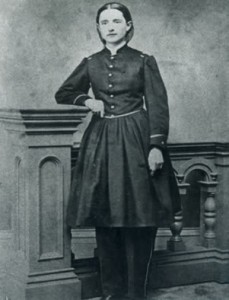
Dr_Mary_Edwards_Walker_1863-229x300

Our nation’s bloodiest conflict afforded many individuals the opportunity to distinguish themselves. One of the most famous women to emerge from the American Civil War was the nurse Clara Barton. Known as the “angel of the battlefield,” she followed the Union army and cared for the injured, sometimes in the midst of battle itself. Her greatest moment of fame came at the Battle of Antietam when a bullet tore through her sleeve and killed the soldier she was tending. She was not, however, the only woman to serve on the front lines. There was another woman who garnered fame, but not as a nurse. Instead, she was a fully-certified doctor. The Union army never granted her a commission, but this did not stop her from winning the hearts of her patients or her commanders. Her name was Mary Edwards Walker. This is the story of how she became the Union’s female battlefield surgeon.

As she matured from a little girl to a young woman, Mary Edwards Walker set her sights on joining the elite group of women granted access into the medical profession. She was born in November 1832 in Oswego, New York to a country doctor. Her parents’ belief in social equality persuaded her she was as good as any man. Determined to prove herself, she entered Syracuse Medical College, a non-regular institution that taught new practices like water-therapy and herbal remedies that opposed regular practices like bloodletting and heavy reliance on mercury. Mary came to value a more modern approach to medicine and put it to use upon her graduation in 1855. She established an office in Rome, New York, but her reliance on the new techniques countered the views of more orthodox physicians. They also opposed her decision to abandon skirts and petticoats for more masculine garb like men’s slacks and suspenders. Her willingness to wear a knee-length dress did not pacify them. Her practice suffered due to the opposition, but she refused to back down, and change was coming irregardless. War was on the horizon, and she knew it was only a matter of time before fighting erupted. When war did come, she saw an opportunity to prove herself to those who believed women did not belong in medicine.

Mary Edwards Walker had been a doctor for six years when she decided to offer her services to the Union army. Unable to gain an appointment in one of the new state regiments, she closed down her practice and moved to Washington, D.C. She arrived in the city in the aftermath of the First Battle of Bull Run and immediately paid a visit to the Army’s Medical Department. She was rejected not only because she was a woman but also because she had graduated from a non-regular school. She was not deterred, however, and began to visit the local hospitals. One hospital housing Indiana soldiers was located inside the U.S. Patent Office. She offered her services to the chief surgeon, J. N. Green, who gratefully accepted her help. Dressed in a U.S. military uniform, she toured the hospital regulating the soldiers’ diets and prescribing medicine for those ill with smallpox. She also remained calm when she assisted Dr. Green in surgical operations. He urged the medical corps to grant her official status, but the request was ignored. In the meantime, she began to feel the need to offer her services to those who most desperately needed it — soldiers suffering on the battlefield.

By the fall of 1862, Mary decided she had to get as close as possible to the frontlines. She made her way to the Army of the Potomac’s camp outside Warrenton, Virginia where thousands of soldiers were sick with typhoid fever. The army was in desperate need of qualified doctors, so her help was greatly appreciated. She was given charge of the sickest soldiers and dove into the task. With the care of a mother, she ripped up her nightgown and dipped the pieces in bowls of water before laying them across the soldiers’ sweat-soaked faces. She remained at her work day and night. Word of her actions spread all the way up the chain of command to General Ambrose Burnside, the army’s commander. He insisted on meeting this rare woman and listened to her case for moving the soldiers to Washington, where they could receive better care. He was so impressed by her argument that he personally drafted orders giving her total control of the operation. She supervised the loading of the soldiers and accompanied them on the journey back to the capital. Once the soldiers were unloaded and settled into hospitals, she realized there was no reason for her to remain in Washington.

As soon as her orders were fulfilled, she hurried back south to Fredericksburg, Virginia. She arrived just in time to see the devastating aftermath of the futile charges Union soldiers made against the Confederate high ground along Marye’s Heights. There were thousands of wounded troops. The senior surgeons directed her to tend to the survivors, including one soldier who had a hole in his skull big enough to see his brain. Regardless of the medical tasks she undertook, Mary found the time to visit with the soldiers, learning of their needs and taking it upon herself to fulfill them. A captain once petitioned her to obtain mittens so his soldiers could endure the harsh winter. She also secured a leave of absence so a soldier could check on his family, and on another occasion, she gained the release of several soldiers being held under false charges. These actions won the hearts of the soldiers who saw her as one of their greatest advocates. Each of these actions was done unofficially, but they earned her the respect of several important officials. One of the most important was Assistant Surgeon General R. C. Wood. He had long been one of her greatest admirers, and it was she that he turned to when medical help was requested in the western theatre of war.

In November 1863 Mary left Washington for Chattanooga, Tennessee where she joined the Army of the Cumberland. She found the army in disarray in the wake of the Battle of Chickamauga, which had occurred in September. There were 7,500 wounded soldiers housed in makeshift hospitals scattered in and around the city, and it was clear the army’s medical corps was unable to provide relief for any of them. She presented a letter from Assistant Surgeon General Wood to the army’s chief surgeon recommending her employment in a hospital. The surgeon insisted she could only work as a nurse. Mary was annoyed, but she refused to allow the doctor’s intransigence to interfere with her work. She visited the hospitals and began tending to those most in need of care. She was not alarmed by the Confederates’ siege of the town and the fierce battles that erupted as the Union soldiers drove the Confederates back. Her courage under fire once again drew the admiration of an army commander, this time General George H. Thomas, the “Rock of Chickamauga.” Thomas recognized that she deserved a chance to prove herself as a surgeon.

In early January 1864 Mary Edwards Walker’s dream of becoming part of the U.S. Army’s medical corps finally came true. “The noble Gen’l,” as Mary referred to General Thomas, appointed her to be an assistant surgeon and assigned her to the 52nd Ohio Volunteers. Despite being deemed unfit by a board of medical examiners because of her gender and medical training, she travelled to Gordon’s Mill outside of the city and took up her new position. She was warmly greeted by the regiment’s commander, Colonel Daniel McCook, and soon gained his confidence. She wrote how he even asked her to review the regiment once when he was unable to do so. She took pride in being part of the regiment, but during her inspections, she saw her services were largely unnecessary since most soldiers were in good health. With little to do for the soldiers, she received permission to attend to the nearby civilians who were suffering. In the beginning, four soldiers accompanied her on the rounds, but it was not long before she insisted on going alone. This led several soldiers to speculate that she was actually spying on the Confederates. Whether true or not, she continued to ride out alone. Unfortunately, she was captured by a Confederate sentry on April 10th and was soon on her way to a Confederate prison in the capital of Richmond, Virginia.

For the next four months, Mary was held in Confederate hands until an exchange was arranged. Many Confederate officers could not believe the Union would allow a woman to occupy so important a position as regimental surgeon. One officer declared it was “a thing that nothing but the debased and the depraved Yankee nation could produce.” She was locked up in a filthy tobacco warehouse with 350 other prisoners and survived on foul rations. In August 1864 she was pleased to learn she had been exchanged for a Confederate major. Her ability to survive such conditions led the army to pay her $432 for her military services. With the help of Generals Thomas and William T. Sherman, she was named “Surgeon in Charge” of all Confederate female prisoners being held in Louisville, Kentucky’s military prison. She ensured the prisoners did not engage in “disloyal talk” or fraternize with male guards. Her willingness to act harshly at times drew criticism, but she retained the faith of her superiors until March 1865. Shortly after she completed her duty in Louisville the war ended, but Mary still desired recognition for her services.

Mary spent the rest of her life speaking of her wartime service, described by some as heroic, and her desire for proper recognition. She wrote dozens of letters to President Andrew Johnson asking to be named a medical inspector in the new Freedman’s Bureau and later a commissioned surgeon in the army. Those who had served alongside her in the war and who had championed her efforts joined her in the quest. Her closed-minded opponents rallied against her, however, and persuaded Johnson and the War Department to deny her request. Seeking to reward her efforts, however, President Johnson signed a bill on November 11, 1865 awarding Mary the Congressional Medal of Honor, the only woman ever granted our country’s highest award for bravery. With medal in hand, she then set out on a lecture tour across the U.S., often appearing in her uniform and speaking about her actions in the field. The public celebrated her for her actions, and she used her platform to call for more opportunities for women. She added her voice to those urging the government to adopt a nurses’ pension bill. She called for women to follow her example and join male-dominated professions like medicine. If more women joined, she said, they would have to be paid for their services. Well ahead of her time in seeking equal opportunity for women, she worked relentlessly for years to achieve fair treatment. Sadly, her fierce attitude alienated many people, and she died virtually alone in February 1919.

Mary Edwards Walker was not one to allow societal barriers to stop her from reaching her full potential. On the battlefields of our country’s most devastating war, she sought only to use her skill and training to ease the suffering and pain of those who needed her most. Under the most difficult conditions, she never failed to show unflagging dedication to the troops who depended on her for survival. She never earned the fame that Clara Barton did, but she is every bit Clara’s equal in sacrifice, service and selflessness. Clara Barton may have been the “angel of the battlefield,” but Mary Edwards Walker was the “soldiers’ surgeon.”

1 Comment

Filed under Uncategorized

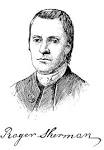
A Real “States” Man

images-1

A popular contemporary view of the U.S. Constitution holds that it established a strong national government, but this has not always been the accepted viewpoint. In the early days of our founding, many Americans feared a strong central government, which could destroy the sovereignty of the individual states. Among those was a particularly capable and determined man who recognized this threat and feared what might happen if the states became obsolete. He believed the future of American liberty was intertwined with the destiny of the states. One could not survive without the other. He fought valiantly to defend the states from being overpowered by the national government. His name was Roger Sherman. This is the story of how he defied the nationalists to defend the rights of the states.

At an early age Roger Sherman became aware of the fragility of liberty and the necessity of protecting it. He was born in April 1721 and grew up in Stoughton, Massachusetts, a small town outside of Boston, where a local minister helped educate him. The minister taught him the value of freedom and liberty and the responsibility of standing up against an unjust government. He took these lessons to heart and demonstrated it not long after moving to Connecticut when he wrote a letter denouncing seizure of private property. As a member of Connecticut’s General Assembly, he opposed Britain’s efforts to dominate the colonies through taxation. Sherman insisted that Britain had no right to exercise unchecked legislative power over the colonies. His dedication to liberty inspired his neighbors to elect him to both the First and Second Continental Congresses. Altogether he served 1,543 days. He was part of the committee that wrote the Declaration of Independence and later the Articles of Confederation, America’s first constitution. After independence was achieved in 1783, he continued to serve as a delegate in the Confederation Congress. He was one of Connecticut’s leading statesmen, and as such was also recognized as a champion of states’ rights.

Roger Sherman’s experience in the Continental and Confederation Congresses showed him to be an ardent defender of the powers enjoyed by each of the states. He fervently believed that the individual states most closely represented the rights and interests of each of its citizens. He also believed all states should be granted the same rights and privileges. It was this view that persuaded him to take up the cause of those living in Vermont. At the time the region was called the New Hampshire Grants and was claimed by both New Hampshire and New York. At the request of the region’s inhabitants, he petitioned Congress that the body recognize the state’s sovereignty. This was eventually done in March 1791. Despite the lengthy struggle, Sherman stayed the course in the belief that no state had the power to interfere with the affairs of other states. Under the Articles of Confederation, this domination by one state, or by a group of states, was prevented by limiting each state to one vote in Congress. The Articles also limited Congress in what powers it had over the states. The principle limitation was the inability of the body to levy taxes or other forms of revenue from the states. This ensured there would be no destruction of each state’s autonomy. His time in Congress exposed him to the views of James Madison of Virginia who argued for a stronger national government. He came to agree that the government needed to be given certain additional powers over those in the Articles of Confederation but not at the expense of the states.

Sherman intended to champion the cause of individual states at the 1787 convention, but it proved a battle from the start. He arrived in Philadelphia just in time to hear James Madison present his Virginia Plan calling for an entirely new government. In this new government, a new national legislature would have the power to act independently of the states. Sherman was shocked to hear that the legislature would have the ability to veto any state law that conflicted with national laws. Such oversight, Sherman feared, could destroy the independence each state enjoyed over its affairs. He believed if this proposal was adopted then it would only be a matter of time before the states became nothing but vassals of the national government. Addressing his fellow delegates, he vehemently denied Congress had authority over states except for defense, commerce and treaties. All other powers rested with the individual states. He insisted that it was the responsibility of state governments to keep the national government in line, not the other way around. The Virginia Plan ran counter to this line of thinking. Sherman further grasped how easy it would be for these new federal powers to grow since Madison’s proposal called for a new composition of the national legislature.

Despite his fear of the legislature’s new power, Sherman was more critical of how the basis for representation would place one group of states at the mercy of another group. Madison argued that the legislature should have two houses and that both houses should be based on the population of each state. Each state was to be divided into equal districts and each district would select a representative. This scheme undoubtedly favored large states like Virginia, which had greater populations, over small states like Connecticut. Sherman and other delegates believed one house needed to have equal representation, no matter what size the state’s population. He based his argument on the model of the Confederation Congress, which allowed one vote per state. If this model were abandoned, he feared it would not be long before only the larger states set national policy. It was critical that small states retain their independence and voice. On June 6, 1787 he supported a motion to allocate seats in one house equally among the states. He knew it was not enough just to give states an equal voice in the government though.

While the proposal to distribute seats in one house equally solved one problem, Sherman still feared the demise of state institutions as the national government was to be formed without the assistance of the states. Under Madison’s proposed government, one house, the House of Representatives, was to be elected directly by the American people while the second house, the Senate, was to be appointed by the first house. The only role the states enjoyed was the ability to select members for appointment. Sherman opposed this proposal on the fear that it would work “to abolish the State Gov[ernmen]ts.” He believed members of the Senate should be appointed by the state legislatures. In this manner senators would remain “vigilant in supporting their rights against infringement by the legislature or executive of the United States.” It also made good political sense since the state legislatures would have a better grasp of each member’s qualifications than the larger House of Representatives would. On June 7th, the day after the motion for equal representation, Sherman seconded a motion calling for U.S. Senators to be chosen by the state legislatures. In securing this important change, Sherman’s actions distinguished himself even more in the eyes of his fellow delegates.

The heated debates over the structure and election of the legislative branch threatened to derail the writing of the Constitution. Sherman and his colleagues were determined to protect the interests of the states. On June 11th he addressed the members of the convention and told them that “as the States would remain possessed of certain individual rights, each State ought to be able to protect itself.” Madison and the other hard-core nationalists were just as committed to the Virginia Plan. The convention finally realized some form of compromise was needed. In early July Sherman was appointed to a committee designed to find a solution to the deadlock. The result was the Connecticut Compromise, also known as the “Great Compromise,” which stipulated that one branch of the legislature would be based on population and the second would be based on equality. Sherman was satisfied when he realized that all of the states would be treated fairly under the new national government. His satisfaction increased after the convention included a series of clauses that expressly stipulated what Congress could and could not do. He now believed the Constitution protected the rights of the states. Pleased with these restrictions on the national government, Sherman signed the Constitution on September 17, 1787.

Roger Sherman remained tireless in his fight to defend the authority and rights of the individual states. In the fight for ratification, he penned articles arguing how the powers of Congress “are specifically defined, so that the particular states retain their Sovereignty in all other matters.” One of those sovereign matters was holding their representatives accountable. Voters would hold the House of Representatives accountable through election, and state legislatures would hold the Senate accountable through appointments. Some of his articles were aimed at the Anti-Federalists and their calls for a “bill of rights.” He denied one was necessary on the basis that “rights are too important to depend on mere paper protections.” Instead their protection “must be in the nature of your government.” In other words, Sherman believed the federal government only had the powers enumerated in the Constitution, so “reserving” certain rights and additional protections was not only redundant and unnecessary but also demonstrated a lack of faith in state governments to police the national government. Despite his objections, he served on the committee that drafted the first ten amendments to the Constitution — what is now known as the Bill of Rights. One of the amendments expressly granted to the states all powers not specifically given the federal government in the Constitution. He served in the newly constituted House of Representatives from 1789 to 1791. In June 1791 the Connecticut legislature appointed him to serve in the Senate. In April 1793 he returned to Connecticut due to illness where he died in late July. A truer defender of states’ rights never lived.

Roger Sherman devoted his life to protecting the liberties so recently fought for and won from a large, tyrannical government. He could not and would not stand by while a new form of tyranny was substituted for an old one. He clearly saw the dangers in the states ceding too much power to a federal government. Sherman battled Madison and other nationalists to see to it the United States had a government that had to work with state governments instead of dominating them. Roger Sherman may not be as well remembered as some signers of the Constitution, but without him, the United States might look very different today. In light of the massive growth in size and power of the federal government since his death, Roger Sherman’s legacy reminds us to keep an ever watchful eye on our liberties.

3 Comments

Filed under Uncategorized

The Making of a Champion

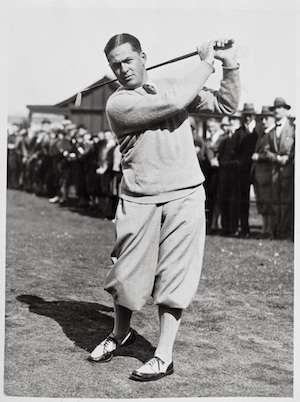
Bobby Jones, c1930s.

No matter what the sport, America has always admired champions. We should remember though that no champion achieves greatness overnight. It takes years of practice and persistence as well as an ability to learn from one’s mistakes. It is this hard-won experience that forms the foundation a true champion can build on. One of those who excelled above all others in his sport was a young golfer in the early twentieth century. He proved to be one of the greatest champions ever, but it only happened after he recognized, confronted and conquered his weaknesses. His name was Bobby Jones. This is the story of how his experiences as a young man transformed him into, arguably, the greatest golfer of all time.

Robert Tyre “Bobby” Jones, Jr. learned to play golf at an early age. Named in honor of his grandfather, he was born in Atlanta, Georgia in March 1902 but spent his childhood in the nearby town of East Lake. He was plagued with fragile health, so he was encouraged to spend as much time outside as possible. Often he walked across to the local golf course and watched the golfers tee off. Among those he enjoyed observing was Stewart Maiden, a golf professional from Scotland. Maiden grew so fond of the boy he presented Bobby with his first set of golf clubs. Not only did Bobby spend hours hitting practice balls, but he also impressed his father by imitating Maiden’s style and the styles of the golfers he had seen his father play with. By the age of nine, he was so confident in his ability he decided to enter his first tournament. Playing at the East Lake Country Club, he won the Junior Championship. He kept improving his swing, even shooting an 80 for the first time at age 11 He felt he was ready for the big time, so in 1915 he played in the Southern Championship. There he set a precedent he would follow the rest of his career — that of qualifying in every tournament he entered. His skill with a golf club was so incredible he won the 1916 Georgia State Championship and became the state’s first amateur champion. It would be the last championship he won for seven years, but it also marked the beginning of his education in the sport.

By 1916 Bobby Jones had established a reputation as one of golf’s rising young stars, but certain aspects of his game needed serious attention. Everyone knew he struck the ball well, but he was weak in some of the finer points of the game. His skill in hitting the ball was proven in the qualifying round of the U.S. Amateur Championship where he shot a 74, the best of anyone. Unfortunately, his putting left something to be desired. One of those who noticed this was U.S. Amateur Champion Walter J. Travis. He took it upon himself to give Bobby advice on changing his putting style. Bobby took this advice to heart and practiced so diligently that his biographer O.B. Keeler later said he “became one of the finest and most consistent putters the game has seen.” He employed his newly acquired skill against the professionals he faced when he played in a series of tournaments used to raise funds during World War I. He was the only amateur to not lose against the professionals in any of these tournaments. Part of this success came from his ability to dissect his opponent’s strengths and weaknesses.

Bobby enjoyed competing against former champions knowing it would give him the opportunity to study their game. By the end of 1919 he was the best golfer at Georgia Tech, where he was a sophomore. He relished the thought of playing the best golfers in the country. In the summer of 1920 he travelled to Chattanooga, Tennessee where, in dramatic fashion, he won the Southern Amateur Championship. He continued on to Memphis to play in the Western Amateur Championship, establishing a new record of 69 and 70 in the qualifying rounds. His opponent was U.S. Amateur and Open champion Chick Evans. Despite being more comfortable playing on Bermuda grass than his opponent, Bobby battled to keep up with Chick. Soon he was down by three strokes. He buckled down and won back those strokes before Chick rallied on the last hole to win. The tournament was not a complete loss though. Bobby took advantage of the match to study Chick’s style. He later told people he had thoroughly enjoyed the experience. He now knew how Chick played, and he would use that knowledge to beat Chick when they faced one another in future tournaments. Chick was not the only former champion to beat Bobby though. Both Bob Gardner and Francis Ouimet would deal Bobby a loss. As with Chick, Bobby would use the losses to analyze both his and his opponents’ games. He realized defeat could be an effective teacher, but he also understood that consistent winning required concentration and control of his emotions.

During several tournaments, Bobby allowed the stress of the game to cause him to lose focus. Nowhere was this more apparent than in the 1920 U.S. Open in Toledo, Ohio. He was paired with legendary golfer Harry Vardon of Britain. As the two walked the first six greens Bobby played extremely well and was able to match Vardon’s score. On the seventh hole, however, Bobby pitched his ball over the green and began to fall behind. He believed he was probably out of the contest, but then he began a remarkable comeback at the same time that Vardon and the other leaders began to lose their initiative. Only four strokes behind, he realized he had a chance to win. He knew he needed to score well on the remaining holes, but he began to feel the mental stress once again and his shots suffered as a result. He ended the tournament in eighth place with a score of 299. He was not disappointed though. He later said a win at the U.S. Open might have convinced him “it was an easy thing to do.” The experience taught him to force his opponents to feel pressure while keeping cool himself. He was soon to discover though it was not just his opponents who could apply pressure.

Bobby had determined he would not allow himself to be distracted by the competition, but he soon realized golf courses themselves could be just as much as an adversary. In 1921 he travelled to Britain with other American amateurs to play in the British Open. Upon his arrival, he found British courses rougher and more prone to the elements than American courses. He journeyed north to the most famous golf course in the world — the Royal and Ancient Course at St. Andrews, Scotland. He took an instant disliking to the course and his performance showed it. It took forty-six strokes for him to finish nine holes. On the tenth hole he scored a dismal 6. His anger increased until he felt he had suffered enough. He picked up his ball and walked off the course, thereby withdrawing from the tournament. It was the only time he would ever do so, and the only game where his final score was unrecorded. He later regretted the decision to quit so easily, but still, it was a valuable lesson for him. He gained an appreciation for how difficult a golf course could be, but he also realized that the tougher the course, the sweeter the win. By the time he left St. Andrews, he had come to respect the course. Such respect would eventually lead him to love that particular golf course more than any other he ever played on. He returned to the U.S. with a deeper understanding of what it took to win, but the lessons to be learned were not over.

Once back in the U.S., Bobby decided he could never let his emotions get out of hand like they had at St. Andrews. He had always had a quick temper, and he often displayed that temper on the course. That temper had most often resulted from the strain of the expectations and pressures he put on himself to win. Hundreds, sometimes thousands, of people flocked to the golf tournaments in which he played. He knew they expected him to play well, almost as much as he expected it himself. Unfortunately, the expectations overloaded him, and he began to lash out by throwing his clubs around. If he missed an easy shot or if he failed to win a hole, he would throw his club on the ground or fling it at a nearby tree. His departure from the course at St. Andrews added to the belief of others that he could not control his volatile emotions. Bobby recognized he needed greater self-discipline if he had any chance of truly becoming a champion. It was time for a change. He made a concentrated effort to even out his emotions and remain in control. He demonstrated his newfound self-control in the 1921 U.S. Open Championship when he badly hooked his shot on the fifth hole, and it rolled out of bounds. Instead of throwing his club down, he took a deep breath and quietly urged himself to think clearly. He loosened his grip on his club and concluded the round with a 77. He tied for fifth place, but more importantly, he had finally managed to master his emotions. Now he felt ready to step on to the tee box and claim the title of champion for himself.

Despite being adored by spectators and opponents alike, there were whispers that Bobby Jones could not win a major championship. He determined to prove these critics wrong. In 1923 his seven years without a championship came to an end when he won the U.S. Open on the final hole of the playoff round when he hit his approach shot over a large pond and dropped it onto the green only six feet from the hole, securing golf’s most prestigious U.S. title. When he arrived home in Atlanta, a crowd met him with thunderous applause. The following year, 1924, his confident swing and calm control wore down his competition and elevated him to the top as America’s amateur champion. Once again Atlanta celebrated the return of its favorite son, even placing his name at the top of the trophy listing every champion. In 1926 he competed in the British Open, and to everyone’s shock he won. He was heralded as a national hero when he returned home. He delighted in each of these wins, but he was determined to clinch one more record before retiring. That record was the “Impregnable Quadrilateral of Golf” — all four tournaments held in Britain and America. In 1930 he finally won the British Amateur Championship at St. Andrews, Scotland when he pitched the ball onto the eighteenth green and then watched it roll into the hole. He went on to win the British Open, the U.S. Open, and finally the U.S. Amateur. Regarded now as the “king of golf,” he announced his retirement from the sport. He played many more holes of golf but none as an active competitor. The golfing world has never been the same. He died in December 1971, but he remains the country’s foremost golfer to this day.

The mark of a true champion is his or her response to adversity. Sometimes the adversity is of the external kind — for example, the opponent or the particular golf course one is playing. More often, the greatest challenge comes from within — confronting the stresses, emotions or even fears one faces. Bobby Jones dealt with all of these challenges and became a champion for the ages. It wasn’t easy and it wasn’t quick, but through perseverance, learning from failure, and mastering his emotions, he climbed to the pinnacle of his sport. His life is an inspiring example not just for those competing in sports but for those who seek to excel in the most important game of all — life.

1 Comment

Filed under Uncategorized

A “Union” Man

200px-Abraham_Lincoln_O-57_by_Brady,_1861

The deadliest war America has ever endured was the American Civil War. In four years of fighting, between 600,000 and 750,000 young Americans died. Each side had their reasons for waging war against their brothers, but they were united in the fact that none of them wanted war. Near the end of the war, one of the two opposing presidents remembered how “all dreaded it, all sought to avert it.” The only difference was he had been “devoted altogether to saving the Union without war” while the other president had been “seeking to divide it without war.” The “union” man was United States President Abraham Lincoln. This is the story of how he desperately tried to prevent the eruption of the Civil War.

Abraham Lincoln rose to prominence at a time when the country was tearing itself apart over slavery. He was born in February 1809 in the slave state of Kentucky, but he grew up in the free state of Indiana. As a boy he studied William Grimshaw’s History of the United States, which criticized Americans for ignoring the plight of African-American slaves. Lincoln himself witnessed the cruelties of slavery when he travelled down the Mississippi River to New Orleans. Returning to the North, he settled in Illinois, established a law practice and launched a career in politics. While serving in the Illinois legislature and the U.S. House of Representatives, he came to the full realization that the Constitution afforded certain protections for slavery. Like other Northerners, however, he refused to accept slavery’s spread into the western territories. He spoke out against Illinois Senator Stephen Douglas who seemed one of the foremost Northerners willing to accommodate the South. The two faced each other in a series of debates shortly after passage of the Kansas-Nebraska Act, legislation which allowed the territorial inhabitants to decide for themselves if their territory would become a slave state or a free state. It was during one of these debates that Lincoln famously declared “a house divided against itself cannot stand.” His opposition to slavery’s expansion led him to join the new Republican Party. In November 1860 he was elected president. He was then immediately thrust into the greatest crisis the nation ever experienced.

Even before Lincoln assumed office in March 1861, he and the United States stood on the brink of war. Southerners were outraged at his election and feared it was the end of their way of life. One Virginia newspaper, the Richmond Enquirer, accused the North of electing Lincoln “for the avowed purpose of aggression on Southern rights.” For others, it was “a declaration of war.” There was only one answer the Southern states could possibly give. Beginning on December 20, 1860, South Carolina and six Deep South states seceded from the Union. As he journeyed from Springfield to Washington, D.C., he described how he would not interfere with Southern institutions, but he also said he would steadfastly defend the principles of the nation. To a crowd in Philadelphia, he declared “I never had a feeling, politically, that did not spring from the sentiments embodied in the Declaration of Independence.” Then he expressed a desire to “be assassinated on the spot than to surrender it.” He arrived in the capital amid a high state of alertness and set to work finishing his inaugural address. He intended the address to combine a call for reconciliation with a promise to defend the Constitution.

On March 4, 1861 President Abraham Lincoln delivered his First Inaugural Address, in which he stated his intent to carry out his constitutional responsibilities. He stated he had the “most solemn [oath] to ‘preserve, protect and defend’” the Constitution. Even more important than the Constitution, however, was the Union itself. He reminded his listeners the Union had been formed before the Constitution was adopted. It was not possible, therefore, for one state, or even a group of states, to dismantle the government based on that Constitution. It was his duty to ensure the Union did not falter at this moment. To that end, he promised to “hold, occupy and possess” those federal forts and military arsenals not already seized by Confederate forces. But he also tried to calm Southerners’ fears by declaring “there will be no invasion, no using force against or among the people anywhere.” It was not truly up to him though. As he said, “in your hands my dissatisfied fellow-countrymen, and not in mine, is the momentous issue of civil war.” Before firing the first shot, he urged Southerners to carefully consider the ramifications of their decisions. He hoped the seceded states would return to the Union. After all “we are not enemies, but friends. We must not be enemies.” When the inauguration was finished, Lincoln set to work keeping his promise to maintain control of a fort that lay in the very heart of the maelstrom — Fort Sumter in Charleston, South Carolina.

The day after the inauguration, March 5th, Lincoln received a message that threatened his promise not to act aggressively towards the South. Major Robert Anderson, Fort Sumter’s commander, informed the president he and his soldiers only had supplies to last six more weeks. If the fort was not supplied by then, he would have to surrender. Lincoln immediately felt the gravity of the situation. He realized he had two options: evacuate the garrison or resupply the fort. He knew if he withdrew the garrison he would appease the Confederacy and prevent the Upper Southern states of Virginia, North Carolina, Arkansas and Tennessee as well as the Border States of Kentucky, Missouri, Maryland and Delaware from seceding. An evacuation, however, would be a rejection of his pledge to “hold, occupy and possess” federal property. He would be seen as backing down in the face of opposition, and his administration would end before it even began. On the other hand, he knew that to resupply the garrison meant risking a commencement of hostilities with the Confederacy. The two sides had nearly come to blows back in January when South Carolina militiamen had fired on the supply ship, the Star of the West, and forced it to turn back. A second resupply mission was even more likely to result in violence. As he considered the choices in front of him, Lincoln realized he would be criticized for whichever choice he made.

The new president desperately needed time to develop a suitable strategy to avert the looming crisis. To give himself breathing room, he sent two friends, Ward Hill Lamon and Stephen Hurlbut, to Charleston in hopes they would find evidence of Unionist sentiment he could use to diffuse rising tensions. They reported back that no sentiment was in existence. With no choice now, he turned to his civil and military advisors for counsel. Most of them were convinced he should do nothing to antagonize the Confederates. Secretary of State William Seward urged the president not to resupply the fort. He said the act was too provocative and would shatter the fragile peace that still existed between the Union and the Confederacy. General Winfield Scott, the U.S. Army’s top commander, similarly advised Lincoln to evacuate the garrison while there was still time. He strengthened his argument by telling Lincoln that any effort to resupply Fort Sumter would require a fleet of warships, 5,000 regular U.S soldiers and 20,000 volunteer soldiers. It would take six to eight months to assemble, equip and train this army. Obviously Major Anderson could not hold out that long. Lincoln was sobered by this information, but at the same time, he still wanted to keep the fort in Union possession.

As the days passed, Lincoln felt the strain of trying to reach an accord between those who wished to relieve Fort Sumter and those who wished to evacuate the fort. Each of his Cabinet officials, with the exception of Postmaster General Montgomery Blair, agreed with General Scott that the garrison should be evacuated. Supporting his son’s position, the Postmaster General’s father, Francis P. Blair, Sr., a former advisor to President Andrew Jackson and a founder of the Republican Party, told Lincoln that giving up Fort Sumter “was virtually a surrender of the Union.” Both father and son recognized Lincoln needed a viable alternative to consider. Fortunately, they knew just the man for the job. Montgomery’s brother-in-law, Gustavus Fox, was a former naval officer. Fox proposed to the president that a steamship carrying troops and two tugboats carrying supplies be sent down to Charleston. Once there, the three ships would probe the Confederate defenses in order to find a weak spot and then use the cover of night to slip through and relieve the garrison. Lincoln was suitably impressed and passed the recommendation on to his Cabinet. Only Montgomery Blair and Secretary of the Treasury Salmon Case endorsed the proposal though. The rest still thought it was too risky. By now it was late March, and the window of opportunity was closing. Despite the lukewarm response he had received, Lincoln decided to send a rescue mission anyway.

On March 29, 1861 President Abraham Lincoln made the fateful decision to dispatch a relief convoy to the aid of those trapped inside Fort Sumter. He directed Secretary of the Navy Gideon Welles and Secretary of War Simon Cameron to gather the provisions the soldiers desperately needed to hold out. In the meantime, Gustavus Fox travelled to New York City to prepare the transports for the journey. The convoy set off on April 9, 1861. As the ships steamed south, Lincoln sent a message to South Carolina’s Governor Andrew Pickens telling him the fort would be supplied, but only with food and other provisions. He strongly asserted there would be no attempt made to reinforce the garrison with additional men, weapons or ammunition. Governor Pickens immediately forwarded the report to Confederate President Jefferson Davis. Davis and his Cabinet realized they had to respond. A resupplied Union garrison was a direct threat to Southern honor. They instructed General P.G.T. Beauregard, the Confederate commander in Charleston, to demand Major Robert Anderson’s surrender. When Anderson refused to comply, the Confederates opened fire at 4:30 A.M. on April 12, 1861. As Abraham Lincoln said four years later in his Second Inaugural Address, “And the war came.”

Abraham Lincoln’s actions in his first month as president showed he wanted to avoid war as much as anyone. He understood what would befall the country if war erupted between the North and the South. Four years later he had the grim satisfaction of knowing he had been right. He now looked out across ruined farms and devastated cities and hundreds of thousands of dead and wounded Americans. No matter how hard he tried to avoid it, the war came anyway. With little choice, he dedicated his entire presidency to reuniting the country. He finally succeeded, only to become one of the war’s last casualties. With his martyrdom, however, his place among American heroes was secured. President Abraham Lincoln strove to protect the United States from the horrors of civil war, but once it erupted, he determined to see it through until final victory and everlasting union were won.

3 Comments

Filed under Uncategorized

A “Man” Among Men

images-1

Americans have always revered the Founding Fathers who led the United States in the fight for independence, but there was another group just as important. These were the “Founding Mothers.” Just as devoted to the cause of independence as their husbands, these women included such patriots as Abigail Adams and Martha Washington. There was one Founding Mother, however, who wished to take a more active role in the birth of her country. She was not content to let only men fight and die for her freedom. She wanted to fight for it herself. Her name was Deborah Sampson. This is the story of her role as the “Female Soldier” of the Revolution.

Deborah Sampson’s early life was filled with struggle, but she showed a determination to fight her way through it. She was born in December 1760 in Plympton, Massachusetts to a family that descended from Plymouth’s Governor William Bradford. That link did not keep her father from abandoning the family or her mother from separating the children. Little Deborah was shuttled between different homes until age ten when Jeremiah Thomas of Middleborough took her into his home as a servant. She tended to the Thomas children and taught herself to read using the children’s books. She also learned to sew. After leaving the Thomas household, she established herself as an independent seamstress and a teacher. As tensions grew in Massachusetts, Deborah joined the many like-minded citizens in protests against Britain’s colonial policy. She supported the aggressive tactics that forced colonial officials like Chief Justice Peter Oliver to resign. Then in 1775 the protests turned into open war between Britain and the colonies. Over the next seven years she saw American soldiers march past her home on their way to distant battlefields. She became consumed with a desire to join the men in fighting for freedom.

By spring 1782, Deborah realized she had to enlist immediately if she were to have a chance to serve her country. Despite the victory at Yorktown the previous fall, the infant nation still needed to field an army in case the British launched another attack. Unfortunately, the Continental Army had always had trouble recruiting new soldiers, and the current efforts were no exception. One officer even half-jokingly suggested enlisting women. For Deborah, it was no laughing matter. Unable to enlist in Middleborough, she walked nearly two hundred miles to Worcester County. In order to hide her identity, she wrapped a waistcoat around her breasts and tightened it to the point it was squeezing her chest. Then she found men’s attire and dressed the part of a man. On May 20th she enlisted in the Continental Army as “Robert Shurtliff.” Shortly afterwards, she and her fellow recruits marched to the Hudson River to join the army at West Point.

Not long after arriving at West Point, “Robert” was assigned to one of the most dangerous units of the army — the light infantry. Her commander noticed how tall and athletic she was, and he decided she would make an excellent candidate for the group of soldiers who scouted far ahead of the main army and skirmished with the enemy. She reported to her new unit and was issued a blue and white dress uniform for parades and a pair of overalls and trousers for action in the field. She soon learned it was the light infantry that saw most of the action at this stage of the war. Between the British base in New York City and the American base in the Hudson River Highlands was the neutral ground of Westchester County. The ground was the scene of fierce battles between Loyalist irregulars led by James DeLancey and American light infantry. Only a few weeks after joining the army, Deborah faced her first trial by fire.

Deborah quickly proved herself more than willing to face the guerrilla warfare erupting in Westchester County. In June Deborah and her company were ordered to perform a routine patrol of the disputed territory. They marched down the Hudson River and encamped at Tappan Bay, not far from the village of Tarrytown, the site of Washington Irving’s famous story The Legend of Sleepy Hollow. Suddenly DeLancey’s Loyalists attacked them. The Loyalists fired two volleys into the ranks before Deborah and the others trained their own muskets on the enemy and delivered a volley of their own. Seeing the approach of British infantry, the company withdrew into a grove of trees where reinforcements of their own were waiting. The Americans immediately regained control and began trading fire with the enemy. The day was growing increasingly hotter, and Deborah was soon worn down from fatigue. She refused to abandon her post though and continued to return the enemy’s fire. As the fighting increased, a soldier on her left fell dead. A few moments later she felt two bullets tear through her coat and another rip her hat. Finally, the fighting ended when the British and Loyalists withdrew to their camp. Deborah had survived her first battle unscathed, but she would not be so lucky the next time.

Shortly after the skirmish at Tarrytown, Deborah’s bravery almost resulted in her death. She and twenty comrades had been dispatched in pursuit of Loyalists who had perpetrated crimes against innocent civilians. It was not long before they encountered enemy cavalry. The soldiers opened fire and dropped numerous troops from their saddles. An invigorated Deborah leapt into an empty saddle and led her comrades in a charge that routed the enemy. She was so focused on the pursuit she did not notice she had been wounded twice. A saber had cut across her head drawing blood, and a musket ball struck her in either the shoulder or breast. Fearing discovery, she tended to the wound herself. She recovered enough to join her company in another fight with British cavalry in December. The company had to fight its way out and barely escaped capture. Deborah once again showed courage under fire as the company dashed across the icy Croton River to the camp at Peekskill, New York. It was there that Deborah learned she was being transferred from the battlefield to the headquarters.

By March 1783 Deborah had proven herself to be a “good and loyal” soldier. She never fell asleep on sentry duty or went absent without leave. Her superiors praised her for her upright conduct and refusal to engage in the licentiousness that infected most soldiers. Chief among her admirers was General John Paterson who asked Deborah to join his staff, or “military family” as he called it, as his “waiter,” or orderly. She gratefully accepted the position and quickly proved herself as eager an orderly as she was a soldier. She ensured his clothes were kept clean, served him and his guests food and drinks, and carried messages to distant parts of the camp. The most harrowing part of her military experience, however, came that summer when she travelled with him to Philadelphia to restore law and order in the wake of a mutiny by Pennsylvania troops. She watched him as he conducted courts-martial for the mutineers and rode throughout town on his behalf. Little did she know that an unseen force was about to expose the secret she had desperately sought to conceal.

Deborah had managed to hide her true identity even when she had been wounded, but there was one enemy she could not escape. At the time she arrived in Philadelphia, a massive epidemic was ravaging the city. Since she travelled around town, it was not long before she came down with a fever, either smallpox or measles. She was moved into a hospital located inside the Philadelphia Alms House and was tended to by Dr. Barnabas Binney and Nurse Mary Parker. Fighting desperately to survive, she often lapsed into delirium. At one point she even appeared to be dead but regained consciousness just as she was being carried away. Hearing she was awake, Dr. Binney came to examine her. It was during the examination that he found the waistcoat she used to compress her breasts. He moved her into his home to give her more privacy and notified General Paterson of his discovery. Deborah returned to the army’s camp at West Point where Paterson asked her if she was really a woman. She feared punishment but still answered yes. Paterson promised no harm would come to her. She was formally discharged from the army on October 25th but stayed in camp another week to see the official disbandment of the army. She then returned home with a determination the country would know Deborah Sampson had done her part.

Deborah spent the rest of her life fighting for recognition of her military exploits. Shortly after her return to Massachusetts, she launched a six-year campaign to claim the back pay she was owed by the state. In 1792 the state legislature finally agreed to pay her $34 for her time in uniform. At the same time, she met a young writer named Herman Mann who wanted to write an account of her war experiences. She described how she concealed herself among her comrades, how she skirmished with the enemy and how she was finally discovered. It took four years, but the memoir was finally published. It achieved immediate success. Mann reported it sold 1500 copies. Supported by Mann and her old commander General Paterson, Deborah ignited a campaign to receive a pension from the U.S. government. As part of the campaign she lectured throughout New England and New York, appearing in her Continental uniform and performing the manual of arms, loading and firing her musket. She eventually received an invalid veteran pension in 1805 and a general service pension in 1821. She died six years later in 1827. Her legacy as the “Female Soldier” lives on to this day though.

Deborah Sampson was one of those Founding Mothers determined to do more for the United States than watch from the sidelines. She might not have had the political acumen of Abigail Adams nor the aristocratic bearing of Martha Washington. What she did have was the burning desire that thousands of young men had throughout the eight long years of struggle. She yearned to prove herself as committed to independence as any man. Like her commander-in-chief, General George Washington, she did not shirk her duty when her country called. Instead, she boldly stepped forward, promising to defend America with every drop of blood in her body. It was a promise she fulfilled when she was wounded in battle. All she wanted in return was to be remembered for her willingness to serve.   It would take another two hundred years before women would be officially allowed to serve in combat roles. Today, we remember Abigail Adams and Martha Washington as the foremost Founding Mothers of the United States. Though perhaps in the shadows beside them, but nonetheless proudly, stands Deborah Sampson — America’s premier female warrior.

2 Comments

Filed under Uncategorized

A Freedom Fighter

images-1

One of the most controversial wars in which Americans have ever fought was the war in Vietnam. The United States first became involved when it offered military assistance to the South Vietnamese who were fighting the North Vietnamese communists. Initially America only provided South Vietnam with weapons and military advisors. One of those early advisors was a young Army captain from New Jersey who understood the threat communism posed to the values held by citizens of a free republic. He dedicated himself to fighting for those ideals in Southeast Asia, though most Americans know him only as the general in command of Operation Desert Storm twenty-five years later. His name was H. Norman Schwarzkopf. This is the story of his service as a military advisor during the early part of the Vietnam War.

H. Norman Schwarzkopf dedicated his early military career to fighting communism. He was born in August 1934 in Lawrenceville, New Jersey to an Army officer father. As a young boy he travelled with his father to Iran and Germany where tensions between the U.S. and the Soviet Union were high. Like his father, Norman developed strong anticommunist views. He entered the U.S. Military Academy at West Point in July 1952 and graduated four years later in 1956. As a young second lieutenant, he served with the famed 101st Airborne Division at Fort Campbell, Kentucky before being transferred to Berlin in 1959. His assigned duty there was to patrol the highly militarized border with the Soviets, even performing reconnaissance missions against them and their East German allies. During these missions he saw firsthand how dismal life in the Soviet-occupied territory was when compared to the vibrant culture flourishing in the free territory administered by the U.S. He knew tensions could erupt at any moment, and he was proven right when the Berlin Wall went up immediately after he left the city. He returned to the U.S. in 1961 just as America was becoming involved in a small Southeast Asian country called Vietnam.

As the fighting in Vietnam intensified, H. Norman Schwarzkopf decided he had to be a part of the struggle for freedom. He read how U.S. soldiers aided their counterparts in the free republic of South Vietnam against the communists in North Vietnam. His readings convinced him the war was a test of ideals — freedom versus tyranny. As the months passed, newspapers began to detail the deaths of American “advisors” who fell victim to North Vietnamese attacks. One of these casualties was a former West Point classmate of Norman’s. This death brought the war home to Norman, and he came to the conclusion that he could no longer stay out of the fight. He had to help the citizens of South Vietnam win their freedom. He was currently serving as an instructor at West Point, but with the help of a senior instructor, he received orders to report to Southeast Asia.

Norman arrived in Saigon in early 1965 and was immediately attached to the Vietnamese Airborne Brigade as an “advisor.” His responsibility was to call in airstrikes against enemy forces and keep the aircraft from dropping bombs on friendly forces. Unlike other American advisors who remained in Saigon for long periods of time, Norman spent most of his time out in the field hunting communists. This was just what he had wanted when he left West Point. The Vietnamese officers welcomed his assistance in helping them repel the communist invaders, but they made it clear this was their home and their war. They would fight on regardless if America helped them or not. One officer told Norman his devotion was so great he would rather have his children killed than allow them to live under communist rule. Norman was inspired to follow their example and to force out the communists at all costs.

He quickly learned that life as a military advisor required hard work. He accompanied the brigade when it marched out into the field. Sometimes he would be away for almost three weeks at a time. During the marches he would push through the dense jungle vegetation while carrying the large radio he used to call for air support. Not being used to the rugged terrain, he would often struggle to keep up with his fellow soldiers as they kept a watch out for the Vietcong guerrillas who liked to hide in the deep ravines. He consumed so much water his Vietnamese aide gave him the nickname of “water buffalo.” Still, he prided himself on eating the same meal of rice mixed with pork, beef or poultry that his fellow soldiers consumed. He even participated in one of their customs and drank a mix of scotch and blood. Throwing himself wholeheartedly into his role, he forged ironclad bonds with his brother warriors — the officers and men of the brigade. He soon proved himself just as willing to face the fire of combat as he was the rigors of the march.

Not long after he settled into the Vietnamese Airborne Brigade, Norman was promoted to major and ordered into combat for the first time. He and the brigade were ordered to drive out a Vietcong force that threatened a South Vietnamese Special Forces camp at Duc Co. The camp lay close to a vital North Vietnamese supply route that passed through Cambodia. Senior U.S. and Vietnamese officers were determined the camp would not fall into North Vietnamese hands. After rounding up air support, Norman and eleven soldiers climbed into one of the helicopters bound for Duc Co. As the helicopter took off though, it clipped a tree and crashed. No one was hurt, and the crew climbed on board another helicopter. Norman recalled how the brigade came under fire when they landed outside Duc Co, and they had to dodge mortar fire as they ran from the landing zone into the camp. Once inside, Norman and his Vietnamese counterpart reported to the camp commander. They then directed their troops to move out toward the Cambodian border. The objective was to get behind the Vietcong force and cut them off from the supply route. Unbeknownst to them, the Vietcong force was actually two regiments of North Vietnamese regulars. The regulars attacked the brigade and Norman was forced to call in air support from a group of helicopter gunships. At last the enemy was dispersed, and the brigade continued its march. The battle had just begun though.

The next day the brigade found itself surrounded and bombarded by another force of North Vietnamese. All Norman could do was attempt to coordinate air strikes against the enemy and lead parts of the brigade back into the Duc Co camp. The North Vietnamese followed and pinned Norman and his compatriots down for several days. They put up a valiant resistance and kept the enemy out of the camp. Norman told how he slept with one eye open in case he needed to dive into a foxhole. Finally the brigade was relieved by a detachment of marines. Word of Norman’s conduct in the battle, especially his bravery in evacuating the wounded, earned him the respect of his South Vietnamese comrades and superiors. Soon after Duc Co though, he watched as American “advisors” were replaced with American soldiers.

As the war escalated, Norman watched as the method of fighting changed. He saw that most of the fighting was now being done by the Americans. Many American officers did not have a high opinion of South Vietnamese soldiers. Norman vehemently defended the heroism of South Vietnamese soldiers to anyone who dared to criticize them. He respected his comrades and loved the Vietnamese culture. Vietnamese officers trusted him so much that he was chosen as the advisor during the mopping-up phase of the Ia Drang Valley campaign — the battle that was the subject of the book and movie We Were Soldiers Once and Young. He watched the South Vietnamese kill hundreds of North Vietnamese soldiers and capture hundreds of weapons the South Vietnamese could use against their opponents. As a task force commander, he continued to see combat more often than many American officers. He led pursuits through the tropical jungle and eventually fell ill from malaria. Once he had recovered enough, he reported back to his superiors that he was fit for duty. He was sent to join in the assault on Qui Nhon where the Vietcong were hiding on the edge of town. Ordered to attack across open rice paddies, Norman and his unit pushed the Vietcong back through the town and then pursued the remnants into the An Lao Valley. In the ensuing Battle of Bong Son he was wounded in the left arm and received superficial wounds to his face. He was soon transferred back to Saigon before being sent back to the U.S. Despite being awarded two Silver Stars and three Bronze Stars for bravery in battle, he was about to discover that the spirit of American civilians contrasted sharply with the spirit of those in South Vietnam.

Returning to the United States, Major Norman Schwarzkopf realized many young Americans did not have the same desire he did to serve in South Vietnam. In Newark, New Jersey he saw reminders of the war in the news, but it was obvious the American public was not as invested in the Vietnam War as they had been in World War II. He quickly travelled up the Hudson River to West Point in hopes he would regain some form of moral clarity. Even there, however, an instructor asked him if he thought America should even be involved in the struggle. He learned it was difficult for West Point administrators to enlist enough cadets. In an attempt to inspire and encourage, Norman addressed a group of cadets about what it was like to fight in Southeast Asia. He dressed in his battle uniform and showed slides of the country. The next day he was told five cadets had left the academy. They did not want to fight in Vietnam. He was also asked to give speeches to several civic organizations. He told his audiences that the South Vietnamese were not cowards, as portrayed by the American press, but were bravely fighting to protect their country from being overrun. His best efforts seemed to fall on deaf ears.

Feeling an obligation to his comrades, he returned to South Vietnam in 1969. He was placed in command of a battalion and pursued the Vietcong, who he saw as opportunists who bullied innocent peasants. He wanted to fight them, but he realized the war had shifted into a series of piecemeal attacks. He remained in South Vietnam for a year before coming home. He discovered that the massive antiwar protests were worse than when he left. He felt despair at his fellow Americans’ rejection. It was a bitter pill to accept the reality that much of the country rejected both the brave men and women of the U.S. who fought in South Vietnam and the cause they fought for. He finally realized he would have to accept the way things were, but he would always honor those who served and apply the lessons learned.

H. Norman Schwarzkopf’s dedicated and honorable service in Vietnam gives testimony that the Vietnam War was as much a struggle against tyranny and oppression as any other American war. This young American did not go to Vietnam for personal glory or for the thrill of the fight. He went simply so South Vietnamese citizens could live their lives in freedom. The communists who inhabited the northern half of the country and who had invaded were a direct and imminent threat to that freedom. Many people after the war have tried to dissect the war in Southeast Asia in complex analyses. For Norman Schwarzkopf it was simple — freedom is always worth fighting for. It was the same basic philosophy that served him so well as coalition commander in the liberation of Kuwait during the 1991 Persian Gulf War. His service, and the faithful service of thousands like him, especially in an unpopular war, should never be ignored. There will always be threats to freedom, and there must always be those who are willing to stand as guardians of that freedom. Every generation must answer the call.

2 Comments

Filed under Uncategorized

Abolitionist-in-Chief

images-1

Today when Americans think of emancipation they think of Abraham Lincoln. They remember how it was he who signed the Emancipation Proclamation and gave freedom to several million slaves. Long before Abraham Lincoln signed the proclamation, however, there was a Massachusetts newspaper editor who saw the injustices inflicted on African-American slaves. He was incensed by what he saw and dedicated himself to ending that injustice once and for all. His name was William Lloyd Garrison. This is the story of how he rose to become the foremost abolitionist of his day.

William Lloyd Garrison’s commitment to social justice was deeply rooted in the spiritual upbringing of his youth. He was born in the small village of Newburyport, Massachusetts north of Boston in December 1805. Shortly after he turned three, his father abandoned the family. His mother then became the dominant force in his life. As a devout Baptist, she instructed Garrison and his siblings in Christian teachings. He also spent large periods of time living with neighbors while his mother struggled to provide for the family. Like his mother, the neighbors encouraged him to study sermons and memorize large sections of the Bible. His studies convinced him to oppose the vices so apparent in the rest of society. After watching his older brother destroy himself through alcoholism, he realized he had to fight against all vices. The most effective way was by expressing his views through the written word. He apprenticed himself to the editor of the local newspaper and began to write columns denouncing corruption and licentiousness. It was not long before his activities led him to join the ranks of other social reformers.

Garrison’s work as a newspaperman convinced him that his principles mattered more than to which political party he belonged. His greatest desire was to defend the truth against all who opposed him. Some of those opponents were members of the United States government who had become more secular in their thinking. As a devoted Christian, Garrison held firm to the conviction that politics needed to reflect Christian values. He became convinced the public consciousness had to be renewed and then used to destroy the social conflicts plaguing American cities. He decided to resettle in Boston where he could help lead New England and the rest of the nation to a spiritual purification. Remembering his brother’s struggles, he joined the new temperance movement to encourage abstinence from alcohol. He befriended evangelical minister Lyman Beecher, one of the movement’s leaders, and wrote articles for the National Philanthropist. His work with these social reformers invigorated him. He determined to become a moral prophet who denounced evil wherever he saw it. It was not long before this calling led him to a cause even more noble than that of temperance.

William Lloyd Garrison had previously had little association with African-Americans, but by the end of the 1820s, he had dedicated his life to eradicating the institution of slavery. His enlistment began in March 1828 when he was introduced to Benjamin Lundy, a Quaker who was the leading abolitionist at the time. He listened to Lundy describe slavery and was appalled at the amount of domination slave masters exercised over their slaves. More importantly, he became convinced ownership of slaves contrasted with God’s authority over the entire human race. Lundy had advised a system of gradual emancipation, and Garrison had initially followed his example. He circulated a petition asking Congress to abolish slavery in the District of Columbia. The petition was rejected. With the rejection, Garrison’s attitude began to change. He was approached by the American Colonization Society to give a speech at the Park Street Church in Boston supporting voluntary emancipation and colonization (the immigration and settlement) of African-Americans in Africa. Instead he declared to the congregation he was “sick of our hypocritical cant about the inalienable rights of man” while allowing “barbarity and despotism” to flourish. He called for churches to take the lead in calling on the government to act. He also advocated the establishment of antislavery societies that would demand immediate abolition of slavery throughout the country. His speech infused new passion in the cause. In the aftermath of his rousing address he travelled to Baltimore to co-edit The Genius of Universal Emancipation with his old friend Lundy. He argued to his readers that slaves were “entitled to immediate and complete emancipation.” One of his attacks was so severe he was sued for libel and sent to jail. Not even a jail cell could stop him though. He continued to write antislavery literature, in which he equated his current fate to that of a martyr. Supporters paid his fine, and he was released. By that time the newspaper had ceased printing, so he returned to Boston.

Now calling himself an “immediate abolitionist,” Garrison determined to inflame the passions of those like him who wanted to see a quick end to slavery. He knew he already had some support in New England, but he realized he would need a broad base if he were to succeed in his mission. He travelled across the North lecturing against colonization and other halfway measures. His speeches alienated him from Lyman Beecher and the Protestant establishment but endeared him to Quakers and Unitarians like Theodore Dwight Weld. Antislavery societies sprung up in New England, New York and Ohio. New centers of education like Oberlin College came into existence to equip young abolitionists for the fight. Garrison found himself applauded by these men and women who shared his conviction that slavery defied the law of God. As his popularity increased, he saw an opportunity to give the cause a voice by printing a newspaper wholly dedicated to the abolition of slavery.

From his home in Boston, Garrison began to craft a newspaper that would declare his views to the country and to the world. On January 1, 1831 Garrison proudly printed the first edition of his celebrated newspaper, The Liberator. In it he told his readers that neither he nor his compatriots could any longer “think, write or speak with moderation…I am in earnest — I will not equivocate — I will not excuse — I will not retreat an inch and I WILL BE HEARD.” He made it clear he unequivocally opposed those who practiced slavery and those who abetted the institution. Garrison found support from white abolitionists, but his words appealed even more to those free African-Americans living in the North. They saw The Liberator as a tool to liberate their brothers and sisters in bondage. Garrison embraced these new readers and even described the newspaper as truly belonging to them saying, “it is their organ.” The popularity of the Liberator among those opposed to slavery was matched with equal hostility by those willing to tolerate the institution, yet Garrison refused to back down in the face of threats to his life and property.

Despite the criticism he faced for his beliefs, Garrison continued to fight for the cause he believed so strongly in. In late summer 1831 he, like others across the country, heard of Nat Turner’s slave insurrection in Virginia. By the time it was over, sixty white Virginians were dead. Garrison wrote how he deplored the brutality committed by the slaves but applauded them for resisting oppression. For his support, he received hundreds of letters from Northerners and Southerners alike blaming him for the revolt. Many Southern states outlawed distribution of the Liberator, and Georgian officials even offered a $15,000 reward for Garrison’s capture and transport to the South for trial. He also faced the outrage and violence of his fellow Bostonians, even having to spend the night in jail once for his own protection. This heated response thrilled Garrison. He was convinced the vitriol meant he was succeeding in forcing the issue into the national spotlight. He told critics that abolition was part of God’s millennial design for the spiritual purification of the human race. These harsh denunciations confirmed that he was now the principle spokesman for the abolitionists, and he intended to make use of that reputation.

For the rest of his life, William Lloyd Garrison fought for the freedom of African-Americans. He helped establish the American Anti-Slavery Society and then used the Liberator to push the agenda of the Society. He forged strong friendships with those just as committed to immediate emancipation as he was. Among these friends were Wendell Phillips, Sarah and Angelina Grimke, and Frederick Douglass. Though he had disagreements with many of them, he continued to work tirelessly for the end of slavery. He watched an increasing number of Northerners support politicians opposed to slavery. By the 1840s the country was tearing itself apart along sectional lines. In response, Garrison proposed that the North secede so there would be no connection with the slaveholding South. Though the idea was rejected, he continued to denounce the government for protecting slavery. He condemned the Fugitive Slave Act of 1850 and the Kansas-Nebraska Act of 1854 that gave each territory the right to decide if it would be slave or free. He wanted to see the entire country full of free inhabitants, both black and white.

By the end of the 1850s, he saw the Republican Party as the political party that would accomplish his long-held dream. He was proven right when Abraham Lincoln issued the Emancipation Proclamation in 1863 and when the Thirteenth Amendment outlawing slavery was ratified in 1865. The remainder of his life was spent leading friends and supporters in fighting for complete vindication of the rights of African-Americans. The many years of struggle culminated with the ratification of the Fourteenth Amendment in 1868, giving equal protection under the law to African-Americans, and with ratification of the Fifteenth Amendment in 1870, giving African-Americans the right to vote. William Lloyd Garrison died at the end of May 1879 with the knowledge that his life’s work had finally been accomplished.

The story of emancipation of slaves in America is a little more complex than many of us have understood. Credit does not belong exclusively to Abraham Lincoln with his proclamation freeing the slaves. To be completely fair, we must recognize the man who helped give the abolitionist movement a national birth. Without William Lloyd Garrison, the cause may not have attracted as much publicity as it did. No one spent as much time or energy fighting to free African-Americans from the chains of slavery. His voice, his words were a clarion call to arms. Throughout the long struggle, he remained one of the most unrelenting advocates the slaves had. He never faltered or ceased firing volleys against those who defended slavery. It was he who inspired countless others to take up the cause. Abraham Lincoln may have been the “Great Emancipator,” but William Lloyd Garrison was, like the name of his newspaper, the Liberator.

1 Comment

Filed under Uncategorized

American Guerilla

GenLee

Over the last fifty years, one of the most effective forms of combat has been guerilla warfare. The wars in Vietnam, Afghanistan and Iraq have proven that a skillful, small force can disrupt the strategy of a superior enemy force, a concept known as asymmetric war. During the American Revolution, some of America’s best tactical commanders were those who depended on quick strikes rather than large-scale engagements. One of these commanders was a Virginia cavalryman who successfully utilized his own style of lightning strikes. His name was Henry “Light Horse Harry” Lee. This is the story of how he displayed tactical brilliance with his guerilla raids against British outposts.

Henry Lee’s early life set the stage for the crucial role he would later play in the fight for American independence. He was born on January 29, 1756 into one of Virginia’s most prestigious families. His youth was spent on his family’s plantation riding horses and reading classical literature. These readings convinced him the welfare of a nation largely depended on the character of its leaders. Some of these leaders were members of his own family. As a young boy he visited the colonial capital of Williamsburg where his father, two uncles and three cousins served in the House of Burgesses. By age fourteen, he determined to follow in their footsteps. He took the first step when he entered Princeton University. He spent hours studying Latin and Greek in addition to law books. After graduation in 1773, he considered visiting Britain to complete his education, but rising tensions between Britain and her colonies made it impractical. Instead he returned to Virginia where his love of country convinced him that America’s survival was the key to the survival of liberty. He was only nineteen years-old when the Revolution broke out in 1775, but he soon became one of America’s first great cavalrymen.

With the advent of hostilities between America and Britain, Lee left his mark on the infant American cavalry. He waited to join the army until 1776, but he used that time to “acquaint myself with the art of war.” Upon entering military service, he was commissioned a captain and given command of a dragoon company, soldiers who could fight either mounted or dismounted. Having only twenty-five soldiers, he decided the best approach was to launch a series of surprise raids against superior enemy forces and then disappear before the enemy could regroup and attack the raiders. He participated in the Battles of Brandywine and Germantown but largely gained fame for his raids, which by early 1778 had succeeded in capturing British supplies and over 120 prisoners. Lee deliberately planned each raid and ensured it was prudently executed. The enemy began to tire of these raids and targeted Lee’s dragoons during the army’s winter encampment at Valley Forge. During a British surprise attack, Lee and seven dragoons holed up in a farmhouse where they stubbornly held off the advancing troops until the Redcoats fell back. His skill evading capture persuaded George Washington to offer him a place on his staff. Lee turned down the offer in favor of staying in the field. Acquiescing, General Washington urged the Continental Congress to create an “independent partisan corps” and appoint Lee as commander.

Promoted to major, Henry Lee assumed command of the corps in early 1779. He was pleased to discover all the troops had signed on to serve for the duration of the war, unlike most American soldiers who enlisted for set periods of time. He ensured every soldier had a uniform and a swift horse. He intended them to be ready for battle at a minute’s notice. By the beginning of August, Lee believed the time had come to test the mettle of his troops. He knew the perfect target for his soldiers to prove themselves. Not far from his position was a British fort on Paulus Hook, New Jersey defending the approach to British-held New York City. He sent out scouts and quickly learned the British soldiers garrisoning the fort had become lax in their responsibilities. This gave the Americans an opportunity. Lee marshaled his troops together and marched on the fort. In the early morning hours of August 19th, Lee’s soldiers crossed over marshy ground and a canal in front of the fort. His men’s powder now wet from the march, Lee ordered his soldiers to fix bayonets and storm the fort. The attack was over in twenty minutes. With the fort’s fall, Lee captured 158 prisoners. He was proud of the accomplishment, but he knew he could not stay in the area. British troops were preparing to retake the fort, so he chose to withdraw. The attack inspired those who heard of it and proved just how successful lightning strikes could be. For his daring, Lee was awarded a gold medal by Congress, the only field-grade officer to receive such an honor. Promoted to lieutenant colonel, he was given command of a Legion made up of both cavalry and infantry. He also gained a new name for himself. From that day on, Americans knew him as “Light Horse Harry.” Soon after the attack, the war in the north settled into a stalemate, so Lee turned his attention towards the southern theatre where his mastery of lightning-quick strikes was sorely needed.

The war in the south was more suited towards Lee’s type of fighting, but it was also more brutal than the war in the north. Lawless bands of men on both sides patrolled the countryside butchering their enemies and pillaging their homes. Lee was initially appalled at this violence, and he attempted to prevent retaliation by his troops when they captured Loyalist prisoners, as demonstrated by his leniency at Augusta, Georgia. He began to change his mind, however, after he heard reports of the atrocities committed by British officers, the most notorious of whom was Colonel Banastre Tarleton. His men had savagely murdered Lee’s unarmed bugler. On another occasion, a group of British regulars executed a militia colonel named Isaac Hayne. Having had enough, Lee finally ordered the Legion to take no prisoners when they attacked British units. He even directed his men to execute British officers in retaliation for Hayne’s death. In early February 1781, the Legion caught up with eighteen of Tarleton’s dragoons and killed them all. A little over a week later, on February 25th, the Legion encountered John Pyle’s Loyalist militia. A disguised Lee convinced Pyle his men were part of Tarleton’s dragoons. The Loyalists approached in welcome, at which point Lee’s soldiers made their true identity known, killing one hundred and wounding another two hundred. Later in May, he captured a garrison and hanged three Loyalists. Despite participating in this backwoods warfare, Lee more often chose to assault British garrisons.

Throughout his time in the South, Lee boldly attacked British forces that specifically targeted him. He occasionally joined forces with the most famous American guerilla fighter, Francis “Swamp Fox” Marion. On one occasion, after extensive planning, the two marched on the British garrison stationed in Georgetown, South Carolina with the intent of capturing the fort. Upon arrival, however, they found the fort too strong to break through without great loss of life. Always judicious with the lives of his men, Lee decided not to take the risk and withdrew. His caution did nothing to undermine his reputation. He still had the trust of General Nathanael Greene who considered him without equal — “one of the first Officers in the world.”

Lee was continually given the toughest assignments. He served as part of the army’s rearguard during Greene’s campaign to lure British General Lord Cornwallis away from his base of supply. He struck out at British forces that came too close to the army. In March 1781 he defended the army’s left flank in the Battle of Guilford Court House, North Carolina against British attacks and tried to stop militiamen from withdrawing in panic. After the battle, Lee and his Legion returned to South Carolina. In September he led the Legion’s infantry against the British at the Battle of Eutaw Springs, South Carolina. In October Greene ordered him to Virginia to seek the assistance of the French navy in evicting the British from Charleston, South Carolina. While there he had a front row seat to Cornwallis’ surrender. Unable to persuade the French to come to Greene’s aid, Lee still returned to South Carolina with the intention of liberating the state from British rule. He scouted the British garrison on Johns Island and conceived a daring attack. A low tide would allow him to lead the Legion across the water and trap the garrison on the island. Unfortunately, the rear of Lee’s column got lost and he had to call off the attack. The war was winding down, and shortly afterwards, citing ill health and other problems, he left the army and returned home to Virginia.

After the Revolution ended, “Light Horse Harry” Lee found another way to serve his country. Virginians celebrated his wartime heroics and elected him to the Continental Congress where he grew to understand the need for a strong national government. He supported ratification of the Constitution and served in the Virginia General Assembly and the office of governor during President George Washington’s first term. Fearing for the safety of Virginia, he used his powers to eliminate the threats posed by Indians and rebellious slaves. His fears also caused him to switch from opposing national policies to supporting them. He initially opposed Secretary of the Treasury Alexander Hamilton’s policies, such as assumption of the federal debt, but he saw that excessive internal dissension could lead to civil war. The dissolution of the union frightened him more than the policies themselves, so he declared his support for them. The most serious threat to arise was the revolt by western Pennsylvanians over a federal tax on whiskey. Lee offered to help put down the “Whiskey Rebellion” and was appointed commander-in-chief of the army that subdued the rebels. He continued to support the Federalist Party and became a fierce opponent of Thomas Jefferson. He feared civil unrest so much that he protected a Baltimore newspaperman from a mob at the outset of the War of 1812. He was badly injured in the altercation, and his health began to fade as a result. At the same time, he was bankrupt from failed commercial ventures. He was forced to leave Virginia and spent the next five years in the West Indies. On March 25, 1818, “Light Horse Harry” Lee died on American soil at Cumberland Island, Georgia. He was buried with full military honors. He left a heroic legacy to his country and to his son, Robert E. Lee.

Henry “Light Horse Harry” Lee proved just how successful guerilla tactics could be when used against an opposing force. Ahead of his time in some respects, he understood that disruption of supply lines and continual harassment could wear down the enemy quicker than any defeat dealt on the battlefield. In a war in which his side was outmatched in men and material, Lee’s was a strategy for victory that maximized results and minimized casualties. It was thanks to him and other partisan warriors that General Cornwallis withdrew from the Carolinas to Yorktown where encirclement by American and French forces eventually compelled surrender. Today, “Light Horse Harry” Lee is sometimes only remembered for being the father of Robert E. Lee. In truth, however, he stands tall in his own right beside Francis “Swamp Fox” Marion as the first of America’s partisan rangers.

1 Comment

Filed under Uncategorized